 Computational Convergence
Computational art enlivens The India Art Fair 2023 held in Delhi, visitors get a chance to collect NFT art
New Delhi/IBNS: Visitors to The India Art Fair 2023, recently held in New Delhi, were treated to an astonishing installation work which redefined the limits of mainstream art.
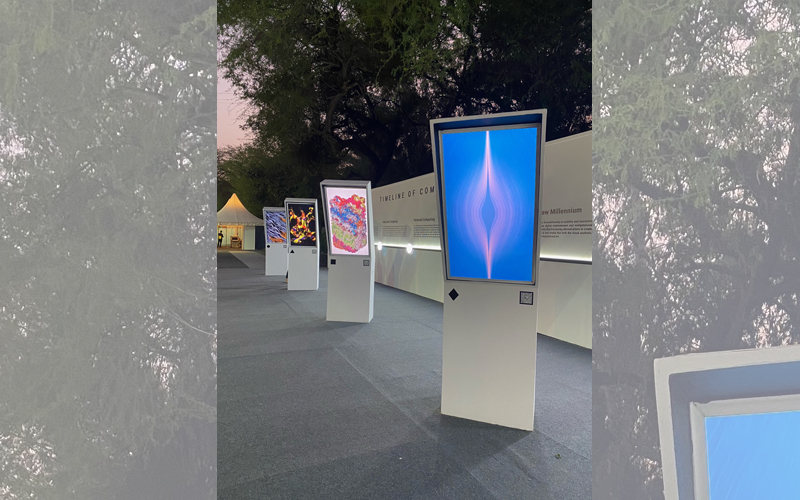
Titled ‘Computational Convergence’, it showcased the intermingling of art and technology in an outdoor public space.
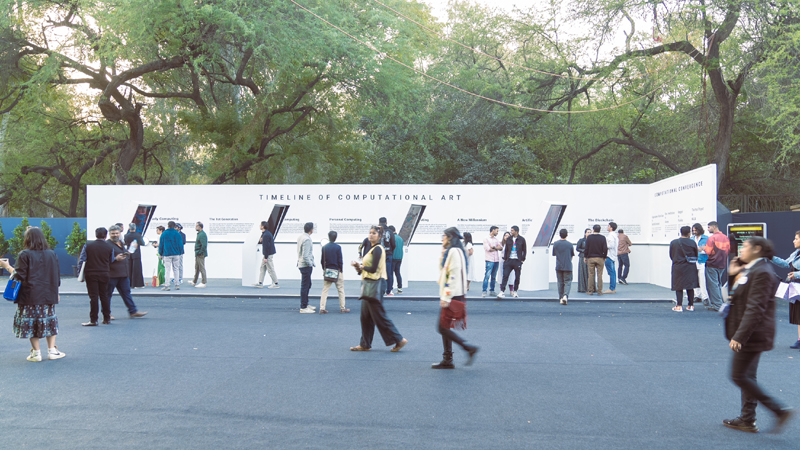
It was supported by Tezos Foundation in collaboration with Tezos India.
The installation featured a timeline of computational art in a large-scale format, chronicling its history from the 1950s to the present.
Along with this, it featured four 8-foot high kiosks with 800 editions of digital generative NFT* art by four artists, Karthik Dondeti, Pixelkar Nitant, Aranya (Ritesh Lala), and KALA (Ujjwal Agarwal).
(*Non-fungible tokens or NFTs are assets that have been tokenized via a blockchain. They are assigned unique identification codes and metadata that distinguish them from other tokens. Source: Investopedia).
The NFT art consisted of 3,200 unique algorithmically generated masterpieces that fair visitors could freely collect via smartphone during the event.
Visitors too got a chance to interact with the artists to learn about the original concept, inspiration, and how the artists used code to create an algorithmic artwork with their own style and language.
Collecting art on the blockchain
Tezos India curated an installation which allowed visitors to collect art using blockchain technology.
Usually, for collectors, especially the uninitiated, the process of collecting NFTs is usually tedious with multiple steps, but this project aimed to ease matters where visitors could scan a QR code and enter their email, thus collecting the artwork in three steps using fx hash (an open platform which allows selling, buying and collection of art among other things) and the naan app (a mobile application).
Tech meets Art
Tezos India also hosted a workshop called 'Computational Thinking' aimed at encouraging aspiring artists to use computational techniques to enhance their art.
The workshop, facilitated by Karthik Dondeti and Pixelkar, helped visitors explore various ways of using computational tools to manipulate, visualise, and analyse data.
The goal was to inspire creativity and show participants how to incorporate computational thinking into their artistic process, the artists said.
According to Varun Desai, Head of Tezos India Art & Culture, “Tezos encourages creative blockchain usage for artists, collectors, galleries, and festivals, and educates people on smart contract development and art projects.”
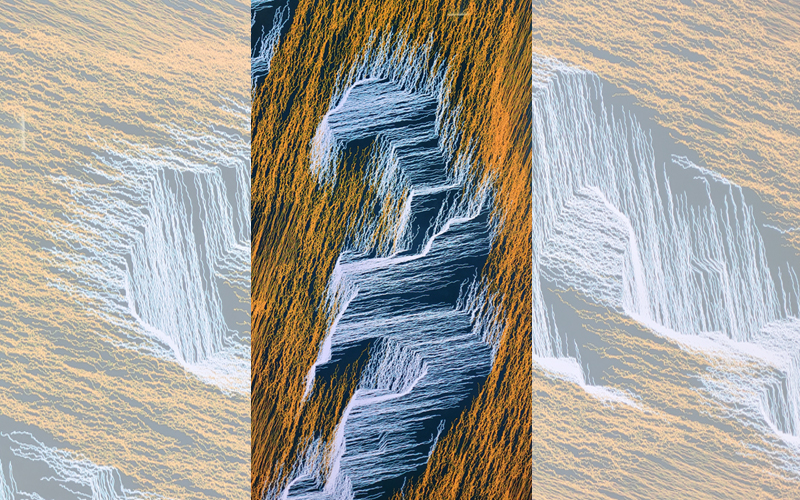 Algoscapes - Rock-face by Karthik Dondeti
Artist Karthik Dondeti said, “Visitors were fascinated by technology and algorithm usage to create art. Code as a creative medium of expression is relatively new to most attendees, and many were keen to understand the process and rigour involved. Presentation to middle school students was a highlight, inspiring creative interest in code-based art.”
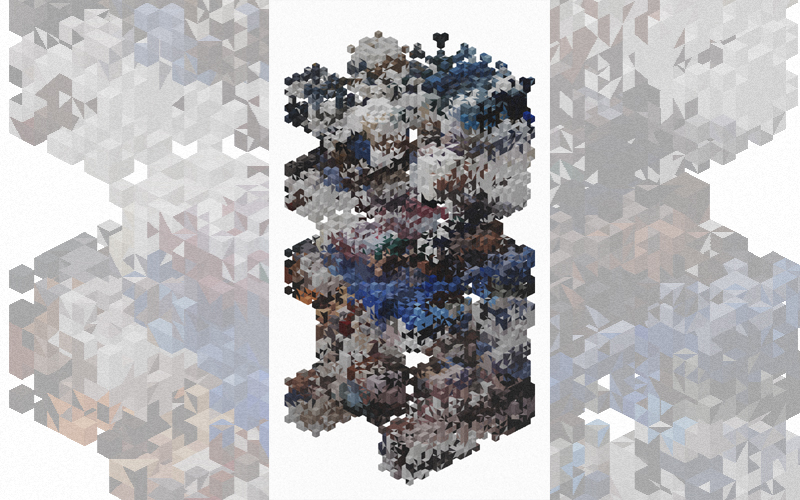 Rangxel by Pixelkar
Pixelkar, the artist behind the 'Computational Convergence' installation, and a computational artist for almost a decade, showcased some of his latest pieces that used rule-based instructions following traditional Rangoli formation principles resulting in interconnected, multi-dimensional monolithic forms of pixelated fragments of his memories.
“Some visitors were in absolute awe of using pure code as a medium for art, while some were in absolute disbelief. One of the interesting conversations I had with visitors was about the confusion between AI art and Generative Art, and it felt great to bust the myth,” he said.
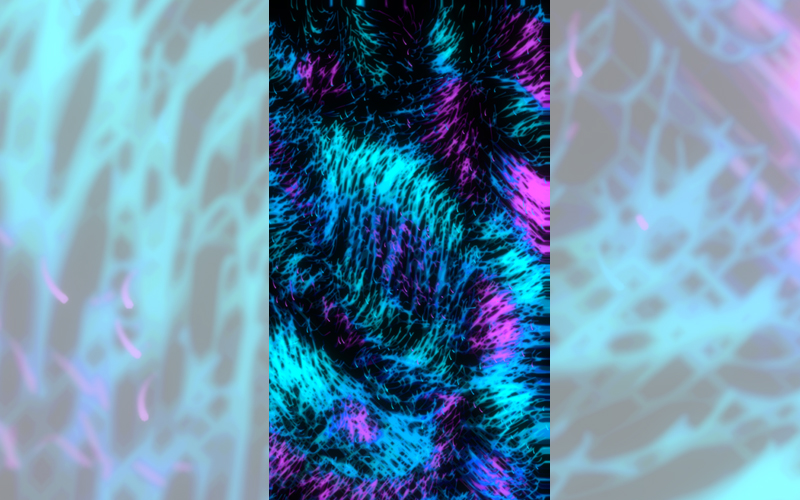 Flow Meditations by Aranya (Ritesh Lala)
New York based artist Aranya (Ritesh Lala), who could not be present in person at the art show, said " I'm excited about the opportunities this creates for South Asian artists to establish our own space in the future of computational art."
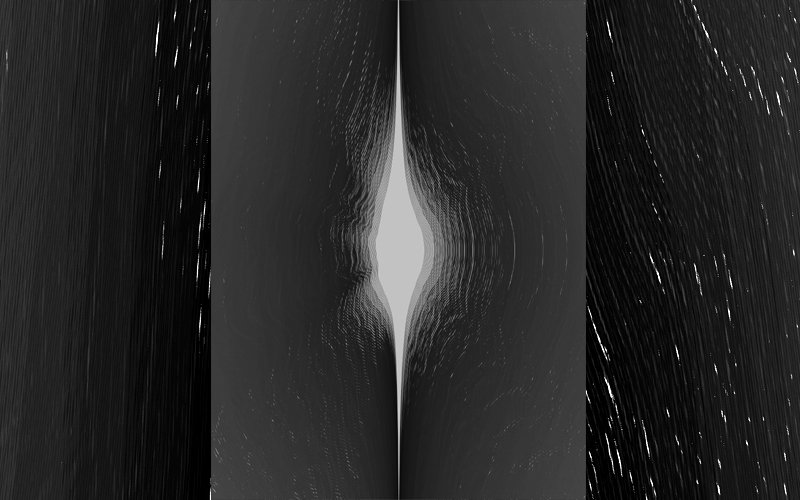 The Yoni Project by KALA (Ujjwal Agarwal)
Artist KALA (Ujjwal Agarwal) expressed appreciation for the team's efforts to educate visitors on the complex topics of blockchain, NFTs, and generative art, acknowledging that it was a challenging task in the modern world of short attention spans.
Support Our Journalism
We cannot do without you.. your contribution supports unbiased journalism
IBNS is not driven by any ism- not wokeism, not racism, not skewed secularism, not hyper right-wing or left liberal ideals, nor by any hardline religious beliefs or hyper nationalism. We want to serve you good old objective news, as they are. We do not judge or preach. We let people decide for themselves. We only try to present factual and well-sourced news.
Support objective journalism for a small contribution.