


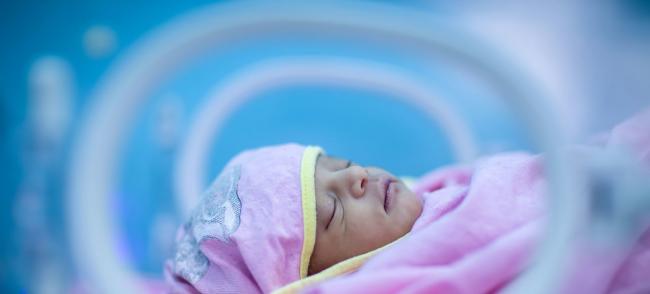
WHO congratulates India for significantly reducing child deaths
New Delhi, Sept 19 (IBNS): WHO has commended India for its concerted efforts to reduce child deaths, which have resulted in under-five mortality estimates to have fallen below the one million mark.
As outlined in a report released by the UN Inter-agency Group for Child Mortality Estimation, India’s share of global child deaths has been reduced from 22% in 2012 to 18% in 2017 – a rate that outpaces the global decline.
India’s remarkable achievement was made possible via a series of initiatives the Ministry of Health and Family Welfare has taken in recent years, including to vaccinate each and every child with life-saving vaccines under Mission Indradhanush and to expand the reach of diarrhea and pneumonia management across the country, with a focus on vulnerable and hard-to-reach populations.
Given recent reductions, the global percentage of under-five deaths that occur in India is commensurate with the percentage of global births the country accounts for (18%), and represents a dramatic breakthrough for India, the WHO South-East Asia Region and the world.
Notably, India’s gender gap in child survival is now almost four times less than what it was five years ago, reflecting substantial advances in gender equity that the country can continue to build on, precisely as it has built on its successes in a range of other areas.
As India’s progress continues – including by concentrating on reducing neonatal deaths, which now account for 62% of under-five deaths – there is immense potential to go beyond ensuring children simply survive but can also thrive and enjoy their right to the highest attainable standard of health and wellbeing.
As outlined in the Global Strategy for Women’s, Children’s and Adolescents’ Health, among other priorities that means ensuring access to adequate nutrition and early childhood development services, at the same time as continuing to increase vaccination coverage for all. Ending preventable newborn and child deaths has been one of the WHO South-East Asia Region’s Flagship Priorities since 2014.
WHO is committed to supporting India and the Region consolidate the significant gains made in recent years, to accelerate further progress, and to ensure healthy lives and promote wellbeing for all at all ages.
Support Our Journalism
We cannot do without you.. your contribution supports unbiased journalism
IBNS is not driven by any ism- not wokeism, not racism, not skewed secularism, not hyper right-wing or left liberal ideals, nor by any hardline religious beliefs or hyper nationalism. We want to serve you good old objective news, as they are. We do not judge or preach. We let people decide for themselves. We only try to present factual and well-sourced news.
Support objective journalism for a small contribution.


