


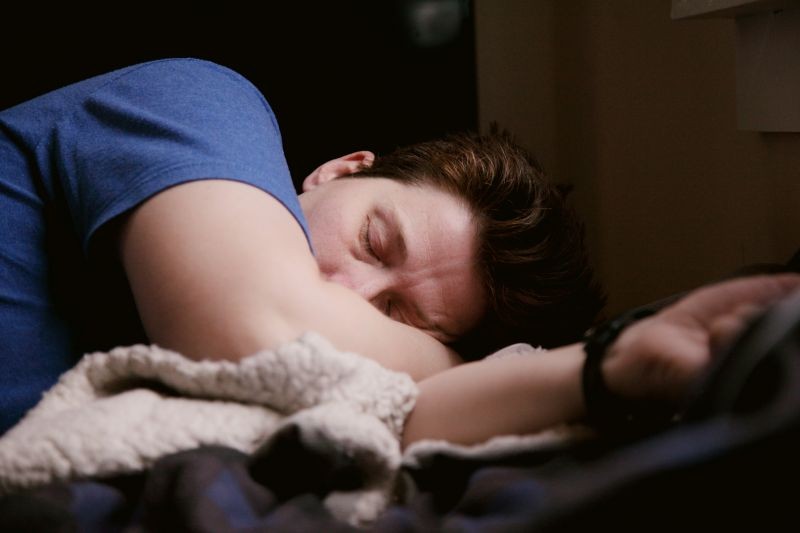
 Sleep-Exercise
Want to exercise more? Study says the secret starts with your sleep
Getting enough sleep and staying active are two of the most important things we can do for our health, but new research shows that most people struggle to achieve both, and that sleep may hold the key to moving more.
A study led by Flinders University analysed more than 28 million days of real-world health data from over 70,000 people across the globe and found that fewer than 13% consistently meet recommended sleep and physical activity targets.
The findings suggest that improving sleep quality could be an effective way to boost daily activity, reads the Flinders University website.
The research team examined data collected over three and a half years from consumer health devices that tracked nightly sleep and daily steps.
They discovered that most people fall short of the widely promoted benchmarks of seven to nine hours of sleep and at least 8,000 steps a day.
Also Read: This everyday drink could slow ageing in severe mental illness, scientists reveal
Alarmingly, nearly 17% of participants averaged less than seven hours of sleep and fewer than 5,000 steps—a combination linked to higher risks of chronic disease, weight gain and mental health challenges.
Lead author, Josh Fitton from Flinders University, says the results show that sleep quality and duration have a stronger influence on next-day physical activity than the reverse.
“We found that getting a good night’s sleep – especially high-quality sleep – sets you up for a more active day,” says Mr Fitton, a PhD candidate at FHMRI Sleep Health
“People who slept well tended to move more the following day, but doing extra steps didn’t really improve sleep that night. This highlights the importance of sleep if we want to boost physical activity.”
Interestingly, the study revealed that the sweet spot for next-day activity was not the longest sleep duration.
“Our data showed that sleeping around six to seven hours per night was linked to the highest step counts the next day,” he says.
“But that doesn’t mean you should cut back on sleep because quality is just as important. People who slept more efficiently, meaning they spent less time tossing and turning, were consistently more active.”
The findings raise important questions about whether current health guidelines are realistic.
“Our findings call into question the real-world compatibility of prominent health recommendations and highlight how difficult it is for most people to have an active lifestyle and sleep well at the same time,” he says.
“Only a tiny fraction of people can achieve both recommended sleep and activity levels every day so we really need to think about how these guidelines work together and what we can do to support people to meet them in ways that fit real life.”
Senior author on the paper, Professor Danny Eckert, says for people balancing work, family and other demands, focusing on sleep may be the first step toward a healthier, more active life.
“Prioritising sleep could be the most effective way to boost your energy, motivation and capacity for movement,” says Professor Eckert.
“Simple changes like reducing screen time before bed, keeping a consistent bedtime, and creating a calm sleep environment can make a big difference.
“Our research shows that sleep is not just a passive state, it’s an active contributor to your ability to live a healthy, active life.”
Support Our Journalism
We cannot do without you.. your contribution supports unbiased journalism
IBNS is not driven by any ism- not wokeism, not racism, not skewed secularism, not hyper right-wing or left liberal ideals, nor by any hardline religious beliefs or hyper nationalism. We want to serve you good old objective news, as they are. We do not judge or preach. We let people decide for themselves. We only try to present factual and well-sourced news.
Support objective journalism for a small contribution.


