


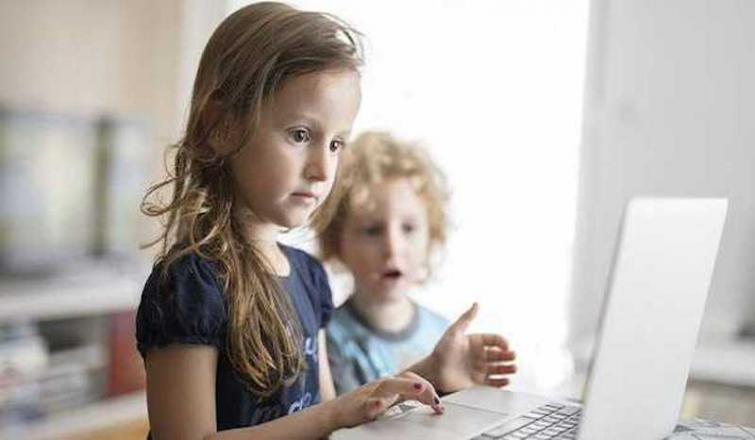
Under-fives' daily screen time should be 60 minutes maximum: WHO
United Nations, Apr 25 (UNI): Toddlers should spend no more than 60 minutes passively watching a screen every day, while babies under 12 months should have none, to ensure that they grow up fit and well, the World Health Organisation (WHO) has said, as part of a campaign to tackle the global obesity crisis.
In recommendations specifically aimed at under-fives for the first time, the UN health agency on Wednesday said that some than 40 million children around the globe - around six per cent of the total - are overweight. Of that number, half are in Africa and Asia, it noted.
The guidelines – which refer to passive activities such as watching cartoons, for example, as opposed to going online to talk to a grandparent - build on data gathered in countries including Canada and Australia, which show that as many as 75 per cent of children do not have healthy lifestyles.
“That takes a moment to think about,” said Dr Fiona Bull, a Programme Manager at WHO’s Department of Prevention of Noncommunicable Diseases.
“Children under-five who seem to be running around and busy all day and certainly tiring their parents, may not be as active as we think.”
'More is better' for sleep and exercise: In addition to screen time recommendations for very young children the UN health agency says that they should be physically active several times a day and get lots of sleep.
“More is better,” the WHO report maintains, suggesting that carers should engage in interactive floor-based play and ensure that babies who are not yet walking spend at least 30 minutes on their stomach, rather than sitting in a chair.
“The advice is where possible, to move from sedentary, passive screen time to more physical activity while at the same time protecting that very important quality sleep,” said Dr Juana Willumsen, WHO focal point for childhood obesity and physical activity.
“And what’s particularly important is that quality interactive play with a caregiver that’s so important for early childhood development…that sedentary time should also be protected.”
Children aged one to four years old should be active for at least 180 minutes throughout the day, WHO says, citing walking, crawling, running, jumping, balancing, climbing, dancing, riding wheeled toys, cycling and jumping rope as suitable pastimes.
Playtime, not screen time: For three to four-year-olds, moreover, 60 minutes of this activity should be of “moderate-to-vigorous intensity”, according to the UN agency’s guidelines, which also note that around the world, five million people die every year because they are not active enough.
“Sedentary behaviours, whether riding motorized transport rather than walking or cycling, sitting at a desk in school, watching TV or playing inactive screen-based games are increasingly prevalent and associated with poor health outcomes,” says WHO’s Guidelines on physical activity, sedentary behaviour and sleep for children under five years old.
Noting the emergence of on-screen applications that help users understand how long they are spending on their devices, Dr. Bull noted that there was still much uncertainty about their health impacts.
“This is a recent development and I think it is a signal that the digital industry is also wary about the addictive nature the time that’s being spent using these in different ways,” she said. “Of course, all of us are using them for work, we’re using them in schools for education, we’re using them at home for education. It’s about managing the use of these valuable tools and about watching both the benefits and the risks.”
Support Our Journalism
We cannot do without you.. your contribution supports unbiased journalism
IBNS is not driven by any ism- not wokeism, not racism, not skewed secularism, not hyper right-wing or left liberal ideals, nor by any hardline religious beliefs or hyper nationalism. We want to serve you good old objective news, as they are. We do not judge or preach. We let people decide for themselves. We only try to present factual and well-sourced news.
Support objective journalism for a small contribution.


