


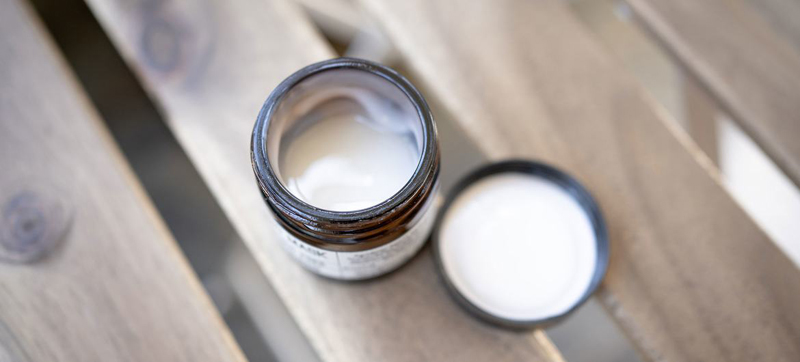
 Skincare Cream
UN-backed project aims to eliminate mercury from skin lightening products
New York: The Governments of Gabon, Jamaica and Sri Lanka have united in a $14 million project to eliminate the use of mercury in skin lightening products – a serious public health issue, the UN Environment Programme (UNEP) announced on Tuesday.
The initiative will support a holistic approach to phase out the harmful chemical and promote the beauty of all skin tones.
Consumers unaware of risks
Skin lightening products inhibit the body’s production of melanin, the pigment that plays a role in determining skin, hair and eye colour.
They have been used around the world for years, by both men and women - not only to lighten their complexions but to fade freckles, blemishes and age spots, and to treat acne.
However, many are often unaware that these cosmetics can contain mercury, which poses risks to human health and the environment.
They can cause skin rashes, discolouration and scarring, as well as nervous, digestive and immune system damage, but also anxiety and depression.
Exceeding the limit
An international treaty known as the Minamata Convention has set mercury limits in skin lightening products to one milligram per kilo.
UNEP cited a 2018 test of 300 products from 22 countries which found roughly 10 per cent exceeded this limit, with many containing as much as 100 times the authorized amount.
The use of mercury in skin lightening products is a serious public health issue that requires urgent attention, said Sheila Aggarwal-Khan, Director of the agency’s Industry and Economy Division.
“While governments have agreed limitations on mercury use through the Minamata Convention, companies continue to manufacture, trade and sell toxic products to consumers,” she remarked.
Changing damaging behaviours
UNEP will lead the three-year project, with funding from the Global Environment Facility (GEF). It will be carried out by the World Health Organization (WHO) and Biodiversity Research Institute (BRI).
With demand projected to grow to $11.8 billion by 2026 - fuelled by a growing middle class in the Asia-Pacific region and changing demographics in Africa and the Caribbean - the use of harmful chemicals in skin lightening products is a global issue.
“This initiative is significant as it focuses not only on substitutions for harmful ingredients, but on awareness building that can help change behaviours that are damaging to individual health as well as the planet,” said Carlos Manuel Rodriguez, GEF Chief Executive Officer (CEO) and Chairperson.
Skin lightening products do not just pose a risk to users. Children can be exposed through breastmilk, and food chains can become contaminated when cosmetics are washed off into wastewater, said UNEP.
The compound can also travel far from where it was dispersed and accumulate in the earth, water and soil without breaking down.
Increasing awareness
WHO has called for urgent action on mercury as one of the top chemicals of public health concern, said Dr. Annette Prüss, Acting Director of the Department of Environment, Climate Change and Health at the UN agency.
“The health impacts of mercury have been known for centuries but more people should become aware now,” she added.
The project will bring the three countries together to align their policies on the cosmetic sector with best practice, creating an enabling environment to phase out mercury.
Shifting cultural norms
Attempting to shift broader cultural norms on skin complexion is another goal, which will be addressed through engaging organisations, healthcare professionals and influencers working in the field.
Sema Jonsson, founder of the Pantheon of Women Who Inspire, a co-financier of the project, said the organisation wanted people to admire and be proud of their natural skin tone.
“We need a new ideal to follow, one which is equated with humanity and not the fairness of one’s skin.”
Support Our Journalism
We cannot do without you.. your contribution supports unbiased journalism
IBNS is not driven by any ism- not wokeism, not racism, not skewed secularism, not hyper right-wing or left liberal ideals, nor by any hardline religious beliefs or hyper nationalism. We want to serve you good old objective news, as they are. We do not judge or preach. We let people decide for themselves. We only try to present factual and well-sourced news.
Support objective journalism for a small contribution.


