


 COVID19
Tedros: COVID-19 remains an international health threat
New York: The head of the UN health agency, Tedros Adhanom Ghebreyesus, said on Monday that COVID-19 is still a global health threat and that now is not the time to declare the pandemic over.
Tedros’s decision follows the advice offered at the latest coronavirus Emergency Committee meeting last Friday, held at the World Health Organization (WHO) in Geneva via videoconference.
“There is little doubt that this virus will remain a permanently established pathogen in humans and animals for the foreseeable future,” the Committee said.
It is three years to the week since COVID-19 was declared a public health emergency of international concern. The novel coronavirus (2019-nCoV) was first reported in Wuhan, China, on 31 December 2019.
Still a killer
The WHO Director-General said that although the world is in a better position than a year ago, when Omicron infections surged, more than 170,000 COVID-19-related deaths have been reported globally, in just the last eight weeks.
Tedros noted once again that surveillance and genetic sequencing of the coronavirus have declined globally, making it more difficult to track known variants and detect new mutations.
He warned that health systems continue to struggle to treat a high number of COVID-19 patients and others with influenza and respiratory infections, amid staff shortages and health worker burnout.
The value of vaccines
The UN health agency chief also insisted that vaccines, therapeutics and diagnostics remain critical in preventing severe disease, saving lives and taking the pressure off health systems and health workers globally.
Despite their proven worth, Tedros said that the COVID-19 response remains “hobbled” in too many countries that are unable to provide these tools to the populations most in need, older people and health workers.
Globally, there have been more than 752.5 million confirmed cases of COVID-19, including 6.8 million deaths, reported to WHO’s Coronavirus dashboard.
At the WHO meeting of the Emergency COVID Committee, participants heard that globally, 13.1 billion doses of COVID-19 vaccines have now been administered, with 89 per cent of health workers and 81 per cent of older adults (over 60) completing the primary series.
Committee members expressed concerns about insufficient vaccine uptake in low and middle-income countries, as well as in the highest-risk groups globally, and the uncertainty associated with emerging variants.
‘Pandemic fatigue’
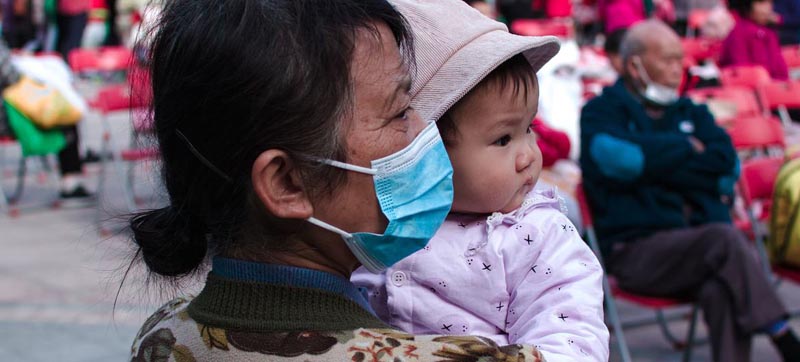
They also recognized that “pandemic fatigue” and the impression of reduced risk “have led to drastically reduced use of public health and social measures, such as masks and social distancing”.
Among its recommendations, the UN health agency urged countries to remain vigilant and to continue to report surveillance and genomic sequencing data to WHO.
“Appropriately targeted” public health and social measures should also be implemented where necessary, and the most vulnerable communities should be vaccinated to minimize severe disease and deaths, the WHO meeting heard.
Answering people’s concerns about COVID-19 remains key to improving why it is so important to implement preventative that will keep the coronavirus at bay, the UN health agency said.
The Emergency Committee explained that although the Omicron variants that are circulating globally remain highly transmissible, infection no longer necessarily means that severe disease will follow, when compared to earlier coronavirus variants of concern.
Support Our Journalism
We cannot do without you.. your contribution supports unbiased journalism
IBNS is not driven by any ism- not wokeism, not racism, not skewed secularism, not hyper right-wing or left liberal ideals, nor by any hardline religious beliefs or hyper nationalism. We want to serve you good old objective news, as they are. We do not judge or preach. We let people decide for themselves. We only try to present factual and well-sourced news.
Support objective journalism for a small contribution.


