


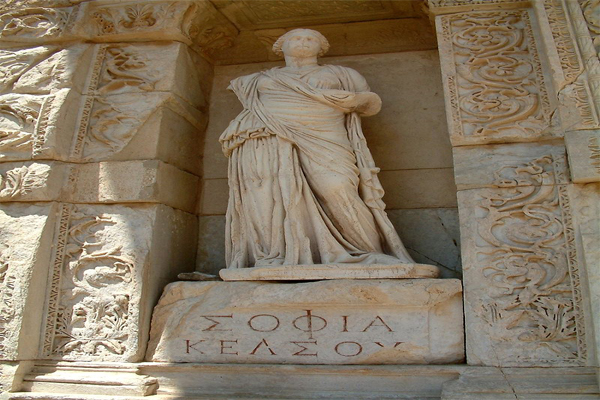
Study finds that our level of wisdom varies depending on the situation
The study defines wise reasoning as a combination of such abilities as intellectual humility, consideration of others’ perspective and looking for compromise. The work appears in Social Psychological and Personality Science.
“This research does not dismiss that there is a personality component to wisdom, but that’s not the whole picture,” said Professor Igor Grossmann, from the Department of Psychology at Waterloo and lead author of the paper. “Situations in daily life affect our personality and ability to reason wisely.”
The observation that wise reasoning varies dramatically across situations in daily life suggests that while it fluctuates, wisdom may not be as rare as we think. Further, for different individuals, only certain situations may promote this quality.
“There are many examples where people known for their critical acumen or expertise in ethics seem to fall prey to lack of such acumen or morals. The present findings suggest that those examples are not an anomaly,” said Grossmann. “We cannot always be at the top of our game in terms of wisdom-related tendencies, and it can be dangerous to generalize based on whether people show wisdom in their personal life or when teaching others in the classroom.”
By examining conditions and situations under which people may or may not show wisdom in their lives, researchers and practitioners may learn more about situations promoting wisdom in daily life and recreating those situations.
For the next stage of this work, Grossmann and his team are preparing a tool to assess wisdom according to the situation. They have plans to conduct the first-ever longitudinal study aiming at teaching people to reason wisely in their own lives.
Image: Wikimedia Commons
Support Our Journalism
We cannot do without you.. your contribution supports unbiased journalism
IBNS is not driven by any ism- not wokeism, not racism, not skewed secularism, not hyper right-wing or left liberal ideals, nor by any hardline religious beliefs or hyper nationalism. We want to serve you good old objective news, as they are. We do not judge or preach. We let people decide for themselves. We only try to present factual and well-sourced news.
Support objective journalism for a small contribution.


