


 Moon
Moon
Scientists are developing fuel that can sustain life on Moon
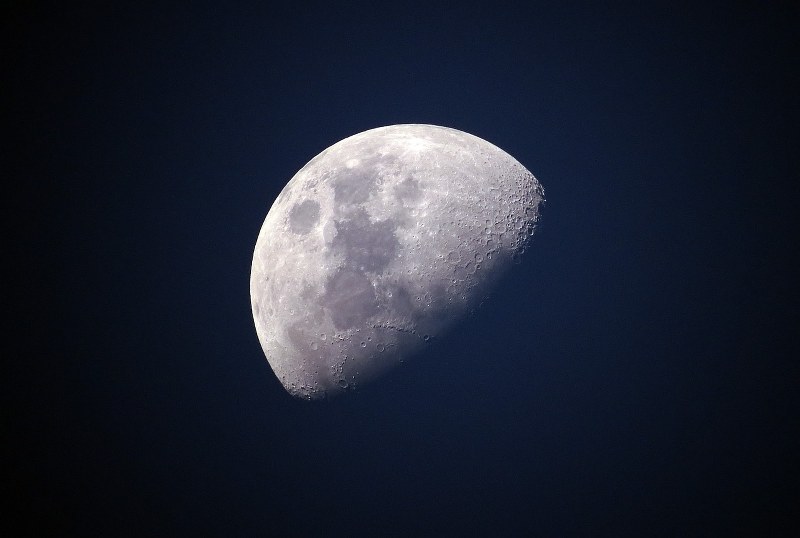
Scientists at Bangor University are carrying out research on powering rockets and developing the fuels required for supporting life on the Moon.
Bangor University is leading one of eight projects funded by the UK Space Agency to revolutionise our ability to journey deeper into space – and even travel to Mars.
The research will make space travel both safer and more efficient, using remote technologies and supplies found in space to sustain astronauts and spacecraft, the university said in a statement.
Bangor University research, led by Dr Phylis Makurunje, will use additive manufacturing techniques to create nuclear-based fuels for space propulsion. Such stable nuclear fuel systems are vital to enabling deep space missions.
The new processes being developed by scientists from Bangor’s Nuclear Futures Institute will enable the development and manufacture of various fuel configurations and designs that cannot be easily realised by conventional manufacturing methods.
Professor in Nuclear Materials and Co-director of the Nuclear Futures Institute at Bangor University, Simon Middleburgh said: “This project will harness the expertise in nuclear fuels which we have within the Nuclear Futures Institute and apply it to one of the most exciting applications possible: space exploration.
"On the moon and on planetary bodies that have day and night, we can no longer rely on the Sun for energy and therefore must design systems such as the small micro-reactor to sustain life.
"Nuclear power is the only way we currently have to provide the power for that length of space travel. The fuel must be extremely robust and survive the forces of launch and then be dependable for many years.
"This challenge is being met by excellent scientists and engineers at the Nuclear Futures Institute, but more will be required over the coming years and we hope that the new Engineering programme at the university will provide a wealth of exciting opportunities for students who wish to apply themselves in these exciting areas of research and development.
India Chandrayaa-3 lunar mission recently tasted success when Vikram lander made a soft landing on the south pole of Moon at 6.04 PM IST on August 23.
India became the fourth nation after the US, China, and the erstwhile Soviet Union to achieve a soft landing on the lunar surface.
Support Our Journalism
We cannot do without you.. your contribution supports unbiased journalism
IBNS is not driven by any ism- not wokeism, not racism, not skewed secularism, not hyper right-wing or left liberal ideals, nor by any hardline religious beliefs or hyper nationalism. We want to serve you good old objective news, as they are. We do not judge or preach. We let people decide for themselves. We only try to present factual and well-sourced news.
Support objective journalism for a small contribution.


