


 Plastics
Researchers are now trying to develop plastic that can break down in seawater
University of Queensland researchers are developing a plastic that breaks down in seawater to help turn the tide on marine waste.
Ruirui Qiao from UQ’s Australian Institute for Bioengineering and Nanotechnology is refining new polymerisation techniques for an affordable and biodegradable plastic to replace existing products.
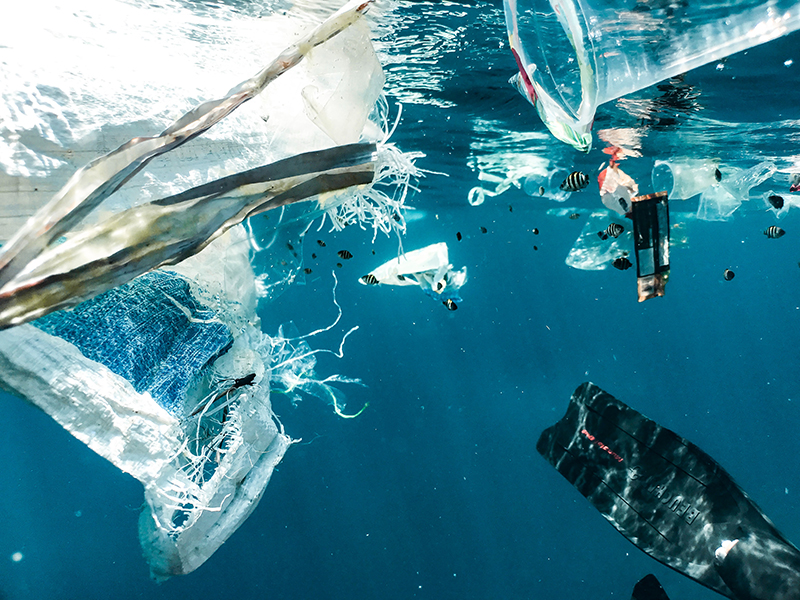
“Our oceans are being clogged by long-lasting plastic containers, bags and even microplastics - which pose a significant threat to ecosystems including millions of seabirds and mammals,” Qiao said.
“Awareness of the problem has risen in the past few years, but the sheer volume of waste going into the water means we need to find new solutions.
“We think plastic degradation technologies could be part of the answer.”
Qiao is working with AIBN colleague Professor Tom Davis and Professor Xuan Pang and Professor Xuesi Chen from the Changchun Institute of Applied Chemistry on the project, read the statement issued by University of Queensland.
The team is developing a range of high-value, customised seawater-degradable plastics using 3D-printing techniques developed by Qiao’s research group at AIBN, and polymeric materials generated by the Chinese Academy of Sciences.
The collaboration has received $125,000 from the Queensland-Chinese Academy of Sciences Collaborative Science Fund to accelerate the work over the next two years.
Qiao said one technique they’ll use, called ring-opening polymerisation, allows them to precisely control the mechanical strength and shape of the plastics while giving the plastics a low-toxic polyester ‘backbone’.
“This means the plastics are able break down to a molecular state in marine environments,” she said.
Qiao said the goal is to commercialise a new line of products in Australia and China within five years to replace traditional plastics and tap into a biodegradable market expected to exceed $9.5 billion by that time.
“Effective seawater-degradable polymer plastics will reduce plastic debris in oceans, boosting the health of ecosystems and the quality of life in communities around the world,” she said.
“We are also fostering collaboration between research groups in Queensland and China to further our strengths in polymer science and additive manufacturing.”
Support Our Journalism
We cannot do without you.. your contribution supports unbiased journalism
IBNS is not driven by any ism- not wokeism, not racism, not skewed secularism, not hyper right-wing or left liberal ideals, nor by any hardline religious beliefs or hyper nationalism. We want to serve you good old objective news, as they are. We do not judge or preach. We let people decide for themselves. We only try to present factual and well-sourced news.
Support objective journalism for a small contribution.


