


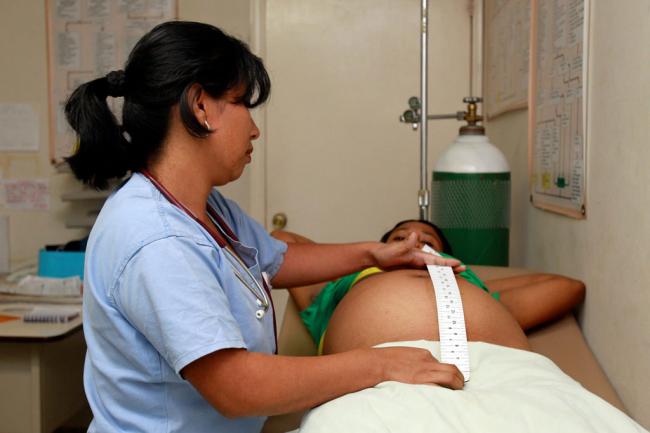
New online portal helps World Health Organization track global access to universal health coverage
The portal aggregates the latest data on universal health coverage for all of WHO’s 194 Member States. Next year, the portal will feature the impact of paying for health services on household finances.
“Any country seeking to achieve UHC must be able to measure it,” said the Director-General of the WHO, Dr. Margaret Chan, in a news release. “Data on its own won’t prevent disease or save lives, but it shows where governments need to act to strengthen their health systems and protect people from the potentially devastating effects of health care costs.”
The purpose of universal health coverage is to ensure that all people have the means to secure their right to health without financial hardship. This means that countries must build a health infrastructure system that supports readily available, quality services and products through an experienced workforce.
According to the portal, fewer than 50 per cent of children diagnosed with pneumonia are taken to a health care provider. 44 per cent of WHO’s Member States have less than 1 physician per 1000 people. While Africans suffer from 25 per cent of global diseases, the continent has only 3 per cent of the world’s health workers.
Universal health coverage is foundational to the success of the 2030 Agenda and its Sustainable Development Goals (SDGs), particularly Goal 3, which aims to secure the health and wellbeing of every individual.
“Expanding access to services will involve increasing spending for most countries,” announced Dr. Marie-Paule Kieny, WHO’s Assistant Director-General for Health Systems and Innovation. “But as important as what is spent is how it’s spent. All countries can make progress towards universal health coverage, even at low spending levels.”
Worldwide, at least 400 million people are without access to essential health services. Every year, 100 million fall into poverty and 150 million suffer “financial catastrophe” due to out-of-pocket costs for health care.
As part of the SDGs, all WHO Member States have agreed to achieve universal health coverage by 2030. In order to make this objective a reality, more than 18 million new health workers will be needed by 2030 in order to meet the growing demand, particularly in low and lower-middle income countries.
Photo: WHO
Source: www.justearthnews.com
Support Our Journalism
We cannot do without you.. your contribution supports unbiased journalism
IBNS is not driven by any ism- not wokeism, not racism, not skewed secularism, not hyper right-wing or left liberal ideals, nor by any hardline religious beliefs or hyper nationalism. We want to serve you good old objective news, as they are. We do not judge or preach. We let people decide for themselves. We only try to present factual and well-sourced news.
Support objective journalism for a small contribution.


