


NASA's OSIRIS-REx begins Earth-Trojan Asteroid search
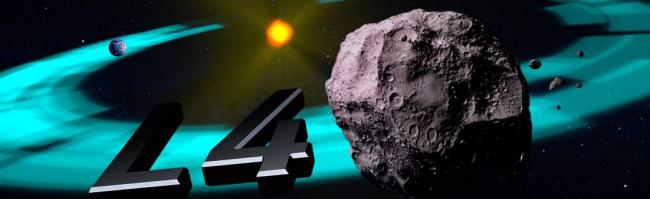
Trojan asteroids are trapped in stable gravity wells, called Lagrange points, which precede or follow a planet. OSIRIS-REx is currently traveling through Earth's fourth Lagrange point, which is located 60 degrees ahead in Earth's orbit around the sun, about 90 million miles (150 million kilometers) from our planet. The mission team will use this opportunity to take multiple images of the area with the spacecraft’s MapCam camera in the hope of identifying Earth-Trojan asteroids in the region, read a NASA website.
Although scientists have discovered thousands of Trojan asteroids accompanying other planets, only one Earth-Trojan has been identified to date, asteroid 2010 TK7. Scientists predict that there should be more Trojans sharing Earth’s orbit, but they are difficult to detect from Earth as they appear near the sun on the Earth’s horizon.
“Because the Earth’s fourth Lagrange point is relatively stable, it is possible that remnants of the material that built Earth are trapped within it,” said Dante Lauretta. “So this search gives us a unique opportunity to explore the primordial building blocks of Earth.”
The search commences today and continues through Feb. 20. On each observation day, the spacecraft’s MapCam camera will take 135 survey images that will be processed and examined by the mission’s imaging scientists at the University of Arizona, Tucson. The study plan also includes opportunities for MapCam to image Jupiter, several galaxies, and the main belt asteroids 55 Pandora, 47 Aglaja and 12 Victoria.
Whether or not the team discovers any new asteroids, the search is a beneficial exercise. The operations involved in searching for Earth-Trojan asteroids closely resemble those required to search for natural satellites and other potential hazards around Bennu when the spacecraft approaches its target in 2018. Being able to practice these mission-critical operations in advance will help the OSIRIS-REx team reduce mission risk once the spacecraft arrives at Bennu.
NASA's Goddard Space Flight Center provides overall mission management, systems engineering and the safety and mission assurance for OSIRIS-REx. Dante Lauretta of the University of Arizona, Tucson, is the principal investigator, and the University of Arizona also leads the science team and the mission's observation planning and processing.
Lockheed Martin Space Systems in Denver built the spacecraft and is providing flight operations. Goddard and KinetX Aerospace are responsible for navigating the OSIRIS-REx spacecraft. OSIRIS-REx is the third mission in NASA's New Frontiers Program.
NASA's Marshall Space Flight Center in Huntsville, Alabama, manages the agency's New Frontiers Program for its Science Mission Directorate in Washington.
Support Our Journalism
We cannot do without you.. your contribution supports unbiased journalism
IBNS is not driven by any ism- not wokeism, not racism, not skewed secularism, not hyper right-wing or left liberal ideals, nor by any hardline religious beliefs or hyper nationalism. We want to serve you good old objective news, as they are. We do not judge or preach. We let people decide for themselves. We only try to present factual and well-sourced news.
Support objective journalism for a small contribution.


