


 Healthcare
Healthcare: Lack of universal coverage, ‘human rights tragedy on a massive scale’
World leaders on Thursday agreed to boost efforts to provide universal health coverage for all by 2030.
By approving a new political declaration at UN Headquarters during the high level meeting, Member States also pledged to take concrete action and provide the necessary funding to reach the ambitious goal.
The declaration – Universal Health Coverage: expanding our ambition for health and well-being in a post-COVID world – also saw governments promise to invest political capital in the push to expand universal care.
A political choice
Ultimately, achieving health coverage for all is a political choice, said Tedros Adhanom Ghebreyesus, Director-General of the UN World Health Organization (WHO).
“But the choice is not just made on paper. It is made in budget decisions and policy decisions. Most of all, it is made by investing in primary healthcare, which is the most inclusive, equitable, and efficient path to universal health coverage,” he emphasized.
The declaration was adopted during the second of the three health summits taking place during this year’s General Assembly High Level Week.
The summit on pandemic preparedness took place on Wednesday and there will be another on ending the scourge of tuberculosis scheduled for Friday.
Staggering statistics
The urgency of the declaration is evident in the staggering statistics.
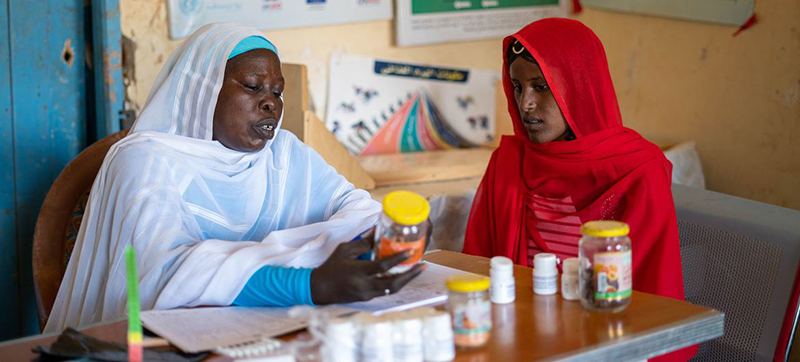
At least 4.5 billion people – more than half the world’s population – are not fully covered by essential health services, according to 2021 data.
Access to basis healthcare caused financial hardship for nearly two billion people, while over 1.3 billion were pushed back or pushed deeper into poverty just trying to access basic services and medicines – a stark reality of widening health inequities, according to WHO.
A fundamental right
Speaking on behalf of UN chief António Guterres, Deputy Secretary-General Amina Mohammed emphasized that universal health coverage will correct a “human rights tragedy on a massive scale”, with billions currently unable to access essential health services.
She called on countries to ensure universal access to sexual and reproductive health services for girls and women, while focusing on the most vulnerable populations, including children, refugees, migrants, and those living through humanitarian crises.
“[Countries] must invest in a well-trained, well-paid health workforce capable of delivering safe, effective quality care to all who need it,” she said.
The deputy UN chief highlighted the need to increase the presence and voices of women – who already make up the majority of health workers – in decisions that concern health.
Extra support
Ms. Mohammed also urged massive scale-up in investments, stressing additional support is crucial for developing countries.
“I call on countries to generously support the SDG Stimulus to increase financing for sustainable development to reach at least $500 billion per year, including investments in health systems,” she said.
She also argued for effective debt-relief mechanisms and multilateral development bank reform.
Support Our Journalism
We cannot do without you.. your contribution supports unbiased journalism
IBNS is not driven by any ism- not wokeism, not racism, not skewed secularism, not hyper right-wing or left liberal ideals, nor by any hardline religious beliefs or hyper nationalism. We want to serve you good old objective news, as they are. We do not judge or preach. We let people decide for themselves. We only try to present factual and well-sourced news.
Support objective journalism for a small contribution.


