


First Person: ‘Fate’ of Italian nurse, and countless other health workers, depends on protective clothing
New York/IBNS: A 24-year-old nurse in Italy who is treating patients with the deadly COVID-19 virus has been describing how her “fate” on any given day is dependent on how well she dresses in her protective clothing.
Laura Lupi works at a COVID-19 hospital in Teramo in the Abruzzo region of Italy to the east of the capital, Rome. On 6 April, Italy had recorded over 16,500 deaths from the virus, more than any other country in the world.
On World Health Day marked annually on 7 April, which this year is focusing on the vital work that nurses are performing in the face of the global pandemic, Ms. Lupi explains why she is willing to put her health and life on the line to help the sick.
“How we put on our protective equipment at the beginning of each shift, determines our fate.
Those first 20 minutes of donning our protective gear are imperative to avoid getting infected. I have worked with infectious diseases before, but this virus is different because we just don’t know enough about it.
Loss in human connection a challenge
I graduated from my Bachelor’s degree programme in nursing a year ago and worked in a general surgery and a geriatrics department, but nothing could have prepared me for the professional and emotional challenges I am facing now.
I am treating 38 patients and do seven- or ten-hour shifts, during which I cannot eat or drink; we cannot take off our protective equipment once we have put it on.
At times, it gets hard to breathe and even if I open the window, I cannot feel fresh air.
Perhaps what is most challenging, is the fact that we must keep a physical distance from our patients, which is made worse by the fact that we are entirely covered. Much of the human connection is lost, which is one of the things that made me fall in love with this profession in the first place.
Constant fear of infection
On the first day at the COVID-19 hospital, I entered a room where a patient was crying. When I inquired what had happened, he told me his mother-in-law had died and how he regretted not being able to comfort his wife. All I could do to ease his pain was to place a hand on his chest, but he could not even see my face.
That first day was particularly challenging, but I pulled through.
When I returned home, I was physically and emotionally drained, and all I wanted was a hug from my mother, but of course, that was not possible. At first, I had to fight the instinct to give up, but I cannot do that to my nurse colleagues. I have to do my job, and I know I can make a difference in my patients’ lives.
My work has changed profoundly, but so has how I spend the rest of my day. I live with my parents and brother, but I have not spent time with them since starting in this position. I cannot risk infecting them; we cannot share a table at dinner.
In the past, I used to enjoy thinking back to my workday, knowing that challenging moments could be opportunities for growth. I now live with the constant terror of infecting others and prefer to avoid thinking of work after a shift. Instead, I try to distract myself, to avoid thinking about having been infected or infecting my loved ones.
I want to hear my patients say, ‘I have survived’
We’ve always known that our job, as nurses, carries some risk with it. The difference now is that others know it too. I feel rewarded by the expression of solidarity from everyone; it is gratifying to read that people recognize our role – they truly see us and our work now.
For the future, I hope to see patients recover and leave the hospital. I know we can beat this virus; we can fight it together. I want to hear discharged patients say, ‘I have survived COVID-19.’ That is what motivates me and keeps me going. We will do everything that is humanly possible to overcome this situation together and we will succeed; we must. Never underestimate us nurses.
The only thing we ask you is to stay at home for us. We will stay at work for you.”
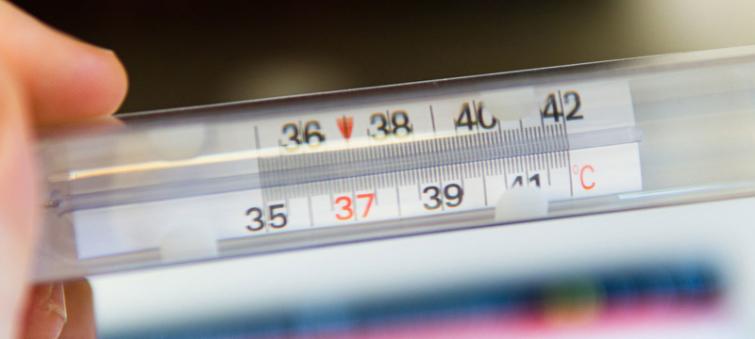
Photo caption and credit: Unsplash/Matteo Fusco A fever is one of the symptoms of coronavirus
Support Our Journalism
We cannot do without you.. your contribution supports unbiased journalism
IBNS is not driven by any ism- not wokeism, not racism, not skewed secularism, not hyper right-wing or left liberal ideals, nor by any hardline religious beliefs or hyper nationalism. We want to serve you good old objective news, as they are. We do not judge or preach. We let people decide for themselves. We only try to present factual and well-sourced news.
Support objective journalism for a small contribution.


