


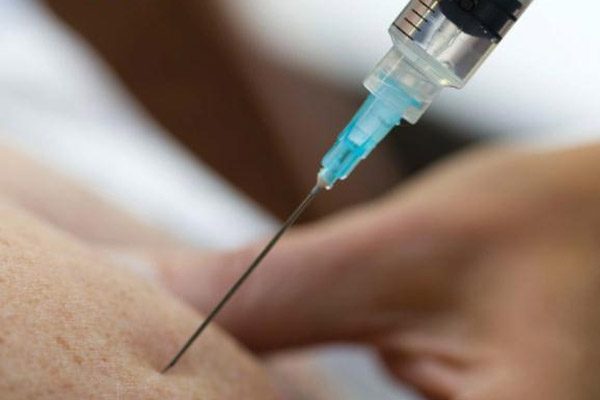
Ebola-affected countries need to intensify routine immunization services - UN
“We are calling for the intensification of routine immunization services in all areas, and for mass measles vaccination campaigns in areas that are free of Ebola transmission,” Dr. Jean-Marie Okwo-Bele, Director of Immunization, Vaccines and Biologicals at WHO, was quoted as saying in a news release.
The Ebola outbreak in West Africa has reduced routine vaccination coverage in Guinea, Liberia and Sierra Leone, as health facilities and staff focus on halting the epidemic, which has infected more than 24,000 people with over 10,000 deaths.
In addition, “People infected with malaria have been unable to get treatment, either because they have been too afraid to seek help at health centres or because such facilities have been closed,” according to WHO.
In a guidance note sent out this week, WHO warned: “Any disruption of immunization services, even for short periods, will result in an increase in the number of susceptible individuals, and will increase the likelihood of vaccine-preventable disease outbreaks.”
“The new guidance for immunization programmes in the African Region in the context of Ebola to help countries maintain or restart immunization services includes infection control precautions for health workers,” according to WHO. “The document notes that for countries not affected by Ebola, routine immunization and surveillance should continue using the normal safe injection and waste disposal practices.”
Mass vaccination campaigns for measles in areas that are free of Ebola transmission should be implemented to reduce the risk of significant outbreak of one of the leading causes of death among young children globally, the guidance note says.
And to rapidly reduce the malaria burden and the number of people with malaria presenting at Ebola evaluation facilities, WHO also recommended mass drug administration of anti-malarial medicines to all eligible people in areas heavily affected by Ebola.
Liberia has carried out two rounds of immunization against several diseases, and Guinea carried out similar activities in Ebola-free provinces in October and November 2014. Sierra Leone has put in place infection prevention precautions, and supported health facilities to scale up their routine service delivery.
Liberia and Guinea have carried out outbreak response vaccination activities for measles, targeting under-five children in outbreak districts, and Guinea is putting together an outbreak response plan targeting 10 additional districts.
Before widespread vaccination, measles caused an estimated 2.6 million deaths each year. More than 145,000 people died from measles in 2013 – mostly children under the age of 5, which translates into about 400 deaths every day or 16 deaths every hour.
“This focus on vaccinations and malaria is part of WHO’s efforts to support countries in early recovery, including infection prevention and control in non-Ebola health care settings, strengthening of the health workforce, disease surveillance, and safe essential health services,” said Dr. Edward Kelley, WHO’s Director of Service Delivery and Safety.
Photo: WHO
Support Our Journalism
We cannot do without you.. your contribution supports unbiased journalism
IBNS is not driven by any ism- not wokeism, not racism, not skewed secularism, not hyper right-wing or left liberal ideals, nor by any hardline religious beliefs or hyper nationalism. We want to serve you good old objective news, as they are. We do not judge or preach. We let people decide for themselves. We only try to present factual and well-sourced news.
Support objective journalism for a small contribution.


