


 Climate Change
Developing countries raise climate ambitions to plot path out of pandemic
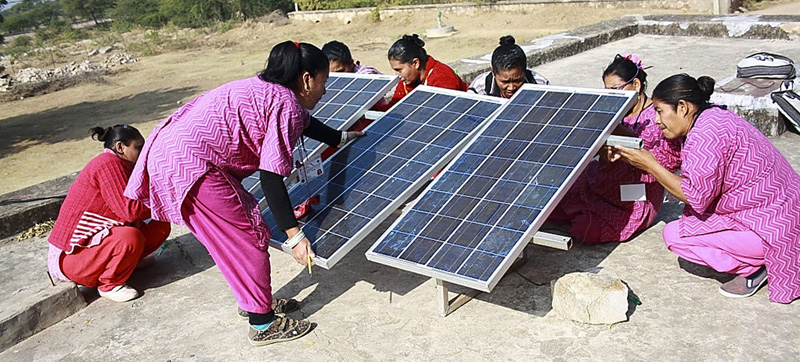
Developing countries are building more ambitious plans to tackle climate change, with COVID-19 stimulus packages often serving as a springboard towards a greener recovery, the United Nations Development Programme (UNDP) said on Tuesday.
UNDP is supporting 115 developing countries, to enhance their Nationally Determined Contributions (NDCs) – the specific steps that each country intends to take to help meet the goals of the 2015 Paris Agreement, which committed the international community to restrict global warming to “well below 2 degrees Celsius” and aim, if possible, for 1.5C.
Signatories to the landmark Agreement are due to meet online for a Climate Ambition Summit on Saturday, marking the fifth anniversary of the pact, and to set out new and ambitious commitments for the next five years, which could provide a major boost for the next landmark meeting, COP26 in Glasgow, Scotland, next November.
“What that 1.5 (degree target) really stands for is a complete and utter transformation of the world. And the speed, and the scale at which we have to do that is unprecedented”, said Cassie Flynn, UNDP Climate Advisor.
‘Stakes could not be higher’
“The good news is that we have all of the solutions, we know what we need to do. We know what it takes to have clean energy, we know what it takes to increase our resilience to climate impacts…to protect nature. But we have to do it faster and bigger than we have ever done it before, and the stakes could not be higher.”
NDCs are supposed to show genuine progress compared to existing policies in three areas: mitigation, adaptation, and support. Each five-year NDC plan is like a chapter in the longer book of how the world will reach “net zero” carbon emissions by 2050, Ms. Flynn told a news conference in Geneva.
The COVID-19 pandemic meant that some developing countries supported by UNDP, which represent 22.5 per cent of global greenhouse gas emissions, would not have their new commitments ready until early 2021.
Pandemic opportunities
But the pandemic has also given the “Climate Promise” countries an impetus and an opportunity to aim higher, presenting plans that are far more robust than they might have been otherwise, said UNDP. And most are now linking their NDC plans directly to a post-pandemic green recovery.
“So it means that 80 per cent of this 115 are really looking at how they can be more aggressive in their plans to reduce emissions. And then when it comes to adaptation, increasing resilience to climate change, we have nearly every single country, so 97% plan to increase adaptation ambition”, Ms. Flynn said.
Although COVID-19 had delayed some of the NDC commitments, it has spurred on NDC planning, she added.
“In many cases, in the early days of COVID, we thought ‘oh is this going to slow us down’. And in many cases I think what's happened now is this has sped us up, because these choices that countries are making when it comes to green recovery are happening within the climate conversations, and vice versa.”
More inclusive
The second generation of NDCs were shaping up to be far more inclusive than the first, Ms. Flynn said, especially in terms of gender and youth, as countries made sure they had all voices represented at the table.
“We are seeing 91% of Climate Promise countries have included gender responsive activities within their thinking on the NDCs. And this includes everything from effective governance, to inclusion in planning processes, and also to developing these policy frameworks that ensure that women and girls are not just included in the moment of the decision, but also have the support in the long term to help bring that NDC to life.”
In the first generation of NDCs, about 40 per cent had a direct reference to children or youth, but that proportion had now jumped to 75 per cent.
“We have seen a dramatic increase in the inclusion of youth within Climate Promise countries”, Ms. Flynn said.
She cited Costa Rica as a leading exponent of making the link between COVID and a green recovery, with an NDC linked to a national decarbonisation plan.
Nigeria was another leading example, involving plans for agriculture and housing in NDC planning, and looking at the role of green jobs in jumpstarting the economy.
Compared to five years ago, countries were now thinking much more seriously about living with climate change, as climate disasters happened more frequently around them, Ms. Flynn said. Whereas in the past an occasional Category Five storm might oblige a country to rebuild, people were increasingly aware that those kind of storms were now coming more regularly.
“People are looking at the world and they're seeing wildfires they are seeing more increased storms they are seeing drought they are seeing sea level rise and trends happen around them. People are really seeing a lot of these impacts.”
Support Our Journalism
We cannot do without you.. your contribution supports unbiased journalism
IBNS is not driven by any ism- not wokeism, not racism, not skewed secularism, not hyper right-wing or left liberal ideals, nor by any hardline religious beliefs or hyper nationalism. We want to serve you good old objective news, as they are. We do not judge or preach. We let people decide for themselves. We only try to present factual and well-sourced news.
Support objective journalism for a small contribution.


