


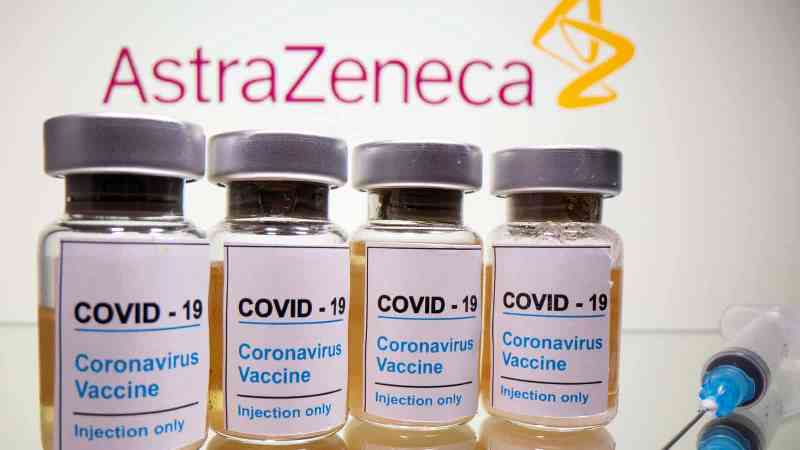
 Astrazaneca Vaccine
Delayed second dose and third doses of the Oxford-AstraZeneca vaccine lead to heightened immune response to COVID-19: Study
London: A longer delay of up to 45 weeks between the first and second dose of the Oxford-AstraZeneca vaccine leads to enhanced immune response after the second dose, a study by University of Oxford researchers,who developed the jab, found.
Research on the ChAdOx1 nCoV-19, also known as the Oxford-AstraZeneca vaccine, indicates that a long interval between first and second doses does not compromise the immune response after a late second dose, and a third dose of the vaccine continues to boost antibodies against SARS-CoV-2. The results were released in a preprint today.
COVID-19 vaccine supply shortages are causing concerns in some countries about compromised immunity as the interval between first and second dose extends due to limited vaccine availability. When examining the effects of a delay of up to 45 weeks between first and second doses in study participants, results demonstrated that antibody levels were increased after a delayed second dose. Additionally, a longer delay between first and second doses may be beneficial, resulting in an increased antibody titre and enhanced immune response after the second dose.
Professor Sir Andrew Pollard, Professor of Paediatric Infection and Immunity and Lead Investigator of the Oxford University trial of the vaccine, says, ‘This should come as reassuring news to countries with lower supplies of the vaccine, who may be concerned about delays in providing second doses to their populations. There is an excellent response to a second dose, even after a 10 month delay from the first.’
Conversely, some countries are considering administering a third ‘booster’ dose in the future. Studying the impact of a third vaccine dose, the researchers found that antibody titres increased significantly with a third dose. T-cell response and the immune response against variants were also boosted.
‘It is not known if booster jabs will be needed due to waning immunity or to augment immunity against variants of concern,’ says Associate Professor Teresa Lambe OBE, lead senior author for these studies. ‘Here we show that a third dose of ChAdOx1 nCoV-19 is well tolerated and significantly boosts the antibody response. This is very encouraging news, if we find that a third dose is needed.’
Side effects of the vaccine itself were also found to be well-tolerated, with lower incidents of side effects after second and third doses than after first doses.
Further research is required to follow up with study participants who received third doses beyond the period that was part of the initial study.
Support Our Journalism
We cannot do without you.. your contribution supports unbiased journalism
IBNS is not driven by any ism- not wokeism, not racism, not skewed secularism, not hyper right-wing or left liberal ideals, nor by any hardline religious beliefs or hyper nationalism. We want to serve you good old objective news, as they are. We do not judge or preach. We let people decide for themselves. We only try to present factual and well-sourced news.
Support objective journalism for a small contribution.


