


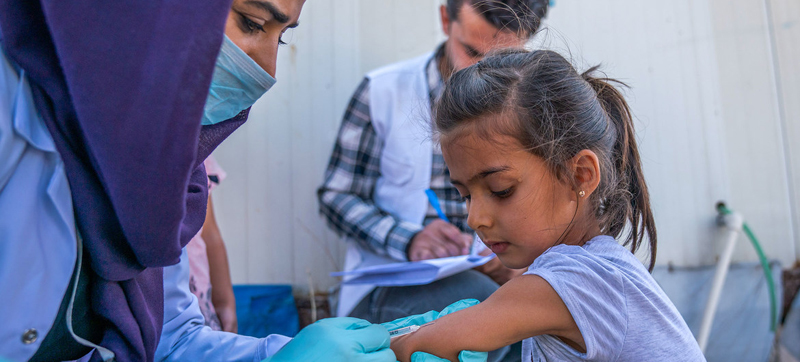
 Child Vaccination
Decline in routine childhood vaccinations, another pandemic fallout
New York: The COVID-19 pandemic has caused a major backsliding in childhood vaccinations, with 23 million children worldwide missing out on routine immunizations last year, two UN agencies reported on Wednesday.
This is the highest number since 2009, and nearly four million more than recorded in the year preceding the crisis, according to data from the World Health Organization (WHO) and the UN Children’s Fund, UNICEF.
“Even as countries clamour to get their hands on COVID-19 vaccines, we have gone backwards on other vaccinations, leaving children at risk from devastating but preventable diseases like measles, polio or meningitis,” said Tedros Adhanom Ghebreyesus, the WHO Director-General.
From bad to worse
The pandemic caused widespread disruption to immunization services, with South East Asia and the Eastern Mediterranean most affected.
Resources and personnel were directed to COVID-19 response, clinics were closed or hours were reduced, while fear of virus transmission, lockdown measures and transportation difficulties kept people from accessing healthcare.
As a result, the number of children not receiving vital first vaccine doses increased across all WHO regions.
Henrietta Fore, the UNICEF Executive Director, warned that lives are at stake.
“Even before the pandemic, there were worrying signs that we were beginning to lose ground in the fight to immunize children against preventable child illness, including with the widespread measles outbreaks two years ago,” she said.
“The pandemic has made a bad situation worse. With the equitable distribution of COVID-19 vaccines at the forefront of everyone’s minds, we must remember that vaccine distribution has always been inequitable, but it does not have to be.”
Recovery and investment
When compared with 2019, three million more children globally did not get their first measles dose, , and 3.5 million more children missed their first dose of the vaccine for diphtheria, tetanus and pertussis, known as DTP-1.
Increasing numbers of children missing out on at least some vaccine doses are now found in middle income countries, the agencies said. India, for example, has seen DTP-3 coverage fall from 91 per cent to 85 per cent.
A troubling picture has also emerged in the Americas region, due to factors that include funding shortfalls, vaccine misinformation and instability. Just 82 per cent of children there have been inoculated, down from 91 per cent in 2016.
As the world emerges from the pandemic, the UN agencies and partners, including Gavi, the Vaccine Alliance, are calling for urgent recovery and investment in routine immunization.
They are supporting countries through measures such as restoring services and vaccination campaigns, rectifying gaps in coverage, and ensuring that COVID-19 vaccine delivery occurs alongside, and not at the cost of, childhood vaccination services.
Support Our Journalism
We cannot do without you.. your contribution supports unbiased journalism
IBNS is not driven by any ism- not wokeism, not racism, not skewed secularism, not hyper right-wing or left liberal ideals, nor by any hardline religious beliefs or hyper nationalism. We want to serve you good old objective news, as they are. We do not judge or preach. We let people decide for themselves. We only try to present factual and well-sourced news.
Support objective journalism for a small contribution.


