


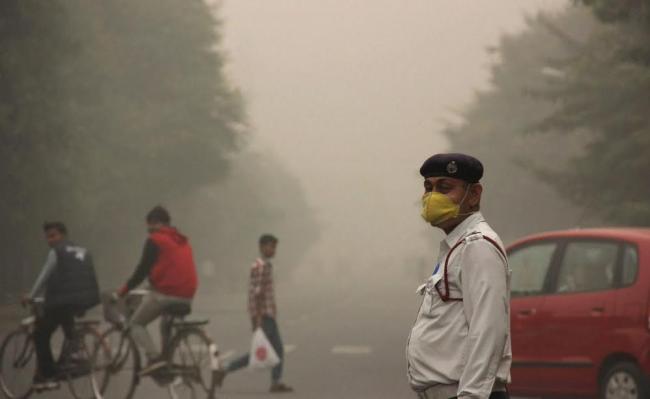
CSE says the WHO report on polluted cities in India sounds a dire warning
New Delhi, May 2 (IBNS): “The report by WHO is a warning about the serious and run-away pollution and public health emergency that confronts India today,” said Sunita Narain, director general, of New Delhi based Centre for Science and Environment (CSE).
She said this in response to the latest urban air quality database 2016 released by the WHO.
According to the database, top 14 of the 20 most polluted cities in the world are in India.
Said Anumita Roychowdhury, executive director-research and advocacy, CSE, “This is a grim reminder that air pollution has become a national public health crisis. Urgent intervention is needed for implementing the National Clean Air Action Plan with a strong compliance strategy to meet the clean air standards in all cities. It requires hard action.”
According to CSE, real-time air quality monitoring, especially that of PM2.5, will have to be expanded significantly to assess air quality in all cities with sizeable population.
Out of the 5,000 odd cities and towns in India, monitoring is being done in only 307 cities – moreover, most of this is manual monitoring that reports data with considerable time lag, CSE said.
“State governments will also have to wake up to ensure action plans are implemented with utmost stringency and aggression. India needs massive energy transition across industries and households, mobility transition to public transport, walking and cycling, and effective waste management to control this run-away pollution,” said Roychowdhury.
Support Our Journalism
We cannot do without you.. your contribution supports unbiased journalism
IBNS is not driven by any ism- not wokeism, not racism, not skewed secularism, not hyper right-wing or left liberal ideals, nor by any hardline religious beliefs or hyper nationalism. We want to serve you good old objective news, as they are. We do not judge or preach. We let people decide for themselves. We only try to present factual and well-sourced news.
Support objective journalism for a small contribution.


