


Conflict and climate change challenge sustainable development effort: UN report
New York, June 20 (IBNS): Although more people are leading better lives than a decade ago, persistent poverty and hunger, as well as rapid urbanization, are challenging global efforts to create a more just and equitable world, according to a United Nations report launched on Wednesday.
The study provides a snapshot of progress towards achieving the 17 Sustainable Development Goals (SDGs), adopted by world leaders nearly three years ago.
“With just 12 years left to the 2030 deadline, we must inject a sense of urgency,” UN Secretary-General Antonio Guterres said in a forward to the report.
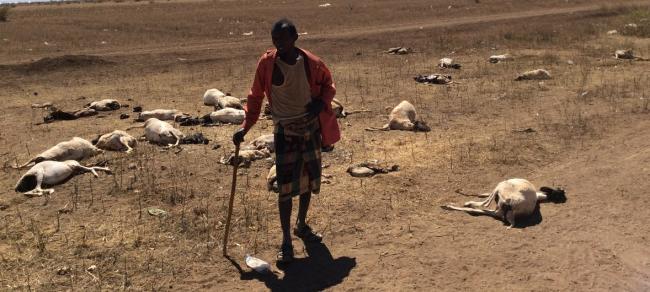
The Sustainable Development Goals Report 2018 reveals that conflict and climate change were major contributing factors to increased hunger and forced displacement, among other challenges.
For the first time in more than a decade, the number who are not getting enough to eat is trending upwards, and there are now approximately 38 million more hungry people in the world: rising from 777 million in 2015, to 815 million a year later.
Meanwhile, conflict is now one of the main drivers of food insecurity in nearly 20 countries.
The report also points out some good news, such as the significant decline in the number of people living on less than two dollars a day.
That number fell from 26.9 per cent in 2000, to 9.2 per cent in 2017.
The mortality rate for children under-five also has dropped, by almost 50 per cent in the world’s least developed countries.
However, dark spots remain, such as the 2.3 billion people who still lack basic sanitation, while more than 890 million worldwide continue to practice open defecation: that is, using the bathroom outdoors.
And whereas there were 210 million cases of malaria in 2013, the number jumped to 216 million just three years later.
Francesca Perucci, Assistant Director of the UN’s Statistics Division, with the Department of Economic and Social Affairs (DESA), also pointed to the importance of timely data collection and analysis to monitor progress.
“The report highlights the need for political leadership, adequate resources and commitment to further expand on tools available for data collection, production and dissemination, to ensure that all countries have rigorous evidence and comprehensive data to guide programmes and efforts towards 2030,” she said.
UNICEF/Sebastian Rich
Support Our Journalism
We cannot do without you.. your contribution supports unbiased journalism
IBNS is not driven by any ism- not wokeism, not racism, not skewed secularism, not hyper right-wing or left liberal ideals, nor by any hardline religious beliefs or hyper nationalism. We want to serve you good old objective news, as they are. We do not judge or preach. We let people decide for themselves. We only try to present factual and well-sourced news.
Support objective journalism for a small contribution.


