


 Omicron
Concern over low vaccination rates as ‘Omicron tidal wave’ floods Eastern Europe, Central Asia
New York: The World Health Organization’s (WHO) top official in Europe on Tuesday called on governments and health authorities to “closely examine” why there is low demand and acceptance of COVID-19 vaccines, as an “Omicron tidal wave” slams countries in the east of the region.
Over the past two weeks, cases of the virus have more than doubled in six countries across Eastern Europe and Central Asia: Armenia, Azerbaijan, Belaurus, Georgia, Russia and Ukraine, said WHO Regional Director, Dr. Hans Kluge.
“As anticipated, the Omicron wave is moving east – 10 eastern Member States have now detected this variant”, he added.
‘This remains a deadly disease’
Across WHO's Europe region overall, COVID-19 “remains a deadly disease” said Dr. Klug, noting that 165 million cases had been recorded so far, with 1.8 million deaths – 25,000 just this past week.
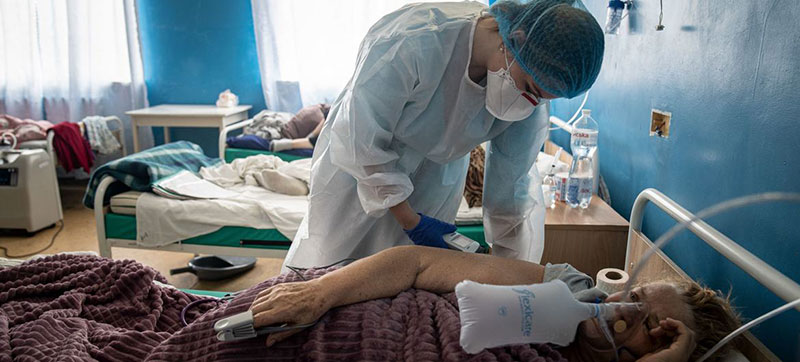
“Health systems are being put under increasing strain, not least because cases among healthcare workers are escalating – rising from 30,000 at the end of last year, to 50,000 a month later”, he said.
As health needs increase, the number of staff available to deliver care has fallen, and the risk of transmission in healthcare settings has risen, making the problem worse, he said.
For the eastern nations experiencing the wave, vaccination remains the best defence, he said, but less than 40 per cent of those over 60 in Ukraine, Bosnia Herzegovina, Bulgaria, Kyrgyzstan, and Uzbekistan, have had a full course of shots.
Taken local action
“I call on governments, health authorities and relevant partners to closely examine the local reasons influencing lower vaccine demand and acceptance”, the top WHO official said, “and devise tailored interventions to increase vaccination rates urgently, based on the context-specific evidence.”
Dr. Klug said that now is not the moment to lift any measures in Europe “that we know work in reducing the spread of COVID-19. These include avoiding closed, confined or crowded locations, wearing masks when with other people indoors, improving ventilation where possible, using rapid tests to identify cases early, and making sure that health systems are well prepared to provide evidence-based treatments that we now know can reduce severe disease and death.”
Hope for the future
Looking ahead, he said there was definitely hope on the horizon, although nobody knows what new variants may emerge.
Several factors are looking up, including high levels of immunity gained through infection or, preferably, vaccination; the end of the winter season with fewer people mixing indoors; and the lower severity of Omicron among those fully vaccinated.
Dr. Klug called for four measures authorities need to take, to bring COVID “full under control” and end the acute phase of the pandemic in Europe.
Maximize vaccine coverage, paying particular attention to those groups where uptake has been poor; coupled with vaccine sharing across borders.
Help people to minimize the risk to themselves and others, through frequent self-testing,
financial and other support for self-isolation, and wearing masks when mixing with other people indoors.
Scale up access to effective antivirals and other evidence-based treatments in all countries.
Support health systems to reduce the backlog of treatment resulting from the pandemic and as they plan ahead for a growing burden of so-called ‘Long COVID’.
“These critical actions apply to east and west alike”, the top WHO official concluded.
Support Our Journalism
We cannot do without you.. your contribution supports unbiased journalism
IBNS is not driven by any ism- not wokeism, not racism, not skewed secularism, not hyper right-wing or left liberal ideals, nor by any hardline religious beliefs or hyper nationalism. We want to serve you good old objective news, as they are. We do not judge or preach. We let people decide for themselves. We only try to present factual and well-sourced news.
Support objective journalism for a small contribution.


