


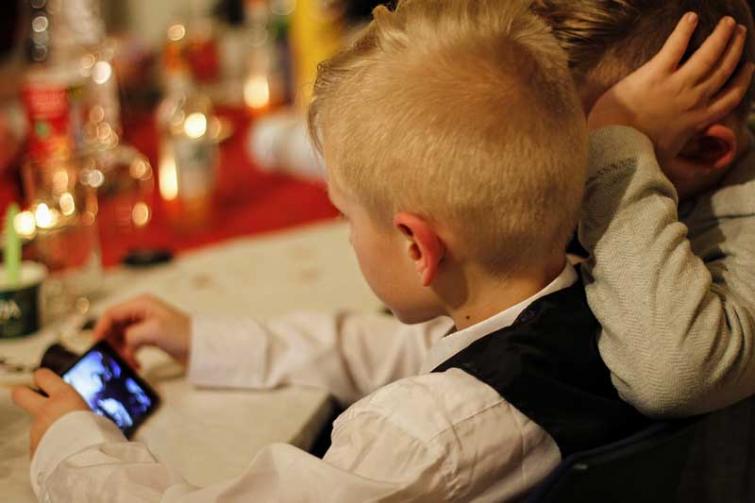
Children looking at screens in darkness before bedtime are at risk of significantly reduced sleep, study finds
London, Jan 30 (IBNS): Pre-teens who use a mobile phone or watch TV in the dark an hour before bed are at risk of not getting enough sleep compared to those who use these devices in a lit room or do not use them at all before bedtime.
The study by researchers from the University of Lincoln, Imperial College London, Birkbeck, University of London and the Swiss Tropical and Public Health Institute in Basel, Switzerland is the first to analyse the pre-sleep use of media devices with screens alongside the impact of room lighting conditions on sleep in pre-teens.
It found that night-time use of phones, tablets and laptops is consistently associated with poor sleep quality, insufficient sleep, and poor perceived quality of life. Insufficient sleep has also been shown to be associated with impaired immune responses, depression, anxiety and obesity in children and adolescents.
Data was collected from 6,616 adolescents aged between 11 and 12 and more than 70 per cent reported using at least one screen based device within one hour of their bedtime. They were asked to self-report a range of factors including their device use in both lit and darkened rooms, their weekday and weekend bedtimes, how difficult they found it to go to sleep and their wake up times.
The results showed that those who used a phone or watched television in a room with a light on were 31 per cent more likely to get less sleep than those who didn’t use a screen. The likelihood increased to 147 per cent if the same activity took place in the dark.
It has been reported that globally, 90 per cent of adolescents are not sleeping the recommended nine to 11 hours per night, which has coincided with an increase in the use of screen-based media devices. In the UK alone, it is estimated that 98 per cent of 12 to 15 year olds watch television and over 90 per cent use mobile phones at home.
Previous studies have shown that sufficient sleep duration and quality are vital in childhood to maintain physical and mental development. Sleep is also crucial for cognitive processes and a lack of sufficient sleep has been directly related to poor academic performance.
Lead author, Dr Michael Mireku, a researcher at the University of Lincoln’s School of Psychology said: “While previous research has shown a link between screen use and the quality and length of young people’s sleep, ours is the first study to show how room lighting can further influence this.
“Our findings are significant not only for parents but for teachers, health professionals and adolescents themselves. We would recommend that these groups are made aware of the potential issues surrounding screen use during bedtime including insufficient sleep and poor sleep quality.”
Support Our Journalism
We cannot do without you.. your contribution supports unbiased journalism
IBNS is not driven by any ism- not wokeism, not racism, not skewed secularism, not hyper right-wing or left liberal ideals, nor by any hardline religious beliefs or hyper nationalism. We want to serve you good old objective news, as they are. We do not judge or preach. We let people decide for themselves. We only try to present factual and well-sourced news.
Support objective journalism for a small contribution.


