


Child victims of DRC Ebola outbreak need ‘special attention and care’: UNICEF
New York, Aug 18 (IBNS): An ongoing deadly Ebola outbreak in the eastern part of the Democratic Republic of the Congo (DRC) has particularly affected children, the UN’s children agency, UNICEF, said on Friday.
The outbreak in North Kivu Province was declared on 1 August and UNICEF reported that so far, two children have died, while six others - who either are infected by the disease or suspected to be - are receiving treatment at two centres in the region.
Meanwhile, more than 50 youngsters have lost their parents to Ebola.
"The children affected by the ongoing epidemic need special attention and care,” said Dr. Gianfranco Rotigliano, UNICEF Representative in the DRC.
“Women are the primary caregivers for children, so if they are infected with the disease, there is a greater risk that children and families become vulnerable."
Ebola is a severe illness with a fatality rate of up to 90 per cent, according to the World Health Organization (WHO). Most cases occur through contact with the blood or bodily fluids of people infected by the disease, but Ebola can also be contracted through contact with infected animals, such as following butchering, cooking or eating.
Family members and health workers are among those most at risk.
Overall, there have been 78 confirmed or probable cases of Ebola in North Kivu Province, with 44 deaths. Another 24 suspected cases are awaiting laboratory confirmation.
UNICEF and partners have trained nearly 90 psychosocial workers to assist and comfort children in Ebola treatment centres.
These professionals also support children who have been discharged, but who may be at risk of stigmatization within their communities. They also organize awareness-raising activities to facilitate their return.
Rotigliano pointed out that Ebola’s impact on children can go well beyond being infected with the disease.
“Many children are faced with the illness or death of their parents and loved ones, while some children have lost large parts of their families and become isolated. These children urgently need our support," he said.
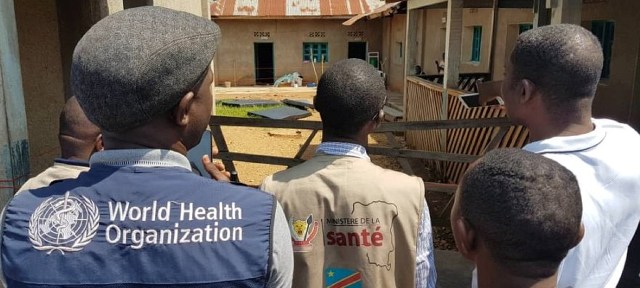
WHO/Twitter
Support Our Journalism
We cannot do without you.. your contribution supports unbiased journalism
IBNS is not driven by any ism- not wokeism, not racism, not skewed secularism, not hyper right-wing or left liberal ideals, nor by any hardline religious beliefs or hyper nationalism. We want to serve you good old objective news, as they are. We do not judge or preach. We let people decide for themselves. We only try to present factual and well-sourced news.
Support objective journalism for a small contribution.


