


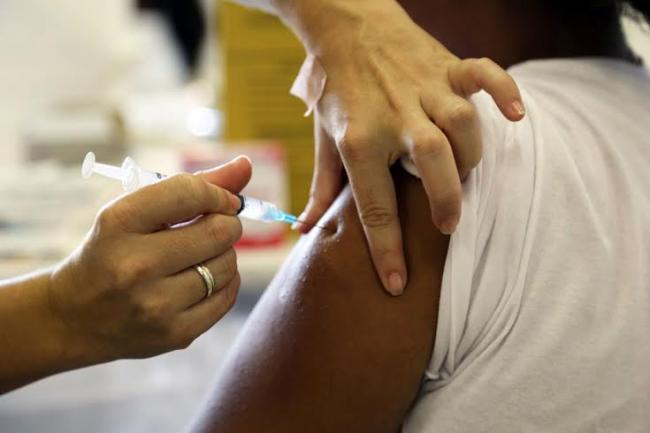
Changing habits and behaviours is key to overcome vaccine hesitancy - UN health agency
“As the recent Ebola crisis tragically brought to light, engaging with communities and persuading individuals to change their habits and behaviours is a lynchpin of public health success,” the WHO said in a special issue of the journal Vaccine published on Tuesday entitled ‘WHO recommendations regarding vaccine hesitancy.’
Dr. Philippe Duclos, Senior Health Adviser for WHO’s Immunization, Vaccines and Biological Department and guest editor of the special issue, said: “Vaccine hesitancy is an increasingly important issue for country immunization programmes.”
The recommendations proposed by WHO suggest ways organizations can increase acceptance of vaccines, share effective practices, and develop new tools to assess and address hesitancy.
“Concerns about vaccine safety can be linked to vaccine hesitancy, but safety concerns are only one of many factors that may drive hesitancy,” says the UN health agency.
WHO went on to explain that “vaccine hesitancy can be caused by other factors such as: negative beliefs based on myths, e.g. that vaccination of women leads to infertility; misinformation; mistrust in the health care professional or health care system; the role of influential leaders; costs; geographic barriers and concerns about vaccine safety.”
But the authors note there is no “magic bullet,” or single intervention strategy that works for all instances of vaccine hesitancy.
“Effective communication is key to dispelling fears, addressing concerns and promoting acceptance of vaccination,” according to WHO.
Vaccine hesitancy is not only an issue in high income countries, but is a complex, rapidly changing global problem that varies widely, it said.
For example, a higher level of education does not necessarily predict vaccine acceptance. The experts noted that a number of studies identify higher education as a potential barrier to vaccine acceptance in some settings, while other studies identify education as a promoter of vaccine acceptance in different areas.
“Even fear of needles can be a factor for vaccine refusal,” noted WHO.
Photo: PAHO/WHO
Support Our Journalism
We cannot do without you.. your contribution supports unbiased journalism
IBNS is not driven by any ism- not wokeism, not racism, not skewed secularism, not hyper right-wing or left liberal ideals, nor by any hardline religious beliefs or hyper nationalism. We want to serve you good old objective news, as they are. We do not judge or preach. We let people decide for themselves. We only try to present factual and well-sourced news.
Support objective journalism for a small contribution.


