 Punjab
Punjab’s rooftop solar push struggles amid free power surge
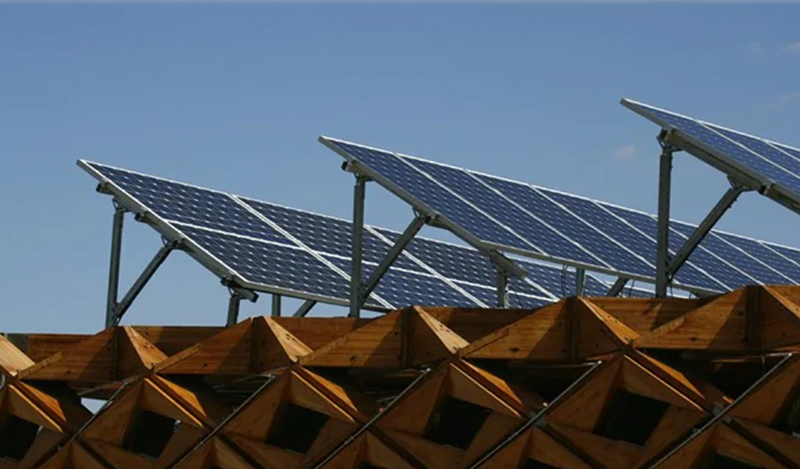
In a stark turn of events impacting Punjab’s energy trajectory, the state’s ambitious push towards renewable energy through rooftop solar installations has hit a snag. The Punjab government’s populist move to provide free electricity to agricultural and domestic sectors has inadvertently led to a decline in the adoption of rooftop solar systems among residential consumers.
Since the initiation of the free power policy in July 2022, which grants 300 units of electricity free of charge to domestic consumers every billing cycle, the enthusiasm for rooftop solar panels has waned significantly. Prior to this policy, Punjab had been steadily increasing its rooftop solar capacity, with installations growing from 107.31 MW in 2019 to 159.10 MW by early 2024.
The rationale behind rooftop solar systems lies in their ability to generate electricity locally, reducing dependency on the grid and mitigating distribution losses. These systems operate by generating power during daylight hours, feeding surplus electricity back into the grid. This setup, supported by net metering policies introduced in 2014, allows consumers to offset their electricity bills by the amount of electricity they supply to the grid.
Despite these advantages, the appeal of rooftop solar has dwindled among domestic consumers who now opt for the government’s free power scheme instead of investing in solar infrastructure. This shift is evident in regions like Faridkot and Amritsar, where new installations of rooftop solar systems have plummeted following the introduction of free electricity incentives.
Parminder Singh, a solar system integration expert from Jalandhar, highlighted a significant drop in consumer interest, noting that many households prefer splitting their electricity meters to stay within the threshold for free electricity, rather than investing in solar panels that require a considerable upfront investment ranging from Rs 1.5 to Rs 2 lakh.
The Punjab State Power Corporation Limited (PSPCL) corroborated this trend, revealing that only consumers with higher electricity consumption levels, exceeding 300 units per month, are now opting for rooftop solar installations. This demographic shift has reshaped the market dynamics, prompting Punjab Energy Development Authority (PEDA) officials to pivot towards installing rooftop solar systems primarily on government buildings rather than households.
Officials further reported a notable increase in rooftop solar capacity on government buildings, which rose from 26,878.9 kW to 33,155.9 kW post-2022, showcasing a strategic realignment in solar energy deployment efforts.
While the state continues to grapple with balancing renewable energy adoption and populist energy policies, the future of rooftop solar in Punjab appears uncertain. As consumer preferences evolve in response to government subsidies and incentives, the challenge remains to sustainably integrate renewable energy sources into Punjab’s energy mix amidst changing socio-economic dynamics.
In conclusion, while the global drive towards renewable energy remains paramount, Punjab’s experience underscores the delicate balance between incentivizing renewable energy adoption and meeting populist demands for free electricity—a conundrum that policymakers continue to navigate in the pursuit of sustainable energy futures.
(Image and text courtesy: Khalsavox.com)
Support Our Journalism
We cannot do without you.. your contribution supports unbiased journalism
IBNS is not driven by any ism- not wokeism, not racism, not skewed secularism, not hyper right-wing or left liberal ideals, nor by any hardline religious beliefs or hyper nationalism. We want to serve you good old objective news, as they are. We do not judge or preach. We let people decide for themselves. We only try to present factual and well-sourced news.
Support objective journalism for a small contribution.