 New GST Reforms
New GST reforms designed to benefit households, farmers and MSMEs: Sitharaman in Kolkata
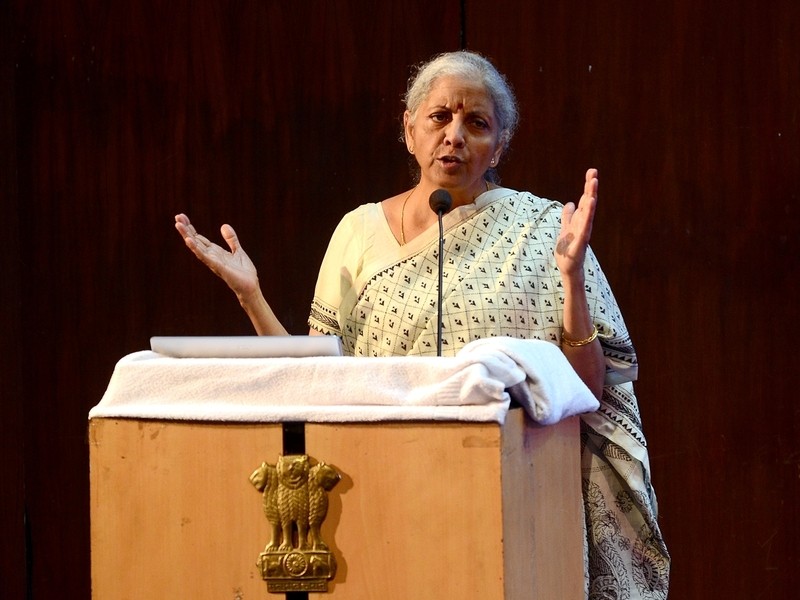
Kolkata/IBNS: Union Finance Minister Nirmala Sitharaman on Thursday outlined the "next-generation GST reforms", promising a simpler tax structure, faster compliance and wider relief for households and small businesses at a gathering in Kolkata.
Speaking at the discussion, Sitharaman said the Goods and Services Tax (GST) Council "unanimously approved the reforms" after months of review.
The revamped GST, she said, was designed "keeping five key parameters in mind — will it benefit the poor and middle class, support aspirational consumption of the middle class, provide relief for farmers, support micro, small and medium enterprises (MSMEs), and propel India to Viksit Bharat by 2047?”
Earlier this month, the GST Council approved a sweeping overhaul of the indirect tax system.
Effective September 22, the Council reduced the four-rate GST structure to two slabs, eliminating the 12% and 28% rates and retaining only the 5% and 18% slabs, a move aimed at easing the burden on the middle class.
"We moved from a complex four-tier structure to a simpler two-rate system of 5 percent and 18 percent," Sitharaman said, adding that demerit and “sin goods” would continue to attract a 40 percent rate.
"This new generation GST is not just for reducing the rate and the burden on the citizen but also for clearing up the confusion which businesses face, making it easy for compliance," the finance minister stressed.
Bengal's influence
Highlighting West Bengal’s role in shaping the reforms, Sitharaman noted that the tax relief is expected to benefit Bengal’s artisans, farmers and small entrepreneurs by making their products more competitive in both domestic and international markets.
"Bengal had a strong influence in the decision-making," she remarked.
The minister described the changes as a "self-enforcing chain" that would trigger higher consumption, providing "relief" to every household.
"If there is a shortfall, both the Centre and the states share it equally. There is no donor-donee relationship in the GST Council — we are equals,” she said, crediting opposition-ruled states for their cooperation.
Calling the reforms a “virtuous cycle”, Sitharaman said they will reduce household burdens, encourage consumption, and give India’s economy a push toward its 2047 growth targets.
Support Our Journalism
We cannot do without you.. your contribution supports unbiased journalism
IBNS is not driven by any ism- not wokeism, not racism, not skewed secularism, not hyper right-wing or left liberal ideals, nor by any hardline religious beliefs or hyper nationalism. We want to serve you good old objective news, as they are. We do not judge or preach. We let people decide for themselves. We only try to present factual and well-sourced news.
Support objective journalism for a small contribution.