 India-US
India, US officials discuss ways to achieve 'early conclusion' of trade deal during Piyush Goyal's recent visit
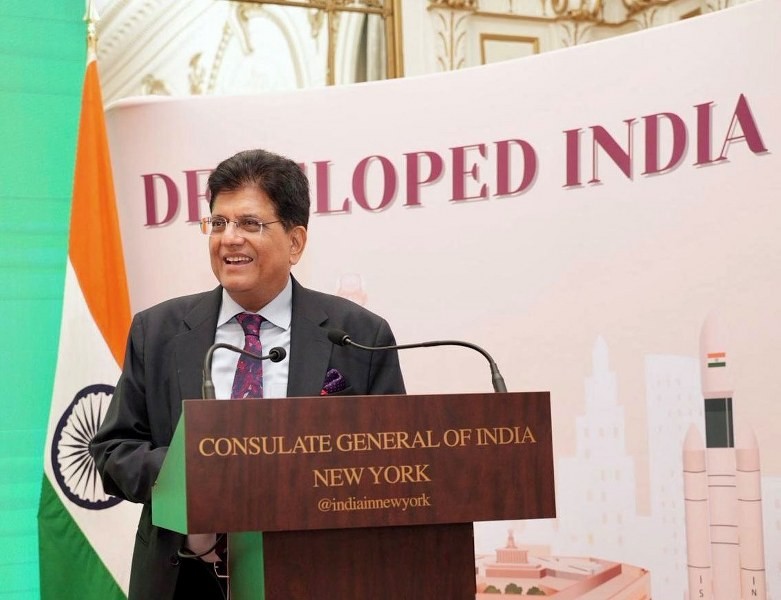
A delegation led by Commerce and Industry Minister Piyush Goyal visited the United States from September 22 to 24 for talks with officials, businesses and investors on boosting bilateral trade and investment.
According to an Indian government statement, the two sides discussed ways to achieve an “early conclusion” of a trade agreement. Goyal held meetings with U.S. Trade Representative Ambassador Jamieson Greer and U.S. Ambassador-designate to India Sergio Gor.
“The delegation had constructive meetings with the U.S. Government on various aspects of the deal. Both sides exchanged views on possible contours of the agreement and decided to continue engagements with a view to reaching an early conclusion of a mutually beneficial trade agreement,” the statement said.
The government added that meetings with U.S. business leaders evoked a positive response. “The business leaders reposed confidence in the India growth story and expressed their desire to intensify their business activities in India,” it noted.
Meanwhile, U.S. President Donald Trump on Thursday announced plans to impose tariffs of up to 100% on branded and patented pharmaceutical imports starting October 1, a move likely to hit Indian drugmakers.
In a post on Truth Social, Trump said: “Starting October 1, 2025, we will be imposing a 100% tariff on any branded or patented pharmaceutical product, unless a company is building its pharmaceutical manufacturing plant in America.” He clarified that “is building” would mean “breaking ground and/or under construction,” with exemptions if domestic production had begun.
Trump also unveiled new duties of 50% on kitchen cabinets and bathroom vanities, 30% on upholstered furniture, and 25% on heavy trucks, citing what he described as a “large-scale flooding” of imports.
The measures could deal a major blow to India’s pharmaceutical industry, which had largely escaped earlier tariff rounds. The U.S. remains a critical market for Indian companies, which supply more than 45% of generic drugs and about 15% of biosimilars used there, Forbes India reported.
Trade ties between Washington and New Delhi have already been strained after the Trump administration imposed 50% tariffs on a range of Indian exports.
Support Our Journalism
We cannot do without you.. your contribution supports unbiased journalism
IBNS is not driven by any ism- not wokeism, not racism, not skewed secularism, not hyper right-wing or left liberal ideals, nor by any hardline religious beliefs or hyper nationalism. We want to serve you good old objective news, as they are. We do not judge or preach. We let people decide for themselves. We only try to present factual and well-sourced news.
Support objective journalism for a small contribution.