 Turkmenistan
India sees opportunities to engage in Turkmenistan’s energy sector
Turkmenistan presents India with an opportunity to boost energy security, strengthen regional ties, and deepen its strategic influence in Central Asia.
Strengthening India's relationship with Turkmenistan can unlock new hydrocarbon reserves and counterbalance the influence of major players like China, enhancing India’s strategic reach in the region.
Home to the world's fourth-largest natural gas reserves, Turkmenistan is a crucial partner in meeting India’s growing energy demand.
Closer energy collaboration would benefit both nations: India could secure a long-term supply of natural gas, while Turkmenistan would gain a stable and reliable market for its energy exports.
As natural gas consumption rises in India, projects like the Turkmenistan-Afghanistan-Pakistan-India (TAPI) pipeline become essential for diversifying energy imports beyond traditional suppliers like Qatar.
Additionally, India could explore the potential for extending the TAPI pipeline to reach Uzbekistan and Tajikistan, further enhancing regional diplomatic and economic connections, diversifying gas use, and improving the overall security of energy supplies.
Turkmenistan's strategic location in the heart of Central Asia presents a crucial opportunity for India to access significant economic potential, diversify trade partnerships, reduce reliance on traditional routes, and mitigate geopolitical risks.
In 2023, Turkmenistan joined the International North-South Transport Corridor (INSTC) project. Russia, Kazakhstan, and Turkmenistan have committed to forming a joint venture aimed at developing the corridor.
This collaboration seeks to improve transportation services, shorten cargo delivery times, and streamline customs procedures through the use of standardized information systems, which the Kazakh ministry refers to as the "unified window."
This initiative aligns with Turkmenistan’s continued efforts to explore and develop oil and gas reserves on the Caspian Sea shelf.
Companies such as Eni, Dragon Oil, and Petronas are actively engaged in oil and gas extraction in designated areas of the Caspian Sea.
The development of offshore fields within Turkmenistan’s sector of the Caspian Sea presents attractive opportunities for investment in the country’s energy sector.
With a wealth of geological exploration data—including surface mapping, 2D and 3D survey results, seismic analysis, and identified promising sites—there is substantial potential for discovering significant hydrocarbon reserves.
India and Turkmenistan signed four significant agreements in April 2022, including those related to financial intelligence and disaster management.
This development occurred as India’s former President Ram Nath Kovind held discussions with his Turkmen counterpart, Serdar Berdimuhamedov, where both leaders committed to enhancing bilateral trade and energy cooperation to deepen their multifaceted partnership.
"We have agreed to intensify our efforts to further strengthen our comprehensive partnership. Economic collaboration is essential to our bilateral ties. We need to do more to expand trade, which has so far remained modest. Our business communities should increase their interactions, understand each other's regulatory environments, and identify new opportunities for trade and investment," President Kovind stated.
The two leaders underscored the importance of the International North-South Transport Corridor for trade connectivity.
President Kovind also highlighted the strategic value of the Chabahar port in Iran, developed by India, in facilitating trade with Central Asia.
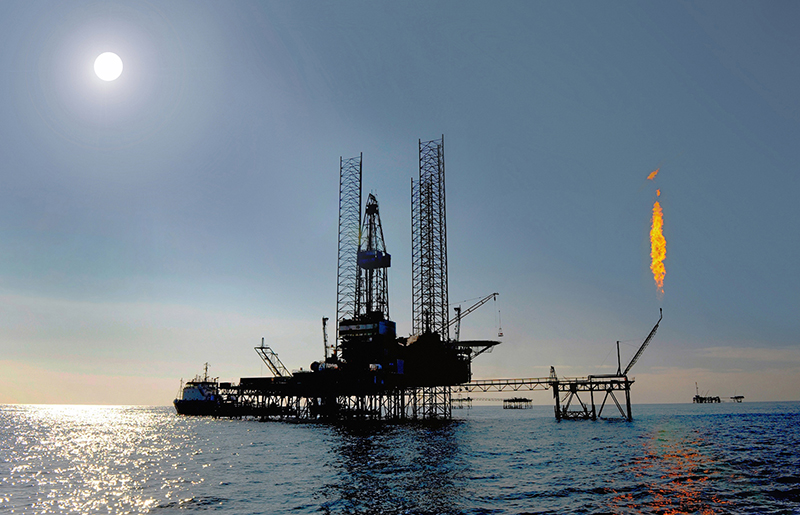
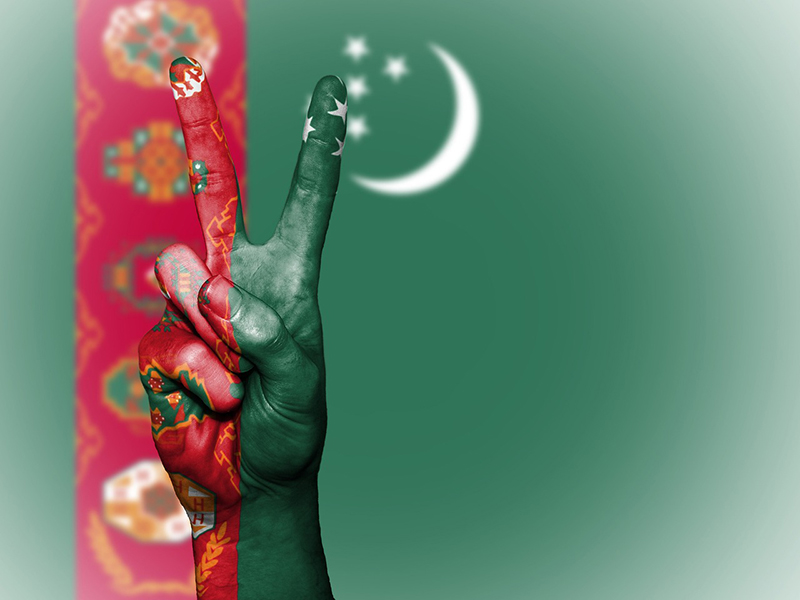 Turkmenistan is home to world's fourth-largest natural gas reserves. Photo Courtesy: Pixabay
"Energy cooperation was a central theme of our discussions. Regarding the Turkmenistan-Afghanistan-Pakistan-India (TAPI) gas pipeline, I suggested that security concerns and business principles should be addressed through technical and expert-level meetings," Kovind added.
The discussions also led to identifying new areas of collaboration, including disaster management and digitalization.
President Kovind expressed India's willingness to support Turkmenistan’s digital transformation and noted space technology as a promising sector for cooperation.
He also emphasized the rich historical and cultural ties between the two nations, suggesting that regular cultural exchanges be organized.
Both leaders stressed the importance of collaborating on managing the COVID-19 pandemic, which has impacted populations in both countries.
India's engagement with Turkmenistan presents a significant opportunity to strengthen its influence in Central Asia while promoting shared economic prosperity and regional stability.
Central to this evolving partnership are projects like the TAPI pipeline and investments in transportation infrastructure, which promise to enhance energy security and improve trade connectivity.
To fully harness the potential of this relationship, India must go beyond traditional energy sector cooperation and adopt a comprehensive strategy.
Key areas such as information technology and pharmaceuticals should be prioritized, along with establishing business councils to encourage Indian private investments in Turkmenistan.
Additionally, collaboration in fields like renewable energy and space technology could unlock new avenues for strategic involvement in Turkmenistan’s economy. This would also help foster meaningful people-to-people ties, strengthening cultural and economic understanding between the two countries.
Bilateral trade between India and Turkmenistan has been modest despite the huge potential. Although it was affected by Covid-19, following the opening up of transport links, there has been a surge in trade volumes. In 2023-24 bilateral trade stood at USD112.39 million.
Major items of India’s exports are pharmaceuticals, agricultural products, sugar, meat, electronic and electrical items, machinery, woven apparel and tyres.
Turkmen's exports to India largely comprise fertilizers, inorganic minerals, chemicals and dyes among others.
Support Our Journalism
We cannot do without you.. your contribution supports unbiased journalism
IBNS is not driven by any ism- not wokeism, not racism, not skewed secularism, not hyper right-wing or left liberal ideals, nor by any hardline religious beliefs or hyper nationalism. We want to serve you good old objective news, as they are. We do not judge or preach. We let people decide for themselves. We only try to present factual and well-sourced news.
Support objective journalism for a small contribution.