


 Mpox
Mpox
UNHCR warns refugees and displaced face heightened threat from mpox outbreak in African countries
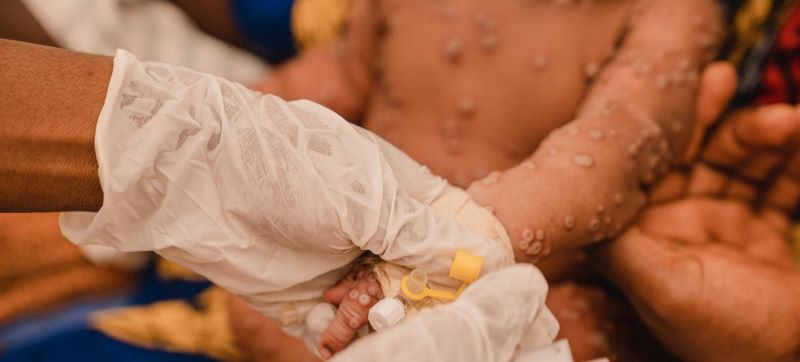
The UN refugee agency (UNHCR) warned on Tuesday that the mpox outbreak could have devastating effects on refugees and displaced families in the Democratic Republic of the Congo (DRC) and other affected African countries if urgent support is not forthcoming.
According to UNHCR, 42 suspected mpox cases have been detected in the South Kivu Province of the DRC – the war-ravaged central African country which is the epicentre of the outbreak.
There have been other suspected and confirmed cases among refugee populations in the Republic of the Congo and Rwanda.
Caseload grows
On 14 August, the chief of the World Health Organization (WHO) declared that the rise in mpox cases constitutes a public health emergency of international concern (PHEIC), with most cases so far being detected in the DRC.
Recent reports from WHO indicate that there are currently more than 18,000 suspected mpox cases and 615 confirmed deaths there and over 220 recorded cases of the new mpox strain Clade 1b in neighbouring countries.
UNHCR noted that there are also suspected cases in “conflict-impacted provinces” which host DRC´s 7.3 million internally displaced people.
“In these areas, the virus threatens to exacerbate an already impossible situation for a population devastated by decades of conflict, forced displacement, appalling human rights abuses and a lack of international assistance,” UNHCR said.
‘No space to isolate’
The refugee agency said members in displaced communities fleeing violence have a “tremendous challenge” implementing mpox prevention measures due to being in overcrowded shelters and having limited access to essential services and humanitarian assistance.
“Displaced families living in crowded schools, churches and tents in farmers’ fields have no space to isolate when they develop symptoms of the disease,” UNHCR said.
Further, displaced community members in unstable zones of the eastern DRC experience difficulty accessing laboratories for mpox testing.
Agencies respond
WHO, UNHCR, and their partners, in coordination with national health authorities, have strengthened health system preparedness and response measures in refugee camps, including reinforcing handwashing stations in public spaces and transit centres.
Where cases have been confirmed or suspected, initiatives are underway on a national level to increase awareness and offer correct information in the languages spoken by displaced groups.
However, the extent of the outbreak has resulted in a shortage of community health workers who can meet the rising demand, UNHCR says.
The refugee agency stresses the importance of fully including refugees and displaced people in national preparedness and response efforts for this public health emergency, from monitoring to medical care.
“International solidarity is urgently needed to expand health services, isolation centres, humanitarian shelters, access to water and soap for those forced to flee,” UNHCR said. “In conflict zones, peace is also desperately needed, to ensure a sustainable response to stop the spread of the disease.”
Support Our Journalism
We cannot do without you.. your contribution supports unbiased journalism
IBNS is not driven by any ism- not wokeism, not racism, not skewed secularism, not hyper right-wing or left liberal ideals, nor by any hardline religious beliefs or hyper nationalism. We want to serve you good old objective news, as they are. We do not judge or preach. We let people decide for themselves. We only try to present factual and well-sourced news.
Support objective journalism for a small contribution.


