


 Measles
UN alerts: Global measles cases surge as 30 million children miss vaccines
Measles deaths have dropped by 88 per cent since 2000 – yet an estimated 95,000 people, mostly children, still died from the virus last year, the UN World Health Organisation (WHO) warned on Friday.
Officials said global outbreaks are accelerating as millions of children remain under-immunized following years of COVID-19 pandemic-related disruption.
“Measles remains one of the most contagious respiratory viruses,” said Dr. Kate O’Brien, WHO’s Director of Immunization, Vaccines and Biologicals.
“One person can infect up to 18 others. Many people think measles is not serious – but it is, and it can be deadly. One in five infected children ends up in the hospital.”
Last year, around 11 million people worldwide were infected, nearly 800,000 more than in the pre-pandemic period. Most of the deaths occurred in children under five, with about 80 per cent in Africa and the Eastern Mediterranean.
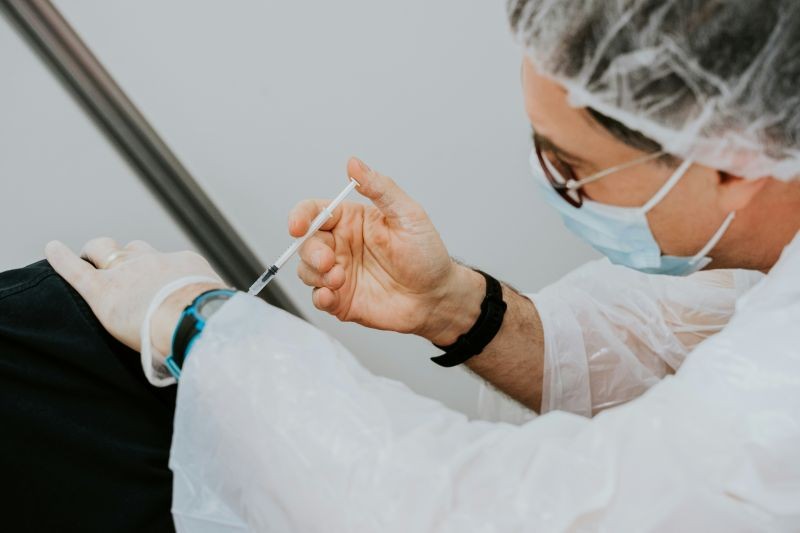
“But no child needs to suffer the consequences of measles,” Dr. O’Brien stressed. “Two doses of vaccine provide 95 per cent protection. The tragedy is that children are unprotected because the system is not reaching them.”
Outbreaks tripled since 2021
Measles outbreaks continue to rise sharply. In 2024, 59 countries experienced large or disruptive outbreaks – almost three times as many as in 2021 – and a quarter of them had previously eliminated measles.
Only 84 per cent of children globally received their first dose of measles vaccine last year, but just 76 per cent received the crucial second dose – leaving as many as 30 million children under-protected. Three-quarters of them were in Africa and the Eastern Mediterranean, many in conflict-affected or highly mobile communities.
“Measles respects no borders,” said Diana Chang-Blanc, Head of WHO’s Essential Programme on Immunization. “A country is only protected when every child, everywhere is fully immunized.”
Why cases are rising
According to WHO, three factors are driving the surge:
Pandemic-era backsliding, ashealth workers were diverted to COVID-19 response
Large numbers of zero-dose children, now concentrated in fragile and conflict settings
Vaccine misinformation and limited access
Dr. O’Brien also addressed vaccine misinformation, stating that false claims – especially online – undermine trust, but noted that access gaps, not hesitancy, remain the biggest barrier to stopping measles.
“The biggest barrier is access, not hesitancy,” she said. “Parents everywhere want the best for their children. What they need is reliable information and a health system that can reach them.”
Still, she called for political, community and religious leaders to “share accurate, evidence-based information,” noting that trust is “the beginning, middle and end of successful vaccination programmes.”
A chance to course-correct
More than 11 million children have already been vaccinated through the global “Big Catch-Up” campaign, which continues through 2025.
But WHO said countries need stronger surveillance, faster outbreak response and renewed political commitment to meet the Immunization Agenda 2030 targets.
Support Our Journalism
We cannot do without you.. your contribution supports unbiased journalism
IBNS is not driven by any ism- not wokeism, not racism, not skewed secularism, not hyper right-wing or left liberal ideals, nor by any hardline religious beliefs or hyper nationalism. We want to serve you good old objective news, as they are. We do not judge or preach. We let people decide for themselves. We only try to present factual and well-sourced news.
Support objective journalism for a small contribution.


