


 ISRO
ISRO
Satellite imagery shows significant expansion in 27% identified glacial lakes in Himalayas: ISRO
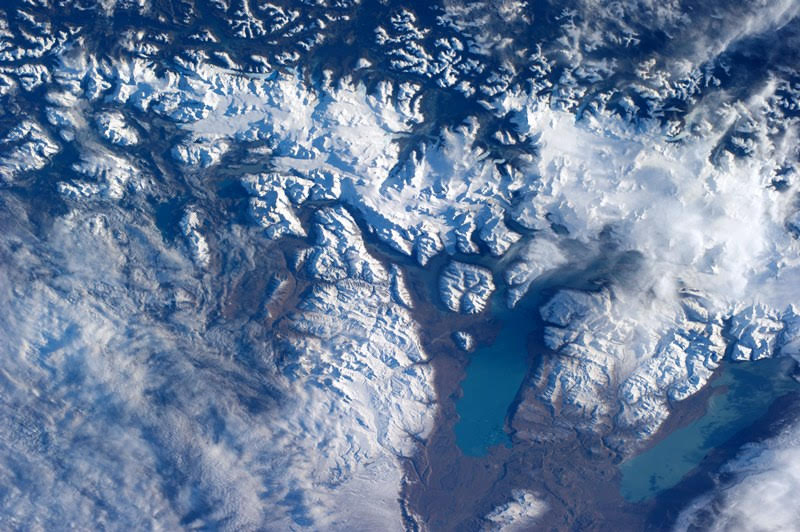
New Delhi/IBNS: The Indian Space Research Organisation (ISRO) on Monday (Apr 22) said that the satellite monitoring has shown major expansion in glacial lakes in the Himalayas, especially in India.
The Indian space agency stated in its satellite insights that the Himalayan Mountains, often referred to as the Third Pole because of their extensive glaciers and snow cover, are highly sensitive to changes in the global climate, both in terms of their physical characteristics and their societal impacts.
According to ISRO, satellite data archives spanning the past three to four decades provide valuable insights into changes occurring in glaciated environments, and long-term satellite imagery covering the catchments of Indian Himalayan river basins from 1984 to 2023 indicates significant changes in glacial lakes.
Of the 2,431 lakes larger than 10 hectares identified during 2016-17, 676 glacial lakes have notably expanded since 1984, and especifically, 130 of these lakes are situated within India, with 65, 7, and 58 lakes located in the Indus, Ganga, and Brahmaputra River basins, respectively, as per ISRO's satellite insights.
Of these 676 lakes, 601 (about 89 percent) have expanded more than twice, 10 lakes have grown between 1.5 to 2 times, and remaining 65 lakes expanded 1.5 times, according to ISRO.
ISRO says among the 676 expanding lakes, the majority of them are Moraine-dammed (307) followed by Erosion (265), other (96), and Ice-dammed (8) glacial lakes, respectively.
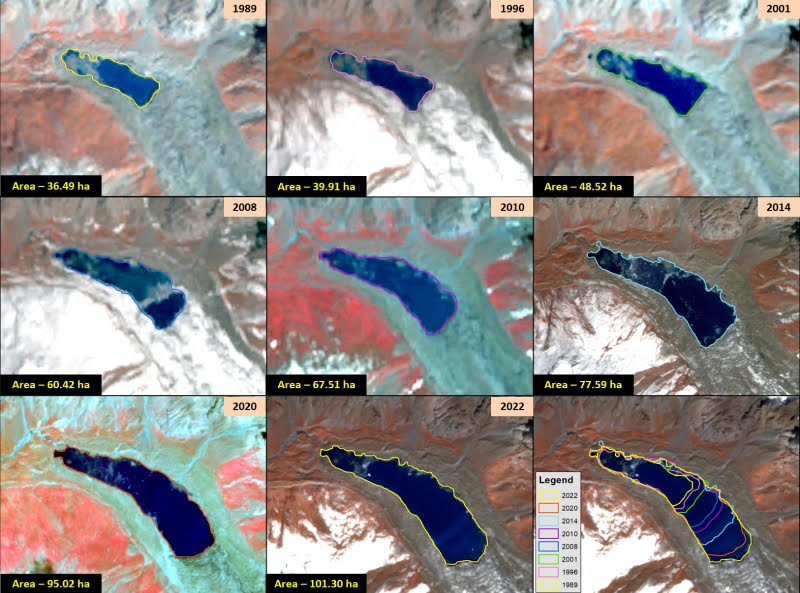 Image courtesy: ISRO
It added that long-term changes in the Ghepang Ghat glacial lake (Indus River Basin) at an elevation of 4,068 m in India's Himachal Pradesh show a 178 percent increase in size from 36.49 to 101.30 hectares between 1989 and 2022.
The rate of increase is about 1.96 hectares per year, as per analysis.
The ISRO also warned that glacial lakes, which play a crucial role as freshwater sources for rivers in the Himalayan region, also pose significant risks, such as Glacial Lake Outburst Floods (GLOFs), which can have devastating consequences for communities downstream.
GLOFs occur when glacial lakes release large volumes of meltwater due to the failure of natural dams, such as those made of moraine or ice, resulting in sudden and severe flooding downstream, according to ISRO.
Support Our Journalism
We cannot do without you.. your contribution supports unbiased journalism
IBNS is not driven by any ism- not wokeism, not racism, not skewed secularism, not hyper right-wing or left liberal ideals, nor by any hardline religious beliefs or hyper nationalism. We want to serve you good old objective news, as they are. We do not judge or preach. We let people decide for themselves. We only try to present factual and well-sourced news.
Support objective journalism for a small contribution.


