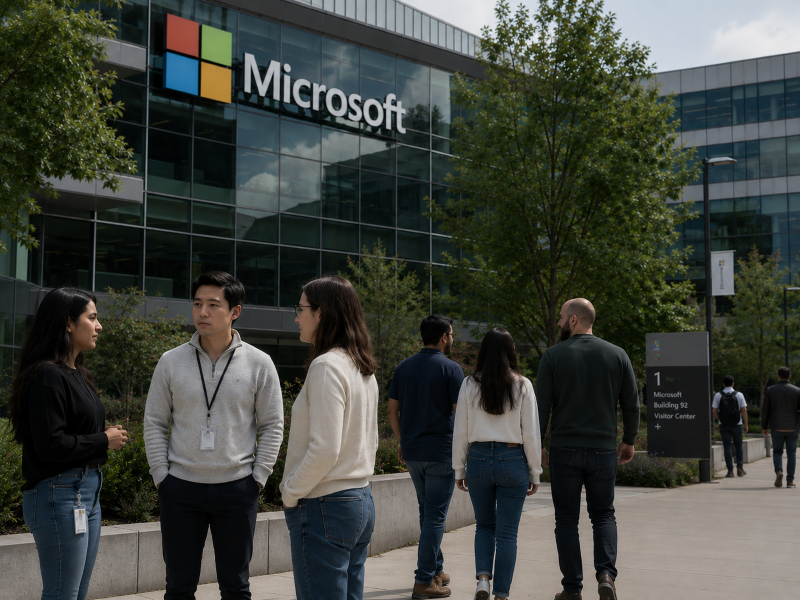
Microsoft to cut nearly 4,800 jobs as AI spending soars, focus shifts to efficiency
Microsoft is laying off about 4,800 employees, or roughly 2.1 per cent of its global workforce, as the tech giant doubles down on artificial intelligence (AI) investments while looking to streamline operations and improve efficiency, according to Reuters.
The latest round of job cuts comes as major technology companies continue to reshape their businesses to accommodate the massive costs associated with AI infrastructure.
Amazon and Meta have also announced thousands of layoffs this year amid similar restructuring efforts.
The announcement follows a difficult first half of 2026 for Microsoft, with the company's shares declining nearly 23 per cent—their worst first-half performance since 2022.
Fresh layoffs follow earlier workforce reduction
The latest job cuts come just months after Microsoft offered voluntary buyouts to around 9,000 employees in the United States, representing nearly 7 per cent of its domestic workforce, Reuters reported.
The company has traditionally adjusted its workforce at the close of its fiscal year in June as it finalises spending plans and priorities for the new financial year.
AI investments drive cost pressures
Microsoft's restructuring comes as the technology industry ramps up spending on artificial intelligence.
Big Tech companies are expected to collectively invest more than $700 billion in AI this year, increasing pressure on firms to demonstrate returns on those investments.
The company has benefited from booming demand for its Azure cloud platform, which until April was the exclusive provider of OpenAI's models.
However, the enormous expense of building and expanding data centres needed to support AI services has weighed heavily on Microsoft's cash flow.
Earlier this year, Microsoft projected capital spending of about $190 billion for 2026—far exceeding analysts' expectations—while forecasting Azure revenue that was stronger than Wall Street estimates.
Software and gaming businesses face new challenges
Alongside rising infrastructure costs, Microsoft is also facing competitive pressures as AI-powered tools increasingly automate routine business tasks, posing a challenge to parts of its traditional software business.
The company has also been hit by soaring memory chip prices, driven by surging demand from AI data centres.
The higher component costs prompted Microsoft to increase Xbox console prices at a time when consumer demand for the gaming hardware was already slowing.
Results due later this month
Microsoft is expected to report its quarterly financial results later this month, with investors likely to focus on whether its heavy AI investments are translating into stronger revenue growth and improved profitability despite the rising costs.
Support Our Journalism
We cannot do without you.. your contribution supports unbiased journalism
IBNS is not driven by any ism- not wokeism, not racism, not skewed secularism, not hyper right-wing or left liberal ideals, nor by any hardline religious beliefs or hyper nationalism. We want to serve you good old objective news, as they are. We do not judge or preach. We let people decide for themselves. We only try to present factual and well-sourced news.
Support objective journalism for a small contribution.