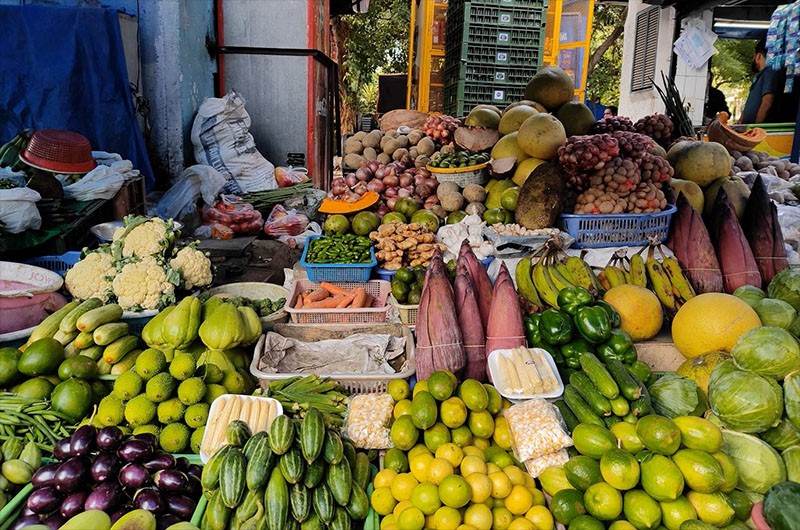
India’s per capita fruits and vegetables availability rises, but challenges persist: SBI report
New Delhi: Per capita availability of fruits and vegetables in India has increased by 7 kg and 12 kg, respectively, over the past decade, according to a State Bank of India (SBI) report.
States such as Madhya Pradesh, Uttar Pradesh, Punjab, and Jammu & Kashmir have shown significant growth in production. However, many northeastern states have witnessed a decline in per capita production, highlighting regional disparities.
Production exceeds dietary recommendations but losses persist
India’s annual per capita production of fruits and vegetables stands at approximately 227 kg, well above the recommended 146 kg per person. Despite this surplus, inefficiencies in harvesting, storage, transport, and packaging lead to 30-35% of these perishable goods going to waste, negatively impacting their consumption.
Impact of extreme weather on agriculture
Extreme weather events like heatwaves and cold snaps are taking a toll on agricultural production. The Indian Council for Agricultural Research (ICAR) noted that a 1°C rise in temperature above 30°C during the grain-filling stage reduces wheat yields by 3-4%.
Inflation trends and food price dynamics
Retail inflation in India eased to 5.48% in November 2024, down from over 6% in October. A sharp decline in vegetable prices contributed significantly, with inflation in this category dropping from 42.2% in October to 29.3% in November.
While vegetable prices provided relief, protein inflation increased slightly, driving core inflation higher.
The report projects food-driven inflation to average 4.8% for the fiscal year 2025, with a possibility of further upward pressure despite easing fuel prices.
Disparities in food inflation decline among states
Inflation across Indian states is converging toward the Reserve Bank of India’s target of 4%. Middle- and high-income states have seen a faster decline in food inflation over the last decade compared to low-income states.
This trend is attributed to labor migration, as workers from low-income states move to higher-income regions for better job prospects, accelerating disinflation in the latter.
Minimal impact of wage growth on food inflation
The report also highlights that increases in wages for non-agricultural laborers have had little impact on food inflation. Data reveals minimal correlation between rural inflation and average daily wage rates, suggesting wage hikes are not a major contributor to rising food prices.
While the availability of fruits and vegetables has improved, inefficiencies in the agricultural supply chain, coupled with extreme weather, continue to pose significant challenges. Inflation trends indicate some relief, but structural reforms are necessary to reduce wastage and ensure equitable benefits across regions.
Support Our Journalism
We cannot do without you.. your contribution supports unbiased journalism
IBNS is not driven by any ism- not wokeism, not racism, not skewed secularism, not hyper right-wing or left liberal ideals, nor by any hardline religious beliefs or hyper nationalism. We want to serve you good old objective news, as they are. We do not judge or preach. We let people decide for themselves. We only try to present factual and well-sourced news.
Support objective journalism for a small contribution.