The House on Harish Mukherjee Road: A Symbol Falls
For over a decade, the stretch of Harish Mukherjee Road in south Kolkata existed in a kind of enforced silence. Residents who lived there knew the ritual well — the pre-dawn route sanitisations, the plainclothes police fanning out before a convoy passed, and the barricades that turned a public road into a private corridor.
The house at 188A, named "Shantiniketan" with an irony that locals never missed, belonged to Abhishek Banerjee — nephew of Mamata Banerjee, TMC's national general secretary, and the man who fancied himself the party's senapati. It was, for years, less a home than a fortress. A neighbour once muttered what many felt: "This was not Shantiniketan. It was Ashantiniketan."
Now the barricades are gone. The bomb disposal squad kiosk sits empty. And the people of Kolkata have arrived — not with flowers.
Crowds have gathered outside the gates, chanting "Chor! Chor!" — thieves, thieves — in the unmistakable cadence of Bengali outrage that needs no microphone to carry.
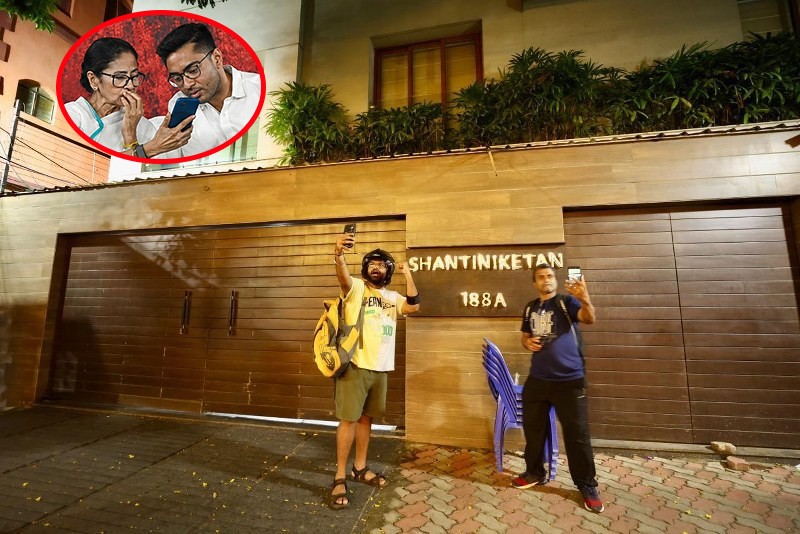
Students and locals click selfies at the gates, a ritual of reclamation that would have been unthinkable a fortnight ago. Impromptu journalists and random content creators with smartphones interview neighbourhood residents who, for years, could not cross the road freely in front of their own homes. Now they speak — volubly, bitterly, and with the particular satisfaction of those who have waited a very long time.
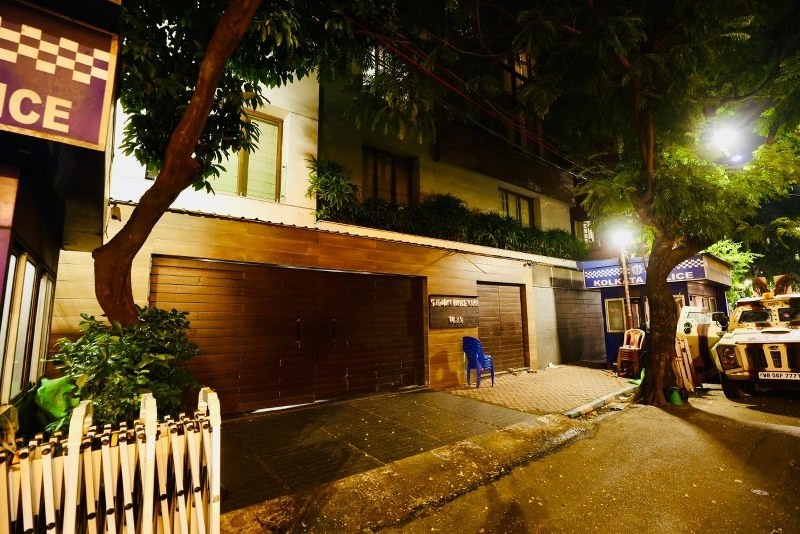 Security presence outside Abhishek Banerjee’s ‘Shantiniketan’ residence in Kolkata was reduced two days after his party suffered poll defeat. Photo: Avishek Mitra/IBNS
The Bhaipo (nephew) Who Became Senapati
Abhishek Banerjee's trajectory is the story of a dynasty that Bengal never voted for directly. Born into the inner circle of the Banerjee family, he entered politics through the YUVA — the TMC youth wing — and was handed the Diamond Harbour Lok Sabha seat, which he converted into an unassailable fiefdom. For a leader who recast himself from a derided "bhaipo" — nephew — to the party's self-styled senapati, the fall from the 2026 election is stark and personal.
His rise was never quite accepted as organic. He was seen as thrust upon the party by Mamata rather than earning his place through the grinding work of political legitimacy.
He sued opponents, threatened journalists, called rivals "empty balloons," and in the run-up to the 2026 polls issued blustering challenges to the BJP — the kind of pre-match arrogance that Bengali voters, historically sardonic and unforgiving of hubris, quietly filed away for later.
If Mamata Banerjee was the face of the TMC's campaign, Abhishek was its architect — and so the defeat belongs to him in ways even his aunt cannot fully absorb.
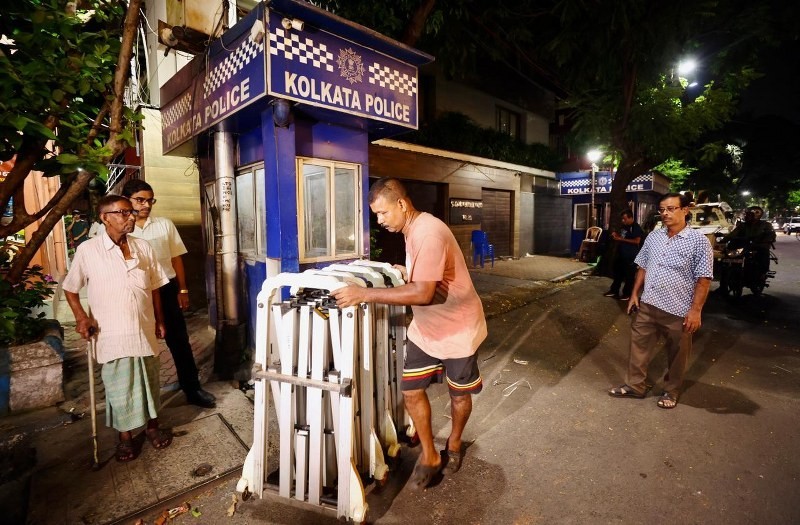 Security barricades were seen being removed following the election outcome.Photo: Avishek Mitra/IBNS
The House and Its Legends
The house itself became, over the years, a vessel for every rumour that power inspires. Escalators inside a residential home. Golden taps. Imported marble. The specifics may be apocryphal, but the psyche behind them is entirely real. In a city where the middle class still debates whether to install an air conditioner, the optics of conspicuous insulation — from scrutiny, from traffic, from the common footpath — were corrosive.
The crowds gleefully recall his wife Ruchira being stopped cold at Netaji Subhash Chandra Bose International Airport, unable to board a Dubai-bound flight amid the coal scam investigations. And then there is the other story they retell with relish — the alleged recovery of undocumented gold from a bag belonging to Rujira, an episode that lodged itself deep in Kolkata's collective memory as shorthand for everything the TMC's first family was rumoured to be.
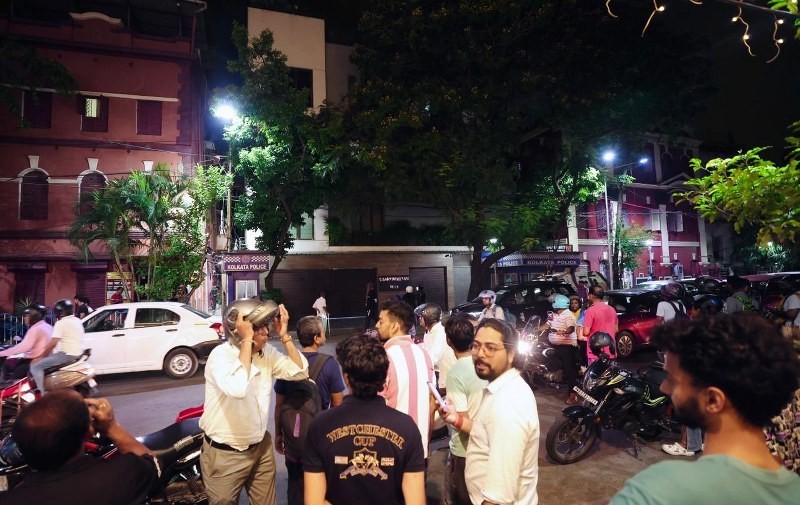 People gathered outside Abhishek Banerjee's ‘Shantiniketan’ residence and booed the TMC leader. Avishek Mitra/IBNS
History's Recurring Address
There is a pattern to moments like this, familiar from Bucharest to Baghdad — the dictator's residence, once unreachable, suddenly, shockingly accessible. People do not simply want justice in these moments. They want to stand there, to confirm with their own bodies that the space is no longer forbidden. Residents say the road has finally become what it always should have been — just a road.
The heavy security blanket that blocked public access for years is gone. The senapati still has his personal Z+ protection. But the street is no longer his.
Kolkata, which has always expressed its politics in verse, procession, and pointed wit, has found its address for this season of reckoning.
"The chants of "Chor" on Harish Mukherjee Road are not simply an accusation. "They are a receipt—long overdue and delivered in person," says a resident of the famous Kolkata street.
(Sujoy Dhar is the Group Editor of IBNS and its affiliated platforms. )
Support Our Journalism
We cannot do without you.. your contribution supports unbiased journalism
IBNS is not driven by any ism- not wokeism, not racism, not skewed secularism, not hyper right-wing or left liberal ideals, nor by any hardline religious beliefs or hyper nationalism. We want to serve you good old objective news, as they are. We do not judge or preach. We let people decide for themselves. We only try to present factual and well-sourced news.
Support objective journalism for a small contribution.