 Passive Euthanasia
Supreme Court allows first-ever passive euthanasia for 32-year-old man in coma for 13 years
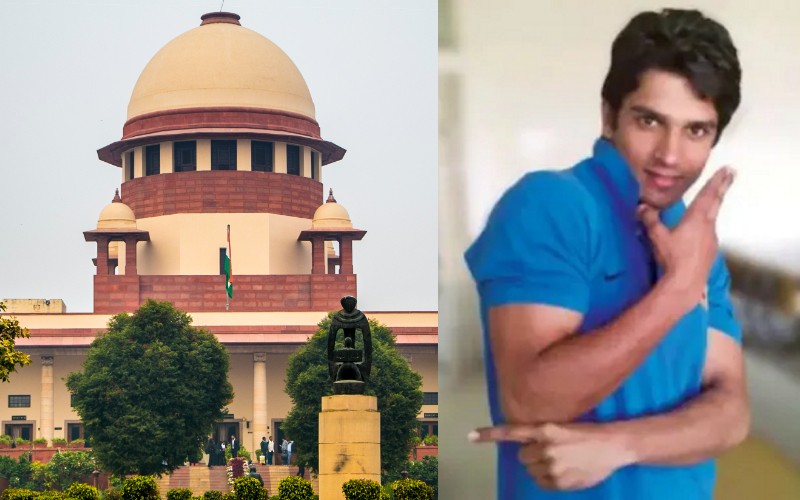
New Delhi/IBNS: In a landmark judgement, the Supreme Court of India on Wednesday permitted the withdrawal of life support for a 32-year-old man who has remained in a vegetative state for 13 years following an accident.
Acting on the plea of his parents, the court allowed the removal of life-sustaining treatment and simultaneously urged the Union government to consider enacting a comprehensive law governing passive euthanasia.
The judgment marks the first known instance in India where a court has directly authorised passive euthanasia, which means allowing a patient to die naturally by withholding or withdrawing medical treatment that sustains life.
A bench comprising Justice JB Pardiwala and Justice KV Viswanathan delivered the verdict, clarifying several aspects of a landmark 2018 ruling that recognised passive euthanasia as legally permissible under specific safeguards.
Tragic accident left student in coma
The case centres on Harish Rana, who was a student at Punjab University when the accident occurred in 2013.
Then only 19 years old, Rana reportedly fell from the fourth floor of a paying guest accommodation building, suffering severe brain injuries.
Although doctors initially stabilised him, the trauma left him in a persistent vegetative state.
Since the accident, Rana has remained bedridden and entirely dependent on medical support.
He requires a tracheostomy tube for breathing and a gastrojejunostomy tube for nutrition.
Medical reports presented to the court confirmed that Rana’s condition has shown no improvement over the past 13 years.
The judges noted that while he experiences sleep-wake cycles, he remains unresponsive and reliant on constant care.
Court reflects on ‘right to die’ debate
While delivering the ruling, the bench reflected on the complex moral and philosophical issues surrounding the right to die.
Justice Pardiwala cited the words of American minister Henry Ward Beecher: “Gods ask no man if he accepts life, you must take it.”
The judge also referenced the famous line from William Shakespeare’s play Hamlet — “To be or not to be” — noting that courts are often confronted with deeply difficult questions when determining whether an individual should be allowed to die with dignity.
The bench emphasised that decisions on withdrawing life support must satisfy two essential conditions. First, the intervention must qualify as a medical treatment. Second, discontinuing it must serve the best interests of the patient.
'Medical duty ends when recovery is impossible'
In its detailed observations, the court acknowledged that doctors carry a fundamental responsibility to preserve life and treat patients.
However, the judges noted that this obligation cannot continue indefinitely if medical evidence shows no possibility of recovery.
The bench observed that Rana had once been a bright young student with a promising future before the accident abruptly changed his life.
Medical reports submitted during the hearing confirmed that his condition has remained unchanged for more than a decade.
Given the circumstances, the court directed the All India Institute of Medical Sciences (AIIMS) to admit Rana into its palliative care facility.
The AIIMS will oversee the gradual withdrawal of life-sustaining treatment under strict medical supervision.
The court stressed that the process must follow a carefully designed plan to ensure that the patient’s dignity is preserved throughout.
Judges acknowledge family’s years of care
The judgment also recognised the unwavering care provided by Rana’s family, particularly his elderly parents.
For more than a decade, they remained by his side and looked after him despite immense emotional and physical challenges.
The bench observed that the family’s dedication reflected profound love and compassion.
According to the order, the court’s decision was shaped not only by legal reasoning but also by the human realities of life, suffering and loss.
The judges noted that cases involving end-of-life decisions rarely fit neatly into purely logical frameworks.
Legal background: Passive euthanasia in India
Passive euthanasia in India traces its legal origins to the landmark 2011 ruling in Aruna Shanbaug vs Union of India.
The case involved Aruna Shanbaug, a nurse who remained in a vegetative state for over four decades after a brutal sexual assault left her paralysed and caused severe brain damage.
While the Supreme Court refused permission to withdraw life support in Shanbaug’s case due to medical assessments suggesting she could continue living, the verdict established guidelines permitting passive euthanasia under exceptional circumstances.
The court later expanded these principles in a 2018 judgment, formally recognising the legality of passive euthanasia and the right of individuals to refuse life-sustaining treatment under carefully regulated procedures.
Call for clear legislation
During the latest ruling, the bench urged the central government to examine the possibility of enacting a dedicated law governing passive euthanasia in India.
Such legislation, the judges suggested, could provide clearer guidelines for families, doctors and courts dealing with similar cases.
The Harish Rana verdict now stands as a significant legal milestone in India’s ongoing debate over the right to die with dignity, highlighting the delicate balance between medical ethics, law and human compassion.
Support Our Journalism
We cannot do without you.. your contribution supports unbiased journalism
IBNS is not driven by any ism- not wokeism, not racism, not skewed secularism, not hyper right-wing or left liberal ideals, nor by any hardline religious beliefs or hyper nationalism. We want to serve you good old objective news, as they are. We do not judge or preach. We let people decide for themselves. We only try to present factual and well-sourced news.
Support objective journalism for a small contribution.