Rs 35,000 spent daily on Cheetah's meal at Kuno National Park? Political storm erupts over feeding cost
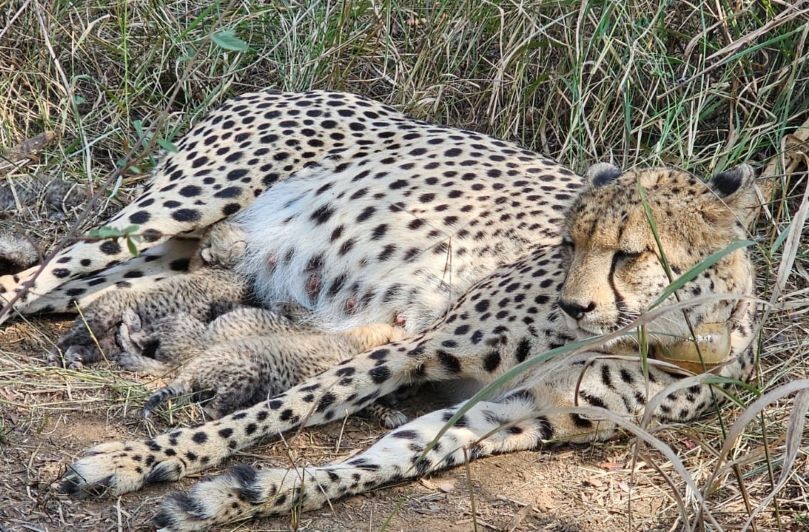
The ambitious Project Cheetah in Madhya Pradesh has sparked political uproar, with opposition leaders questioning the government about the daily expenditure of nearly Rs 35,000 on goat meat for the big cats at Kuno National Park.
The controversy surfaced during the Assembly Question Hour, when Congress MLA Mukesh Malhotra pressed for details about the costs and budget allocations under the state’s high-profile wildlife reintroduction programme.
In a written reply, Chief Minister Mohan Yadav confirmed that Rs 1.27 crore was spent on goat meat in 2024‑25, breaking down to approximately Rs 34,825 per day.
The CM also admitted there is no separate budget for cheetah food, with funds diverted from other heads “as required,” and no fixed standard for daily feeding — decisions are based on veterinary assessments and monitoring.
The figures have provided ammunition to opposition parties, who accuse the ruling government of mismanagement and extravagance. Questions raised include whether crores are being spent unnecessarily, the daily number of goats fed, and whether cheetahs or leopards have turned to preying on village livestock due to mismanagement.
“This is a case of public funds being spent without accountability,” Malhotra told reporters. “While wildlife protection is important, transparency is critical when crores of taxpayers’ money are involved.”
The government, however, defended its actions, stating that cheetahs are well-fed and closely monitored, and clarified that a leopard death on December 6, 2025, was caused by a road accident, not lack of food.
It also emphasized that occasional predation of livestock by leopards occurs naturally in open forests, and no officials were negligent.
Project Cheetah’s expanding footprint
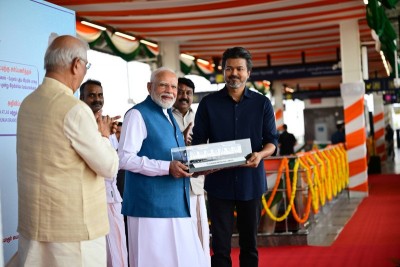
Kuno National Park became India’s first home to African cheetahs when Prime Minister Narendra Modi released eight cheetahs from Namibia on September 17, 2022.
Twelve more were added from South Africa in 2023, and eight more — two males and six females from Botswana — are scheduled to arrive on February 28, 2026.
The Gandhi Sagar Wildlife Sanctuary is now the second home for the cheetahs, currently hosting a South African male coalition and a female.
Despite the political uproar, the government maintains that a dedicated monitoring team ensures the welfare of the cheetahs, highlighting the scientific and conservation rationale behind the high expenditure.
Support Our Journalism
We cannot do without you.. your contribution supports unbiased journalism
IBNS is not driven by any ism- not wokeism, not racism, not skewed secularism, not hyper right-wing or left liberal ideals, nor by any hardline religious beliefs or hyper nationalism. We want to serve you good old objective news, as they are. We do not judge or preach. We let people decide for themselves. We only try to present factual and well-sourced news.
Support objective journalism for a small contribution.