Passport is a travel document, not conclusive proof of citizenship: MEA
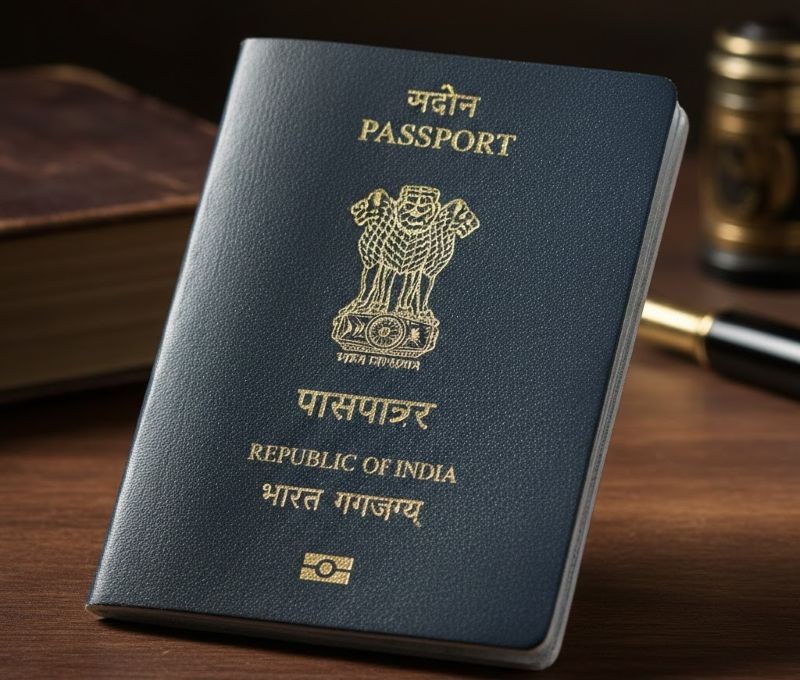
Amid ongoing public debate over the use of passports as proof of citizenship and eligibility for government benefits, the Ministry of External Affairs (MEA) has clarified that an Indian passport is primarily a travel document and should not be treated as conclusive proof of citizenship.
The clarification came during a detailed briefing on India's expanding passport ecosystem, where officials highlighted a series of reforms aimed at improving accessibility, security and international mobility for Indian citizens.
Passport meant for travel, says government
Officials stressed that while passports are issued only to Indian citizens, their primary purpose is to facilitate international travel and establish identity abroad.
The clarification assumes significance as questions continue to be raised over the role of various government-issued documents, including Aadhaar and voter identity cards, in establishing citizenship and eligibility for welfare schemes.
The MEA underlined that the passport's core function remains that of a travel document rather than a definitive instrument for determining citizenship status.
Faster services, wider reach
The government highlighted significant improvements in passport issuance services, with processing times in many cases reduced to as little as five working days.
According to officials, applicants now spend less than 45 minutes at Passport Seva Kendras (PSKs), thanks to digitisation and streamlined procedures.
India's passport infrastructure has expanded dramatically over the past decade. The network currently comprises 545 passport service centres across the country, representing a six-fold increase.
The government plans to open 20 additional Passport Seva Kendras this year and aims to ensure that every Lok Sabha constituency has access to a passport facility by 2027.
E-passports rolled out nationwide
A key milestone highlighted during the briefing was the nationwide rollout of chip-enabled e-passports.
Since May last year, all newly issued Indian passports have been embedded with secure electronic chips carrying biometric information and advanced security features compliant with standards set by the International Civil Aviation Organisation (ICAO).
Officials said the initiative would enhance document security, reduce fraud and improve the ease of international travel through faster verification at border checkpoints.
Only 10% of Indians hold passports
Despite the expansion of passport services, officials noted that passport penetration remains relatively low, with only about 10 per cent of India's population currently possessing a passport.
To address the gap, the government has deployed mobile passport teams to remote and difficult-to-access regions.
Special outreach camps conducted last year helped nearly 300,000 people in underserved areas obtain passports.
The MEA said expanding access to passports remains a priority as global mobility becomes increasingly important for education, employment and business opportunities.
Mobility agreements boost global opportunities
The government also highlighted India's growing international mobility partnerships.
India has signed 27 mobility agreements with 25 countries, including the European Union, the United Kingdom, Australia and several Gulf nations, to facilitate smoother movement of students, researchers, professionals, apprentices and business travellers.
Visa access for Indian passport holders has also improved, with 27 countries currently offering visa-free entry, while 47 countries provide visas on arrival and 66 nations extend e-visa facilities.
Focus on safe overseas employment
Officials said the upgraded eMigrate 2.0 platform has streamlined emigration clearance procedures for Indian workers seeking jobs abroad.
Since its launch in October 2022, nearly 700,000 Indian workers have obtained emigration clearance through the portal.
The government has also strengthened worker welfare initiatives, including pre-departure orientation programmes offering country-specific cultural training and job-related skills.
One-stop support centres providing legal assistance and psychological counselling for distressed Indian women have been established in Gulf countries and Singapore.
India is also set to host a Human Resource Mobility Forum next week involving Germany, Italy, Japan, Russia and Denmark to connect skilled Indian workers with ethical employers overseas.
Officials said the broader goal is to transform the passport from a document held by a limited section of society into an accessible travel credential for millions more Indians while ensuring safe and orderly international migration.
Support Our Journalism
We cannot do without you.. your contribution supports unbiased journalism
IBNS is not driven by any ism- not wokeism, not racism, not skewed secularism, not hyper right-wing or left liberal ideals, nor by any hardline religious beliefs or hyper nationalism. We want to serve you good old objective news, as they are. We do not judge or preach. We let people decide for themselves. We only try to present factual and well-sourced news.
Support objective journalism for a small contribution.