Pakistan’s cross-border attacks risk derailing crucial IMF bailout
New Delhi: Pakistan’s recent targeting of Indian military and civilian locations may prove more damaging to itself than to India, particularly given the timing. Islamabad is clinging to financial lifelines in the form of loans and aid, with the International Monetary Fund (IMF) scheduled to review its $7-billion bailout programme on May 9, media reports said.
Any military escalation could weigh heavily on that assessment, as such instability is generally viewed unfavourably by global lenders, even for an already struggling economy, according to an India Today report.
Despite its collapsing financial health and public suffering, Pakistan continues to channel energy into its most persistent export—terrorism.
For years, its economy has been mired in crisis, brought on by a chronic trade imbalance, weak tax collections, and mounting public debt.
Defence spending remains disproportionately high due to Pakistan’s fixation on India, worsening the fiscal burden.
Ordinary citizens face the brunt of this mismanagement, battling soaring unemployment, inflation, and stagnating growth. Disillusioned youth, particularly professionals, are leaving the country in droves.
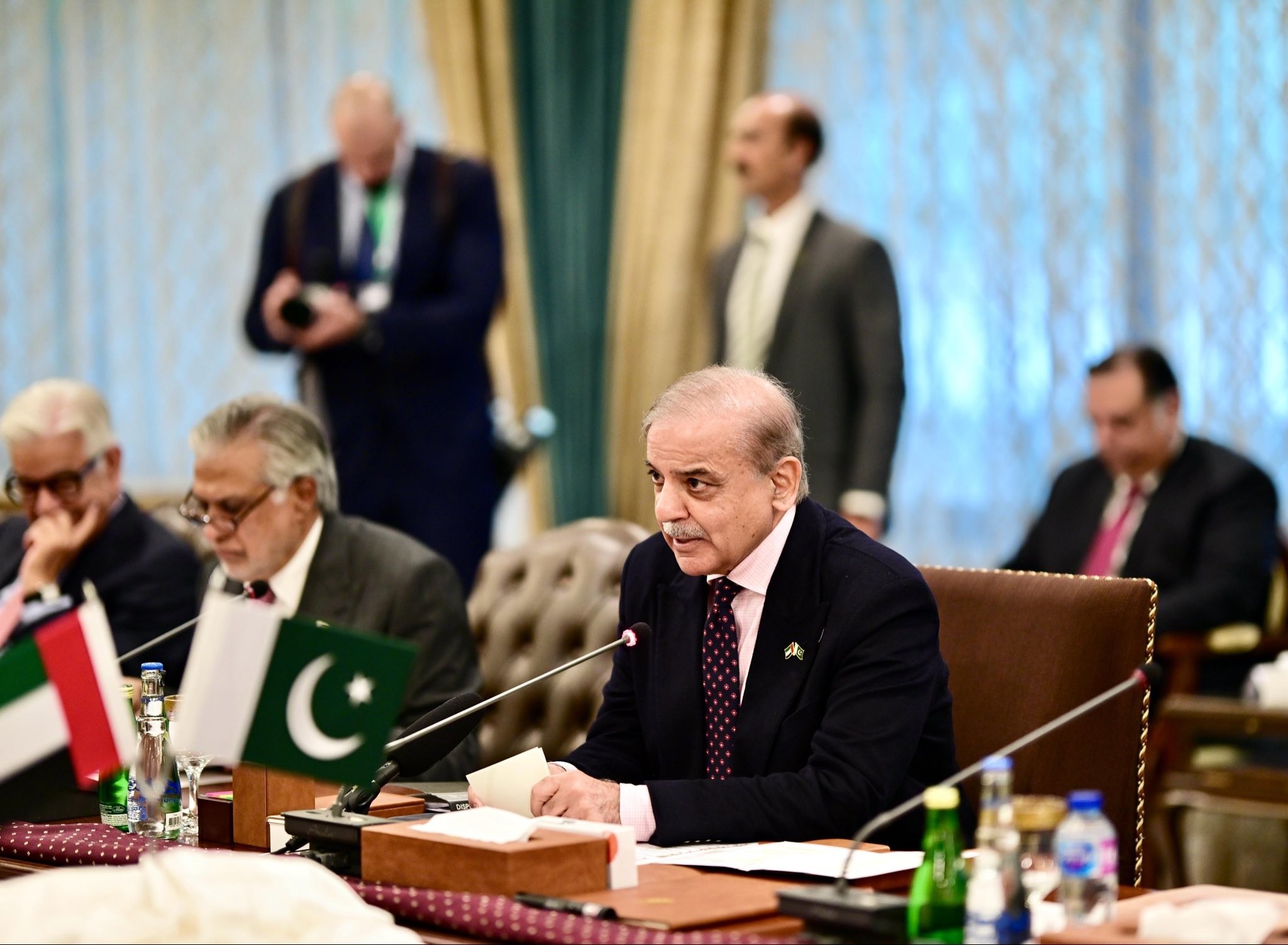
Globally, Pakistan’s duplicity has not gone unnoticed. The U.S. Secretary of State has pressed Prime Minister Shehbaz Sharif to take “concrete steps” to curb support for terror outfits.
India, meanwhile, has emphasised that under Operation Sindoor, it only struck terror camps located within Pakistan and Pakistan-Occupied Kashmir (POK), refraining from hitting military infrastructure or causing civilian harm by employing precision-guided munitions.
Pakistan, however, escalated the confrontation by launching drone and missile strikes on both military and civilian targets, all of which were thwarted by India.
In the last fortnight, intense shelling by Pakistan along the Line of Control and the International Border has resulted in 18 Indian fatalities and over 50 injuries.
Speaking on the eve of the IMF’s review in Washington, India’s Deputy National Security Advisor Vikram Misri addressed Pakistan’s recent provocations.
“We have an executive director at the IMF. Tomorrow [May 9] there is a meeting of the board of the IMF, and I am sure that our Executive Director will put forward India’s position,” Misri said.
“I think the case with regard to Pakistan should be self-evident to those people who generously open their pockets to bail out this country...,” he added.
Global creditors, after all, are primarily concerned about the security of their loans—and Pakistan increasingly appears to be an untrustworthy recipient.
Islamabad was anticipating an immediate disbursement of $2 billion following the IMF’s review.
But by intensifying hostilities with India and targeting non-combat zones, it may have inflicted a self-sabotaging blow.
Even if it secures the current tranche, Pakistan’s military belligerence could scare off future lenders.
Support Our Journalism
We cannot do without you.. your contribution supports unbiased journalism
IBNS is not driven by any ism- not wokeism, not racism, not skewed secularism, not hyper right-wing or left liberal ideals, nor by any hardline religious beliefs or hyper nationalism. We want to serve you good old objective news, as they are. We do not judge or preach. We let people decide for themselves. We only try to present factual and well-sourced news.
Support objective journalism for a small contribution.