Pakistan activated spies, sleeper cells to locate India's S-400 during Op Sindoor: Ex-Air Marshal
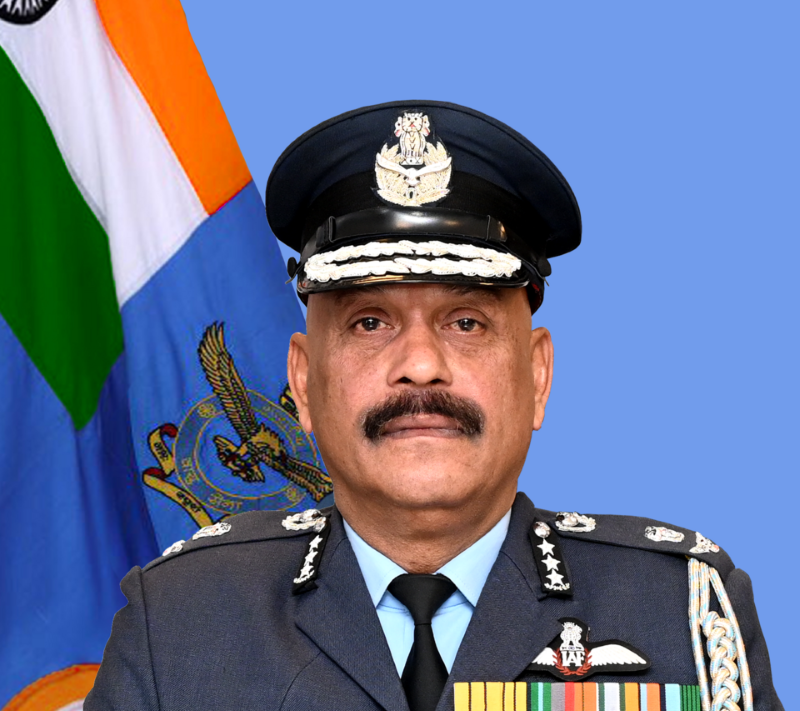
Pakistan was so desperate to locate India's S-400 air defence systems during the May 2025 hostilities that it activated spies and sleeper cells inside India, according to Air Marshal (retd) Jeetendra Mishra, who headed the Indian Air Force's Western Air Command during Operation Sindoor.
In an interview with ANI, Mishra said the Russian-made S-400 systems emerged as Pakistan's biggest challenge during the conflict, forcing its military to use multiple means to track their locations.
"Pakistanis were desperate to find where these S-400s were. They used every available means. They were also getting satellite help from other nations," Mishra said.
He added that Pakistan also activated "spies and sleeper cells" in India in an effort to identify the locations of the air defence systems.
S-400 kept Pakistani jets at bay
Mishra said the presence of the S-400 significantly constrained Pakistan's air operations, with its fighter aircraft unable to approach within 200 km of the Indian border.
"Every time they got airborne, they were shot by an S-400," he said, describing the system as the "biggest threat" for Pakistan during the operation.
India had acquired the S-400 from Russia under a 2018 agreement covering five systems. Three systems had been delivered and inducted into the IAF, while a fourth squadron was received in June this year.
S-400 shot down AWACS at 314 Km
Mishra said the IAF first targeted Pakistan's ground-based radars and command-and-control infrastructure, severely affecting its ability to coordinate air operations.
"We destroyed all their radars, including American AN/TPS series ones in Punjab. We also got two of their command and control centres. So, they were blinded," he said.
With its ground-based radar network damaged, Pakistan increasingly relied on airborne early warning and control aircraft, or AWACS, for surveillance.
Mishra said an AWACS aircraft operating from Sargodha was detected by an S-400. The system's operator sought permission to engage it, which was granted.
"When he shot, we got it at 314 km," Mishra said, describing it as the longest surface-to-air kill in military history.
According to Mishra, the strike fundamentally altered the balance of the conflict, leaving India with greater freedom to conduct operations while limiting Pakistan's ability to respond.
India had 'Operational Freedom'
Mishra also said the armed forces were given operational freedom during Operation Sindoor, while the government directed them to avoid civilian casualties.
"The direction was there should be no collateral. We don't want common citizens to be affected. Only terrorists and their handlers are to be punished. We are not a war-mongering state," he said.
"There was not a single restriction. It was left to the military to decide how to fight the war," he added.
India launched Operation Sindoor following the Pahalgam terror attack, which killed 25 tourists.
The IAF struck nine terror targets, including facilities linked to Jaish-e-Mohammed and Lashkar-e-Taiba, on May 7.
Pakistan escalated after initial strikes
Mishra said the conflict could have ended after India's initial strikes, but Pakistan chose to escalate.
Pakistan first launched 14-15 drones targeting the Adampur air station, all of which were neutralised, he said. On May 9, however, Pakistan launched hundreds of drones and missiles.
One long-range, GPS-guided drone struck a hospital at an air force station and a nearby civilian office, Mishra said. One airman was killed and another person suffered injuries that resulted in the amputation of his arm.
He also alleged that Pakistani forces attempted to target civilian areas and places of worship, including gurdwaras, prompting India to retaliate.
India struck 11 Pakistani military stations
On May 10, India struck 11 Pakistani military installations, including the Nur Khan and Bholari airbases, according to Mishra.
Pakistan subsequently sought a ceasefire, bringing three days of intense hostilities to an end.
Mishra, who was awarded the Sarvottam Yudh Seva Medal, also revealed that women fighter pilots played a significant role in the operation.
He said women pilots flew multiple combat missions, including strikes on Lashkar-e-Taiba's Muridke headquarters, before returning to conduct further operations against Pakistani airbases and command-and-control centres on May 10.
Support Our Journalism
We cannot do without you.. your contribution supports unbiased journalism
IBNS is not driven by any ism- not wokeism, not racism, not skewed secularism, not hyper right-wing or left liberal ideals, nor by any hardline religious beliefs or hyper nationalism. We want to serve you good old objective news, as they are. We do not judge or preach. We let people decide for themselves. We only try to present factual and well-sourced news.
Support objective journalism for a small contribution.