 Kerala Story 2
‘My life reflects this reality’: Shooter Tara Shahdeo recalls forced conversion amid Kerala Story 2 row
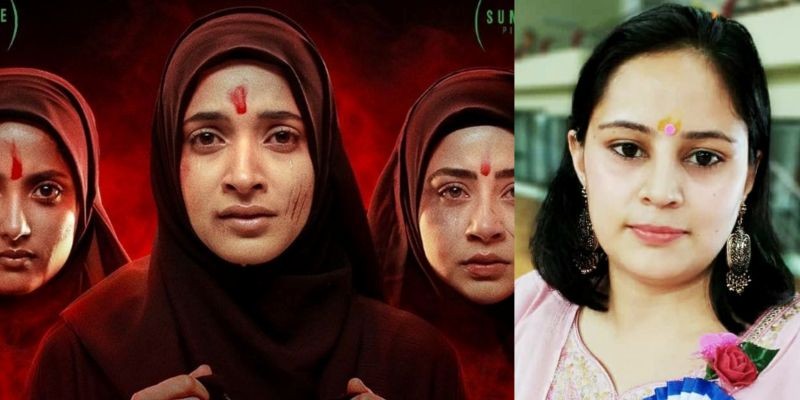
New Delhi/IBNS: Amid the controversy surrounding The Kerala Story: Goes Beyond, national-level shooter Tara Shahdeo has shared her personal experience, saying it resonates with the theme explored in the film.
Speaking about her marriage in 2014 and subsequent religious conversion, Shahdeo opened up about her decade-long legal battle, stating that the subject of the film reflects her own life experience.
Shahdeo told ANI, “My case happened in 2014. That was the first time I heard the term ‘love jihad’ from the media. Until then, I didn’t even know what that word meant. Even today, there are many girls who have not been able to come forward.
“This is such an issue where people think the girl got misled and did it of her own free will. Back then, I felt no one would understand this story, but today it is coming out in society. We have been going to court for 10–12 years. If there had been a discussion about this earlier, we would not have become its victims.”
#WATCH | Delhi | On film ‘The Kerala Story 2’, National Shooter Tara Shahdeo says, "My case happened in 2014. That was the first time I heard the term 'love jihad' from the media. Until then, I didn’t even know what that word meant. Even today, there are many girls who have not… pic.twitter.com/n0r2xSxARR
— ANI (@ANI) February 24, 2026
Meanwhile, the Kerala High Court on Tuesday criticised the makers of the film, observing that it appeared to portray the people of the state in a misleading manner, according to media reports.
The court sought the Centre’s response on whether a screening of the film could be arranged before it delivers its verdict on petitions challenging the censor certification. The petitions allege that the movie depicts the state negatively.
While examining transcripts of certain dialogues, Justice Bechu Kurian Thomas orally remarked that the portrayal in the film did not reflect the reality of the state.
“Kerala lives in total harmony. But you have portrayed that this is happening all over Kerala. There is a wrong indication and it can also incite passion. That is where the censor board comes into play. Have you considered that?” the judge was quoted as saying.
Acknowledging concerns over artistic freedom, the court noted that the film’s claim of being inspired by true events and explicitly naming Kerala could potentially create communal tension. The judge directed the makers to arrange a screening of the film for judicial review.
The controversy intensified after the trailer of the sequel portrayed Hindu women allegedly being targeted by Muslim men under the guise of relationships, depicting themes of coercion and radicalisation.
The film is written by Amarnath Jha and Vipul Amrutlal Shah and directed by Kamakhya Narayan Singh.
Earlier, Pinarayi Vijayan had criticised reports about the sequel, alleging it could fuel communal discord in the state.
The first part, The Kerala Story, directed by Sudipto Sen, had sparked widespread controversy after its teaser claimed that 32,000 women from Kerala were converted to Islam and recruited by ISIS.
The figure was widely disputed by political leaders, activists, and fact-checkers, triggering protests, legal challenges, and a nationwide debate over factual accuracy and artistic freedom. The filmmakers later revised their claim, stating the film was inspired by a limited number of real-life cases.
Support Our Journalism
We cannot do without you.. your contribution supports unbiased journalism
IBNS is not driven by any ism- not wokeism, not racism, not skewed secularism, not hyper right-wing or left liberal ideals, nor by any hardline religious beliefs or hyper nationalism. We want to serve you good old objective news, as they are. We do not judge or preach. We let people decide for themselves. We only try to present factual and well-sourced news.
Support objective journalism for a small contribution.