India climbs 10 spots in Henley Passport Index despite fewer visa-free destinations
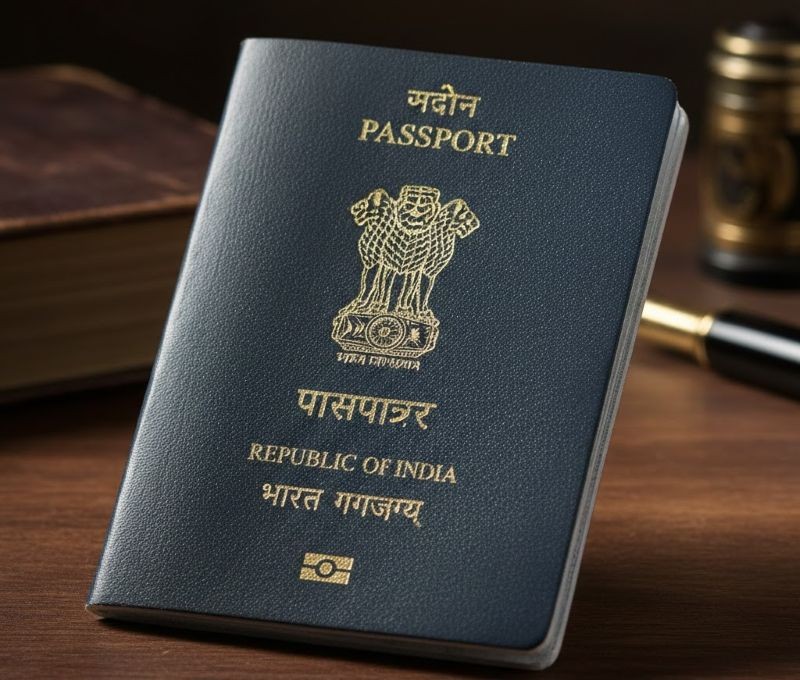
The latest edition of the Henley & Partners Passport Index presents a curious development for India. While the country has climbed 10 places in the global rankings, Indian passport holders now technically have access to fewer destinations without prior paperwork than they did last year.
India ranks 75th in 2026, up from 85th in 2025. In January this year, the country stood at 80th, making the latest jump particularly notable within a short span.
However, the number of destinations Indian citizens can access without securing a visa in advance currently stands at 56. That figure is slightly higher than January 2026’s 55, but still lower than the 57 destinations recorded in 2025.
In simple terms, India’s position on the leaderboard has improved even though its total visa-free access has marginally declined.
What is the Henley Passport Index?
Published by Henley & Partners, the Henley Passport Index ranks 199 passports across 227 travel destinations.
The ranking is based on how many destinations passport holders can access without obtaining a visa before departure.
The index draws on data from the International Air Transport Association and includes visa-free access, visa-on-arrival facilities and certain electronic travel authorisations in its scoring.
Each passport earns one point for every destination that allows entry without advance approval.
If travellers must apply for a visa beforehand, whether through an embassy or a pre-approved e-visa process, the destination does not count toward the score.
Countries are then ranked from highest to lowest based on their total points. If multiple countries have the same score, they share the same rank.
The two countries India lost
In 2025, Indian passport holders could access 57 destinations without prior visa approval. By January 2026, that number dropped to 55, before rising slightly to 56 in February.
The reduction stemmed from changes in entry rules by Iran and Bolivia.
Iran suspended its visa-free entry for ordinary Indian passport holders in November 2025 following reported cases involving fraud and trafficking. India’s Ministry of External Affairs said individuals had allegedly been lured to Iran with false job offers and later kidnapped for ransom.
After the suspension, Indian travellers were required to obtain a visa in advance, removing Iran from the index tally.
Bolivia’s change was procedural. While Indian citizens previously qualified for a visa-on-arrival, which counts under the index methodology, the country shifted to an e-visa system requiring online application and approval before departure. Since this involves prior authorisation, Bolivia no longer qualifies as visa-free under the index’s criteria.
The January dip and February recovery
The January 2026 edition reflected the removal of both Iran and Bolivia, bringing India’s accessible destinations down to 55.
By February, one country, The Gambia, was added to India’s visa-free tally, taking the number to 56. While this partially offset the earlier losses, it did not restore the 2025 total of 57.
The progression stands as follows:
2025: 57 destinations
January 2026: 55 destinations
February 2026: 56 destinations
Why did India’s ranking improve?
The answer lies in how the index functions. The Henley ranking is relative, not absolute. A country’s position depends not only on its own score but also on how other passports perform.
Although India’s visa-free count dipped slightly, several other countries also experienced changes in access. When the final standings were recalculated, India moved up the table relative to others.
In essence, the index operates like a global leaderboard. Even if a country’s score remains stable or declines slightly, its ranking can improve if others fall further.
India currently shares its position with countries that have similar visa-free access totals. In a global landscape where visa policies frequently shift, such positional changes are not uncommon.
Support Our Journalism
We cannot do without you.. your contribution supports unbiased journalism
IBNS is not driven by any ism- not wokeism, not racism, not skewed secularism, not hyper right-wing or left liberal ideals, nor by any hardline religious beliefs or hyper nationalism. We want to serve you good old objective news, as they are. We do not judge or preach. We let people decide for themselves. We only try to present factual and well-sourced news.
Support objective journalism for a small contribution.