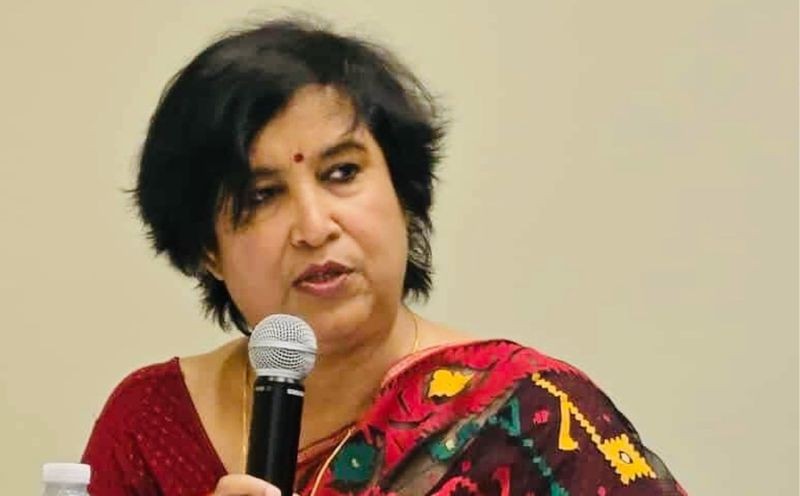
 Taslima Nasreen
'I would feel blessed': Taslima Nasreen seeks return to West Bengal after BJP win
Kolkata/IBNS: Exiled Bangladeshi writer Taslima Nasreen, who was forced to leave Kolkata in 2007 amid violent protests, has expressed her desire to return to West Bengal following the Bharatiya Janata Party’s maiden victory in the state.
‘Will Feel Blessed To Return’
With the regime change in West Bengal, Nasreen said she would “feel blessed” if she is allowed to live again in the state, where the BJP stormed to power on May 4, unseating the government led by Mamata Banerjee.
“West Bengal, to me, is Bengal. Bangladesh is also Bengal. My roots are in Bengal. Yet the doors of both Bengals have long been closed to me. One closed more than three decades ago, the other nearly two decades ago.
“The door to East Bengal is permanently shut; if the door to West Bengal opens, I would feel blessed,” she said.
“Even if I cannot live in Bengal, I wish I could at least go there—to buy books at book fairs, watch plays at theatre festivals, listen to music at cultural events, or visit friends at their homes,” the writer added.
Years Of Exile
Nasreen, known for her writings on women’s rights and criticism of religious fundamentalism, has been in exile since 1994 after facing severe backlash in Bangladesh.
Several fatwas were issued against her, forcing her to leave the country during the tenure of Khaleda Zia.
Her works, including the controversial novel Lajja (1993) and memoir Amar Meyebela (1998), were banned in Bangladesh.
Lajja drew intense criticism for depicting violence against Bengali Hindus in the aftermath of the Babri Masjid demolition.
Nasreen spent nearly a decade in exile across Sweden, Germany, France, and the United States before moving to Kolkata in 2004.
2007 Kolkata Exit
In 2007, violent protests by Islamist groups erupted in Kolkata over her presence.
The situation escalated into a major law-and-order concern, prompting the then Left Front government led by Buddhadeb Bhattacharjee to ask her to leave the state.
She was first moved to Delhi, where she spent about three months under tight security and partial house arrest after being physically attacked. In 2008, she left India and moved to the United States.
Life Between Countries
After a few years abroad, Nasreen returned to India and has since been living here on a residence permit, though her movement—particularly to West Bengal—has remained restricted.
Her latest remarks underline a long-standing emotional and cultural connection with Bengal, even as political shifts over decades have failed to open its doors to her.
Support Our Journalism
We cannot do without you.. your contribution supports unbiased journalism
IBNS is not driven by any ism- not wokeism, not racism, not skewed secularism, not hyper right-wing or left liberal ideals, nor by any hardline religious beliefs or hyper nationalism. We want to serve you good old objective news, as they are. We do not judge or preach. We let people decide for themselves. We only try to present factual and well-sourced news.
Support objective journalism for a small contribution.