 BLA
BLA
From reel to real: Why a BLA attack video has the internet seeing Dhurandhar’s Hamza in Balochistan
The internet is rarely subtle, but even by social media’s standards, the reaction was striking.
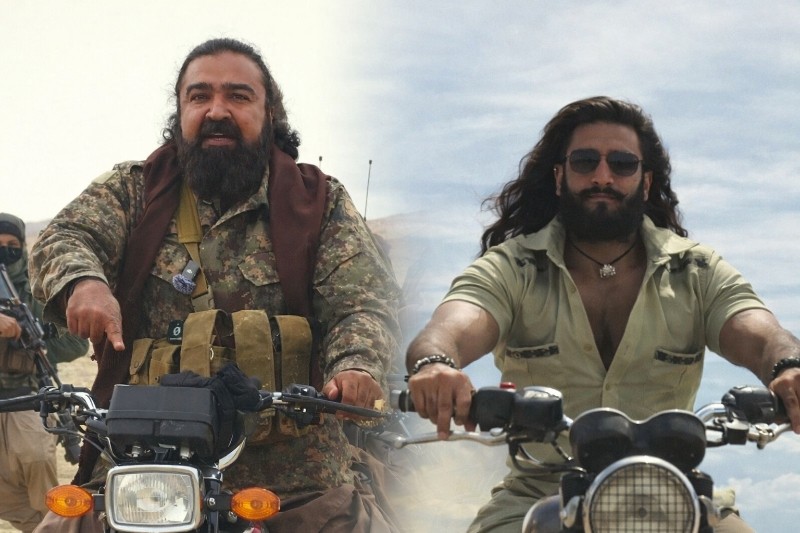
A video showing Baloch Liberation Army (BLA) leader Bashir Zaib riding a motorcycle through a stark, rocky desert—armed men moving in formation beside him—triggered instant comparisons with Dhurandhar’s Hamza Ali.
Dust swirling behind the tyres, an unhurried gaze fixed forward, militant gear framed against unforgiving terrain—the resemblance felt uncanny.
Video released by BLA shows Bashir Zaib Baloch, BLA leader, in #Baluchistan: pic.twitter.com/0H2vEqWcGo
— The Dispatcher (@dispatcherOnX) January 31, 2026
Within hours, the clip flooded timelines, many versions set to the song “na to karwaan ki talaash hai”.
Users remarked that it looked less like insurgent footage and more like a meticulously crafted cinematic entry shot. The verdict online was swift: “Balochistan has its own Hamza.”
Reel-life aesthetic inside a real conflict
The timing amplified the effect. In the early hours of January 31—just a day after Dhurandhar dropped on OTT platforms—the BLA launched what it called its largest coordinated assault yet against the Pakistani state, Operation Herof Phase 2.
The offensive followed a similar wave of attacks carried out in August 2024.
As clashes unfolded across multiple locations in Balochistan, visuals emerged of fighters speeding through desert tracks on motorcycles, weapons slung, movements synchronised.
Only propaganda dhurandhar has it this bike ffs https://t.co/JMV2SHhwDs pic.twitter.com/qhiW4Xp3MP
— 𒉭Anniyan𒌐 (@aryan02km) February 1, 2026
In the middle of an operation that reportedly claimed more than 140 lives, one clip took on a life far beyond the battlefield.
Slowed down, looped, and overlaid with Dhurandhar’s background score, it travelled rapidly across platforms.
The parallels were hard to ignore. The terrain matched. The posture matched.
Even the visual grammar—dust, desert, defiance—felt lifted from a screenplay.
For many viewers, it seemed as though Hamza Ali had ridden straight out of fiction into a geopolitical flashpoint.
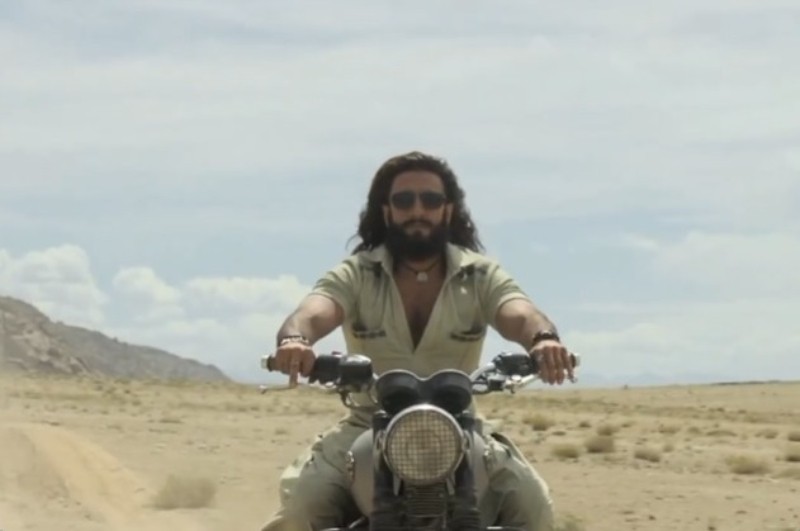 Ranveer Singh in Dhurandhar. Photo: Screen-grab from X
Why Dhurandhar framed the internet’s gaze
In Dhurandhar, Ranveer Singh’s Hamza Ali doesn’t merely arrive; he announces himself. The motorcycle is not transport, but symbolism.
The desert isn’t a backdrop; it’s a character. Every frame is designed to project rebellion, myth, and menace.
So when real-world imagery ticks the same boxes, the comparison becomes almost inevitable.
Not because reality is imitating cinema, but because cinema has trained audiences to recognise power through a specific visual language.
It was this overlap that led online users to label Bashir Zaib as “Balochistan’s Dhurandhar Hamza.”
In the film, Hamza—an Indian spy infiltrating Karachi’s criminal underworld—poses as a Baloch man to gain entry into Rehman Dakait’s network.
Acceptance demands total immersion, not just loyalty or violence, but appearance, demeanour, and attitude.
That raw, defiant energy, carefully choreographed on screen, is the same vibe many viewers now claim to see in the viral BLA footage.
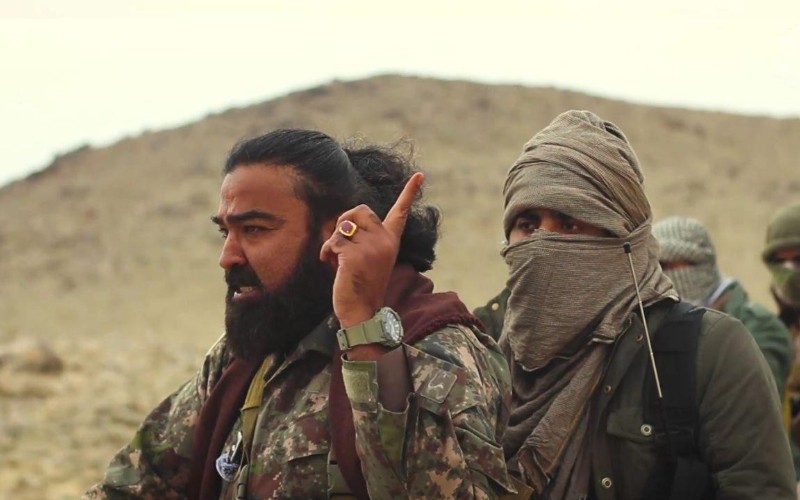 Photo: Screen-grab from X
Operation Herof-2 and BLA’s claims
According to statements released by BLA spokesperson Jeeyand Baloch, the group carried out coordinated attacks across Kharan, Mastung, Tump, and Pasni, with clashes continuing elsewhere.
The BLA also claimed a presence in parts of Quetta and Noshki, asserting that Pakistani military positions had been “repelled.”
The group alleged that more than 200 Pakistani security personnel were killed and at least 17 captured, describing these as preliminary figures that could rise.
Pakistani authorities have not publicly confirmed these numbers.
Balochistan, Pakistan’s largest but least populated province, has endured decades of insurgency driven by demands for autonomy or independence.
Separatist groups cite political marginalisation, enforced disappearances, and disputes over control of natural resources as long-standing grievances.
Locals, videos, and a competing narrative
Videos circulating in recent days have added another layer to the narrative.
Some clips appear to show local civilians providing food to BLA fighters, with children interacting freely with them.
These scenes stand in sharp contrast to official Pakistani claims that insurgents lack grassroots support in the province.
While the latest BLA offensive appears to have paused, its visual impact continues to reverberate online.
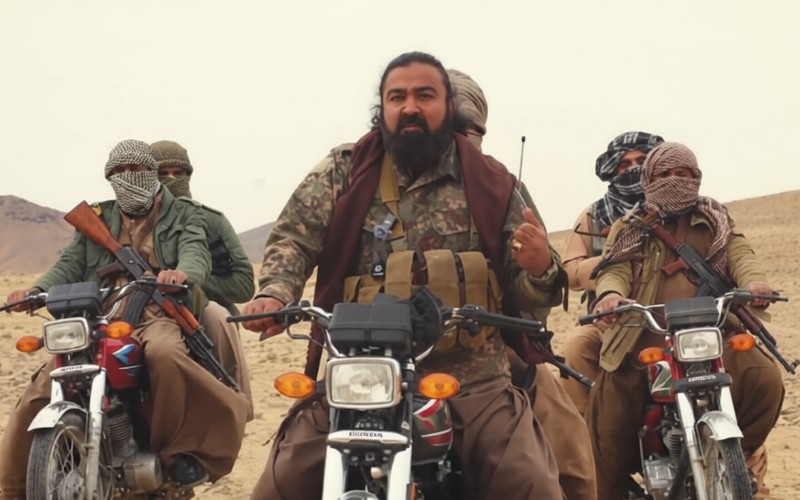 Photo: Screen-grab from X
Bashir Zaib: From student activist to BLA commander
At the centre of this attention is Bashir Zaib, the man currently leading the Baloch Liberation Army and shaping its recent operations.
Believed to be from Nushki district, Zaib studied mechanical engineering at Quetta Polytechnic College before pursuing a master’s degree in Balochi literature.
Before taking up arms, he was deeply involved in student politics, serving as chairman of the Baloch Students Organisation–Azad.
His reported transition into the BLA in 2012 followed crackdowns on student activists, arrests, and increasing restrictions on political mobilisation.
Zaib steadily rose through the organisation’s ranks. After the death of the then BLA leader Aslam Baloch in 2018, senior commanders appointed him as the group’s chief.
Under his leadership, the BLA has intensified attacks on Pakistani security forces and Chinese-linked infrastructure, including suicide missions involving female operatives.
BLA has started posting videos from Op Herof 2 !
— Elite Predators (@elitepredatorss) February 6, 2026
That's BLA in Nushki's Police station, where Pakistani forces were claiming of giving a tough fight !
In reality : As per true Pakistani traditions surrendered and deserted check posts, police stations and military posts.… pic.twitter.com/Ue62vrMc1k
Cinema moves on, conflict does not
The Dhurandhar effect shows no signs of fading.
With Dhurandhar 2 set for release next month, online speculation has already begun about a third instalment.
Meanwhile, in Balochistan, the insurgency remains very real, far removed from cinematic polish.
Yet, for a brief moment, a viral video collapsed the distance between fiction and conflict—reminding viewers how powerfully cinema shapes the way wars are seen, remembered, and interpreted online.
Support Our Journalism
We cannot do without you.. your contribution supports unbiased journalism
IBNS is not driven by any ism- not wokeism, not racism, not skewed secularism, not hyper right-wing or left liberal ideals, nor by any hardline religious beliefs or hyper nationalism. We want to serve you good old objective news, as they are. We do not judge or preach. We let people decide for themselves. We only try to present factual and well-sourced news.
Support objective journalism for a small contribution.