 Punjab
Declining soil fertility and decreased wheat yield raise concerns for Punjab farmers
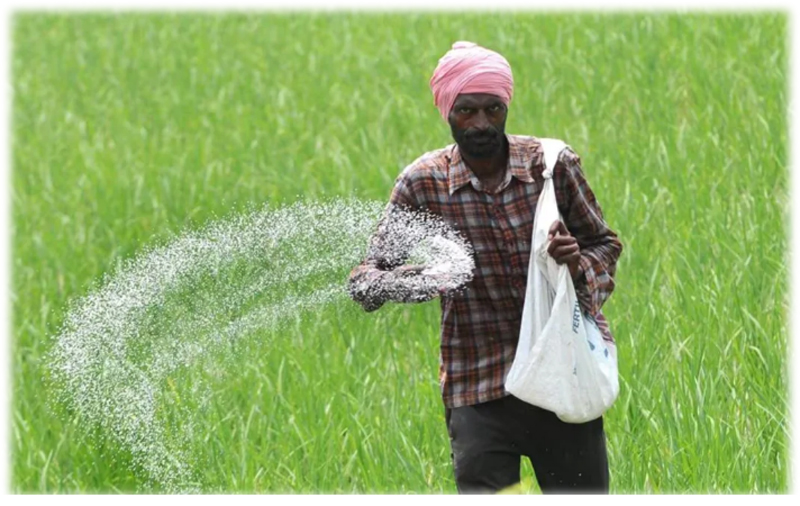
Alarming trends are emerging in Punjab’s agricultural sector as soil fertility continues to decline, attributed to the excessive use of chemical fertilizers.
Over the past five years, wheat production in Punjab has witnessed a significant decrease, dropping from 178 lakh metric tonnes in 2017-18 to 149 lakh metric tonnes in 2021-22. Moreover, per acre wheat productivity has also suffered, declining from 5,077 kg per hectare in 2017-18 to 4,216 kg per hectare in 2021-22.
Recent data released by the government indicates that the increased utilization of chemical fertilizers in Punjab has led to a 16% decrease in wheat production and a 17% decrease in wheat productivity per acre. The consumption of fertilizers by Punjab farmers has risen by nearly 10%, reaching 39.47% in 2021-22, compared to 36.06 lakh metric tonnes in 2017-18.
These figures underscore the fact that production and productivity have already reached a plateau, with increased fertilizer consumption having little to no positive impact and even showing a negative impact on wheat production. Punjab currently boasts the highest per hectare consumption of chemical fertilizers in the country, with 253.94 kg per hectare of nutrients – nitrogen, phosphate, and potash – being used in 2021-22.
Agriculture experts have expressed concerns over the overuse of chemical fertilizers, which has effectively depleted the organic component in the soil to near zero. The consequences of this practice are becoming increasingly evident, with declining soil health and reduced agricultural output.
In response to these challenges, Union Minister for Chemical and Fertilizers, Mansukh Mandaviya, emphasized the need to protect Punjab’s soil by reducing reliance on chemical fertilizers. Mandaviya stated, “Punjab is one of the states where wheat production and productivity have declined, despite increased usage of chemical fertilizers. Therefore, it is imperative that we prioritize soil health, which has deteriorated over the past few years.”
The declining wheat production and reduced productivity in Punjab serve as a wake-up call for farmers and policymakers to adopt sustainable agricultural practices that prioritize soil health. It is crucial to strike a balance between maximizing yields and preserving the long-term fertility of the land, ensuring a sustainable future for Punjab’s agricultural sector.
(Image and Text credit: Khalsavox.com)
Support Our Journalism
We cannot do without you.. your contribution supports unbiased journalism
IBNS is not driven by any ism- not wokeism, not racism, not skewed secularism, not hyper right-wing or left liberal ideals, nor by any hardline religious beliefs or hyper nationalism. We want to serve you good old objective news, as they are. We do not judge or preach. We let people decide for themselves. We only try to present factual and well-sourced news.
Support objective journalism for a small contribution.