 Sikh Persecution
Debunking myths of Sikh persecution in India
During his trip to the U.S., a senior Indian leader claimed there is an “existential threat to Sikhs in India.”
He added that “the fight in India is whether a Sikh will be allowed to wear a turban and kada, go to gurudwara.”
Gurpatwant Singh Pannun, a U.S.-based pro-Khalistan extremist, supported the leader’s remarks, saying they “justified SFJ’s global Khalistan Referendum campaign.”
This statement, however, stands in stark contrast to the lived reality of millions of Sikhs thriving in India, actively contributing to its national diversity. According to a survey by Pew Research “Of India’s four major religious groups, Sikhs on average are the wealthiest, by a wide margin. Approximately six-in-ten Sikh households fall in the highest wealth quintile, according to the NFHS wealth index“.
An article by The Diplomat aptly challenged these misleading narratives, highlighting the need for a more nuanced understanding of the Sikh community in India.
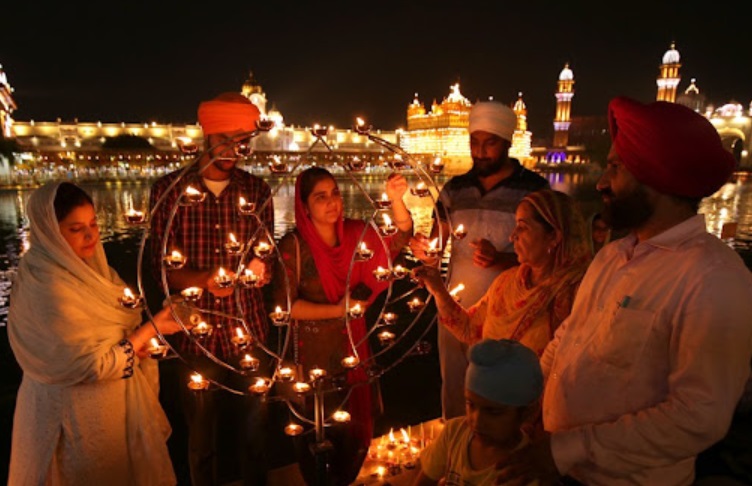
With over 20 million Sikhs, India boasts the world’s largest Sikh population. Punjab, their historical homeland, is a testament to their vibrant presence. This state, where Sikhs form a majority, stands as a beacon of their cultural and religious expression. Gurdwaras, houses of worship, dot the landscape, serving as community hubs and symbols of their unwavering faith.
Sikhs in India, contrary to certain claims in Western capitals, are not facing genocide or persecution. To claim widespread persecution ignores the reality of Sikh representation in government, police, and judicial services. It overlooks their entrepreneurial spirit, driving economic growth in various sectors. It negates their contribution to interfaith dialogue and social work, actively bridging communities.
The narrative propagated by Khalistan separatists, which paints Sikhs as an oppressed ethnic and religious group fighting for freedom, tends to obfuscate key facts. Punjab, like other states in India’s federal system, conducts regular free and fair elections, with local Punjabi Sikhs winning key positions. The current Chief Minister and most of the cabinet ministers in the state are Sikhs. The state also enjoys a fair amount of autonomy within the Indian constitutional framework.
Punjab, historically recognized as a prosperous agricultural state, has undergone significant political and geographical changes. The current boundaries of Indian Punjab, drawn in 1966, were a result of the Punjabi Suba movement, aiming to create a state where Punjabi-speaking Sikhs would be the majority. Today about 58% population in the state is Sikhs, followed by 39% Punjabi Hindus.
Importantly, a recent survey indicates that up to 93% of Sikhs in Punjab express pride in being Indian, challenging the notion that the majority desires an independent Khalistan. Many Sikhs actively engage in the cultural, economic, and social fabric of India, dispelling the myth that an independent Khalistan would offer better opportunities.
The very premise of the Khalistan movement comes under scrutiny when considering the geographic and geopolitical realities. An independent Khalistan, if realized, would be a landlocked agricultural country surrounded by nuclear-armed powers India and Pakistan.
(Image and photo courtesy: Khalsavox.com)
Support Our Journalism
We cannot do without you.. your contribution supports unbiased journalism
IBNS is not driven by any ism- not wokeism, not racism, not skewed secularism, not hyper right-wing or left liberal ideals, nor by any hardline religious beliefs or hyper nationalism. We want to serve you good old objective news, as they are. We do not judge or preach. We let people decide for themselves. We only try to present factual and well-sourced news.
Support objective journalism for a small contribution.