'Artistic freedom': India pushes back after China slams Salman Khan starrer Battle of Galwan
India on Tuesday dismissed China’s criticism of the Salman Khan–starrer Battle Of Galwan, underlining that filmmakers in the country enjoy “artistic freedom” and are free to tell their stories without government interference, NDTV reported, quoting official sources.
The response came after Chinese state-run media claimed that the film distorts facts surrounding the deadly June 2020 Galwan Valley clash between Indian and Chinese troops in eastern Ladakh.
“India is a country with freedom of expression, and cinematic expression is an integral part of it. Indian filmmakers are free to make films as per this artistic freedom,” a government source told NDTV.
The source added that the government has no role in the making of the film.
“Those who may have concerns about this particular movie are free to approach the Ministry of Defence for any clarifications,” the source said.
Battle of Galwan is set against the backdrop of the violent hand-to-hand combat between soldiers of the Indian Army’s 16 Bihar Regiment and troops of China’s People’s Liberation Army (PLA).
Directed by Apoorva Lakhia, the film is based on a chapter from India’s Most Fearless 3 by journalists Shiv Aroor and Rahul Singh.
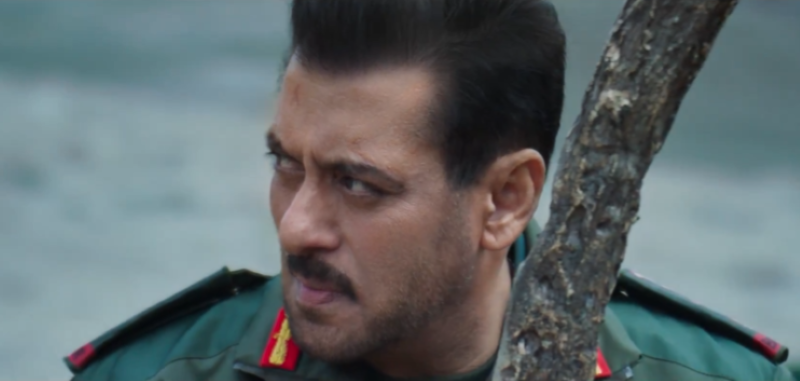
Salman Khan plays Colonel Bikkumalla Santosh Babu, the commanding officer of the 16 Bihar Regiment, who was killed while leading his troops during the clash.
The controversy came after Song Zhongping, a Chinese military expert, told China’s state-run Global Times on Monday that India’s use of films, particularly Bollywood productions, to evoke nationalistic sentiment is unsurprising, reflecting a deeply rooted cultural and political tradition.
An article published in Global Times alleged that the events depicted in the film “do not align with the facts” and accused Bollywood of presenting an “emotionally charged” and exaggerated version of history.
“Bollywood films at most provide entertainment-driven portrayals, but no amount of cinematic exaggeration can rewrite history or shake the PLA’s determination to defend China’s sovereign territory,” the article claimed.
India has officially acknowledged the loss of 20 soldiers in the confrontation, the first combat fatalities on the India-China border in over four decades.
China, which initially denied suffering any casualties, later claimed that four of its soldiers were killed, a figure widely seen as significantly understating its losses.
Tensions between the two nuclear-armed neighbours escalated sharply after the Galwan clash, leading to a massive military buildup along the Line of Actual Control (LAC) in Ladakh.
Both sides deployed additional troops, armour and artillery, while India also stepped up surveillance and border infrastructure to counter potential Chinese aggression.
The Global Times piece also claimed that the Galwan Valley lies on the Chinese side of the LAC and blamed India for provoking the 2020 clash, a position New Delhi has consistently rejected.
Support Our Journalism
We cannot do without you.. your contribution supports unbiased journalism
IBNS is not driven by any ism- not wokeism, not racism, not skewed secularism, not hyper right-wing or left liberal ideals, nor by any hardline religious beliefs or hyper nationalism. We want to serve you good old objective news, as they are. We do not judge or preach. We let people decide for themselves. We only try to present factual and well-sourced news.
Support objective journalism for a small contribution.