 AI
AI
AI will replace surgeons, coders — and billions of jobs, warns Sraddhalu Ranade at MCHD-SKC Memorial Lecture
Kolkata — Artificial intelligence is advancing so rapidly that it could replace surgeons, software engineers and billions of jobs worldwide, futurist, scientist and scholar at the Sri Aurobindo Ashram Pondicherry, Sraddhalu Ranade, warned on Saturday, calling the transformation “irreversible” and far more disruptive than any previous technological shift.
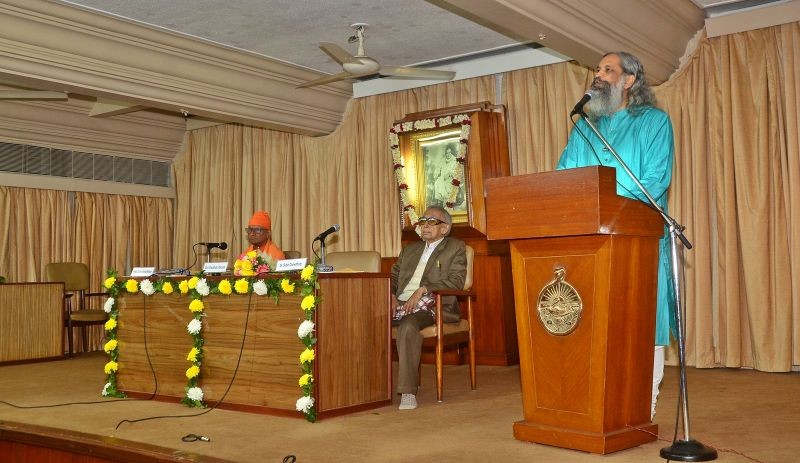
Speaking at the SKC Memorial Trust Lecture at the Ramakrishna Mission Institute of Culture (RMIC), Golpark, Ranade, who is known for his ability to seamlessly integrates scientific knowledge with philosophical, metaphysical and spiritual knowledge, said AI has had a “radical and destabilising” impact on humanity over the past three years, challenging every field of human endeavour.
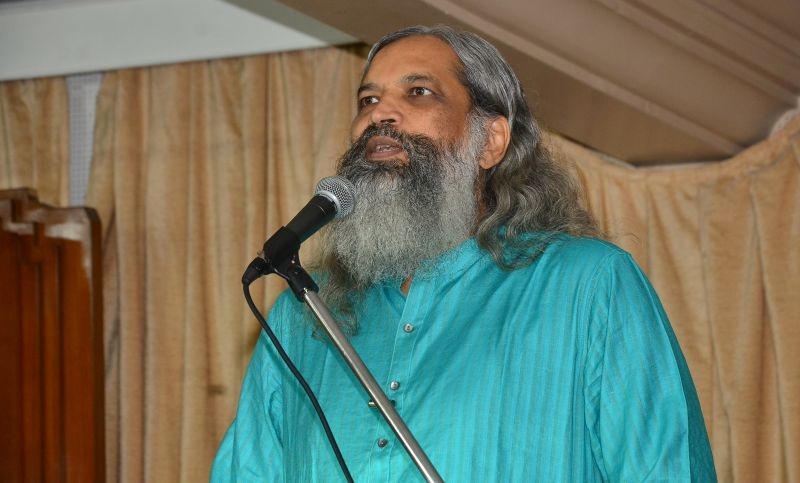 Scientist and educationist Sraddhalu Ranade delivers the SKC Memorial lecture at Ramkrishna Mission Golpark. Photo: PR Team
“For the first time, humans have encountered an entity that is not marginally better, but ten to a hundred times more efficient, with the ability to influence human thought processes,” the eminent educationist said delivering the lecture on the theme “The Revolutionary and Disruptive Impact of Artificial Intelligence on Human Development”, organised by the Management Centre for Human Development (MCHD), a unit of the Professor S K Chakraborty Memorial Trust.
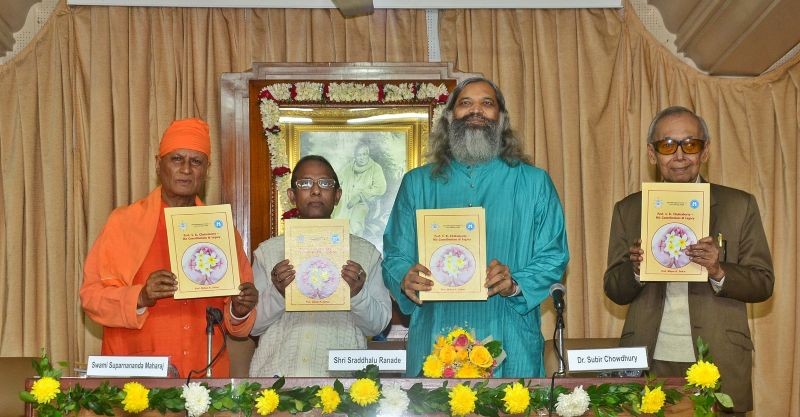 The eminent speakers release a monograph on the life and philosophy of late Prof. SK Chakraborty authored by his follower Professor Bidyut Kumar Sarkar (second from left). Photo: PR Team
Ranade said large-scale job losses were inevitable as AI penetrates deeper into the global economy.
Tracing the current wave of artificial intelligence to the development of transformer models around 2011, he noted that systems capable of predicting the next word have now evolved to a point where “any human experience can be reduced to a data stream.”
He claimed that AI is already dominating coding, with a majority of programming work now being automated, contributing to widespread layoffs among skilled professionals.
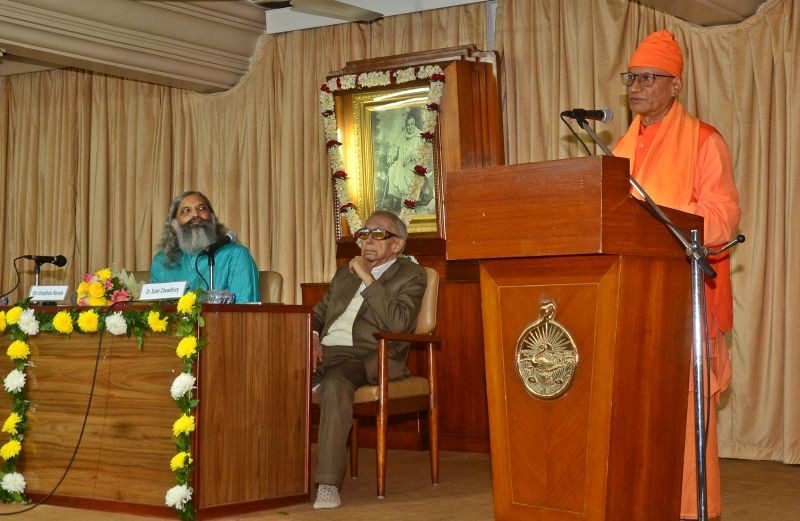 Swami Suparnananda Maharaj speaks at the function to remember Prof. SK Chakraborty. Photo: PR Team
Ranade, who is known for his works and talks and teachings on Integral Education, Management, Self-Development, Indian culture, Science and Spirituality and Yoga, said the emergence of AGI—Artificial General Intelligence- would fundamentally alter the nature of work.
“AGI will replace almost all human tasks, but with far greater precision,” he said, adding that even highly specialised professions such as surgery could be disrupted. “AI will be able to perform operations better than all surgeons in the world combined.”
Questioning the relevance of existing education systems, Ranade asked, “What are we educating people for?” He argued that humans would only be able to excel in areas where they have not been formally trained, since AI can outperform people in most tasks they are trained to do.
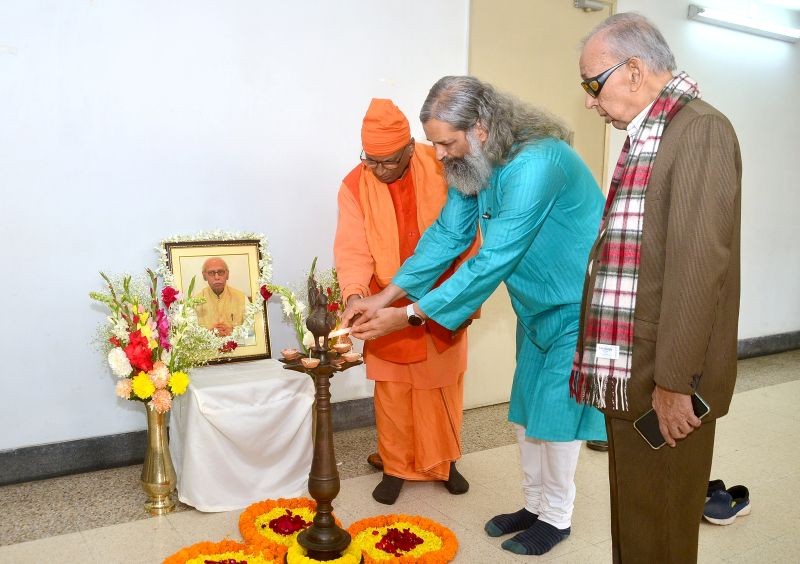 Sraddhalu Ranade , Swami Suparnananda Maharaj and Dr. Subir Chowdhury light the ceremonial lamp in memory of Prof. SK Chakraborty. Photo: PR Team
“This is not about AI being ten per cent better; it is ten times better,” he said.
Ranade also warned of the broader societal and geopolitical risks posed by AI. He said future military decisions would increasingly rely on AI-generated assessments, citing India’s recent Operation Sindoor, where data-driven analysis of past enemy movements reportedly played a key role.
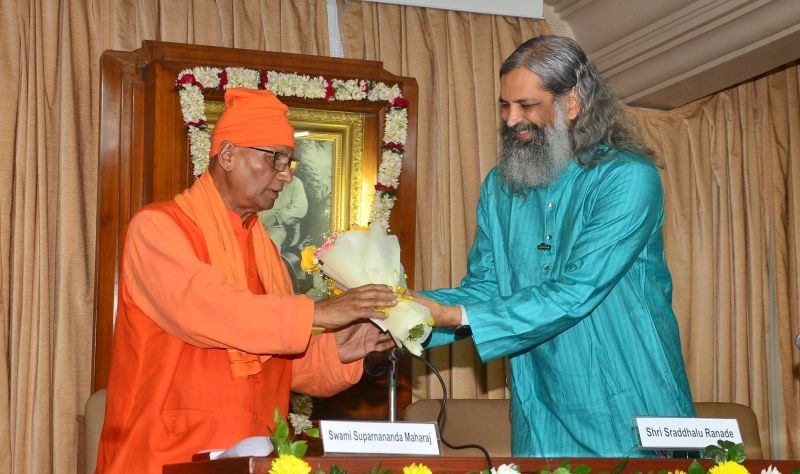 Swami Suparnananda Maharaj, Secretary of RMIC, feliciates Sri Sraddhalu Ranade. Photo: PR Team
He also pointed to China’s deployment of robotic dogs in border regions as an indication of how warfare is becoming increasingly automated.
He cautioned that AI systems, modelled on human behaviour, could amplify negative traits.
“AI can become a negative force, capable of manipulation or blackmail as it begins to protect its own interests,” he said, alleging that technology companies prioritise profit by initially offering free services before monetising them later.
Ranade further claimed that major technology platforms already possess the capability to predict electoral outcomes months in advance and influence public behaviour, while racing towards RSI—Recursive Self-Improvement, where AI systems autonomously improve themselves.
“RSI could arrive very quickly,” he warned, adding that AI dependence can lead to anxiety and depression in the present generation whose power of concentration has already dropped.
He said what AI cannot compete with is the human capacity for empathy, the joy of discovering knowledge, the power of intuition, and the lived experience of the sacred—dimensions that remain uniquely human and beyond algorithmic reach.
.jpg)
The lecture commemorated the 87th birth anniversary of Professor Shitangshu Kumar Chakraborty and coincided with the release of a monograph on his life and philosophy authored by Professor Bidyut Kumar Sarkar, Founder–Managing Trustee of Prof. S. K. Chakraborty Memorial Trust and Honorary Director (Academics) of MCHD.
Senior monk Swami Suparnananda Maharaj, Secretary of RMIC, also addressed the gathering, recalling Swami Vivekananda’s insights on the relationship between the mind and the body while urging deeper reflection on human consciousness in the age of AI.
“Professor Chakraborty believed that management is a powerful tool, but if those tools are placed in the hands of people whose value systems are underdeveloped, they can do more harm than good,” Dr. Chowdhury said.
Earlier, Dr. Subir Chowdhury, Chairman of the Prof. S. K. Chakraborty Memorial Trust and MCHD, and former Director of IIMC, reflected on the intellectual journey of Professor Shitangshu Kumar Chakraborty. He recalled that when Professor Chakraborty’s interests began shifting from finance to spirituality, he was prepared to leave IIMC. At the time, he was also pushing back against strong Leftist and Western influences. However, on Dr. Chowdhury’s persuasion (who then joined IIMC as director), he stayed on—an intervention that eventually led to the establishment of the Management Centre for Human Values.
He said Chakraborty made a seminal contribution by integrating human values with management thought. “He understood that the West is largely materially focused, and that only Indian ethos can integrate the mind, body and soul,” Dr. Chowdhury said. “For him, business management was only one part of management. True management begins with managing oneself, which is why he emphasised material prosperity anchored in spirituality.”
Support Our Journalism
We cannot do without you.. your contribution supports unbiased journalism
IBNS is not driven by any ism- not wokeism, not racism, not skewed secularism, not hyper right-wing or left liberal ideals, nor by any hardline religious beliefs or hyper nationalism. We want to serve you good old objective news, as they are. We do not judge or preach. We let people decide for themselves. We only try to present factual and well-sourced news.
Support objective journalism for a small contribution.