 Pakistan
The dangers of supporting the Khalistan movement: A wake-up call for Pakistan
In the complex world of international relations, the interplay between domestic politics and global dynamics can have far-reaching consequences. Often, neighboring countries find themselves secretly delighting in each other’s troubles.
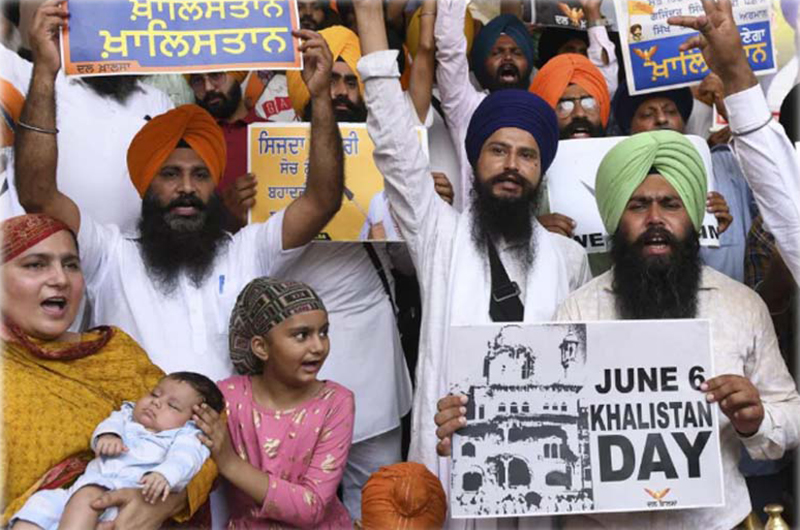
The ongoing dispute between India, Canada, and their Western allies has added fuel to the simmering Khalistan movement. While some in Pakistan may be tempted to view India’s predicament with satisfaction, it is crucial to recognize the potential dangers that this movement poses not only to India but also to Pakistan and regional stability, as highlighted in a report by the Islamabad Policy Research Institute (IPRI).
The Khalistan extremist movement poses a multitude of dangers, including terrorism, secessionism, and religious extremism. Supporting such groups exposes Pakistan to the risk of terrorism within its own borders.
As per the IPRI report, Khalistan’s original claim to Lahore and other parts of Pakistan is a deeply troubling aspect of this movement. The assertion of territorial claims by Khalistan extremists has the potential to spark conflict between these groups and the Pakistani government. This issue adds yet another layer of instability to the already volatile region.
Pakistan’s support for Khalistan extremists has grave economic consequences too. Maintaining a proxy army and providing financial assistance to these groups diverts resources from critical domestic needs, hindering economic development. Moreover, it exposes Pakistan to international sanctions, causing further economic strain. The loss of foreign investment is another glaring issue, as potential investors become wary of a country associated with extremist activities.
Internationally, Pakistan’s support for Khalistan extremists is alienating the country from the global community. Its inclusion on the Financial Action Task Force (FATF) grey list already reflects the world’s growing concern about Pakistan’s role in promoting extremism. Deteriorating relations with the United States, a long-standing ally, and its growing isolation in the region have dire consequences for Pakistan’s global image and diplomatic ties.
A rare admission by General Hamid Gul, former head of Pakistan’s Inter-Services Intelligence (ISI), regarding Pakistan’s support for Khalistan extremists, is a significant revelation. It highlights Pakistan’s intention to use extremist groups as a means to exert influence and create instability in the region. This admission only adds weight to the suspicions of Pakistan’s involvement in supporting radical elements within India, further complicating India-Pakistan relations.
The IPRI report also referenced Terry Milewski’s book ‘Blood for Blood‘, where he reveals Pakistan’s pivotal role in supporting the Khalistan movement since its inception, underscoring the historical depth of this association. Pakistan’s consistent support for Khalistan extremists reveals a long-standing commitment to promoting separatism and religious extremism. This history raises concerns about Pakistan’s long-term intentions and its willingness to stoke regional instability. The book further reveals Zulfikar Bhutto’s ‘revenge’ plan for 1971 was to help create Khalistan.
The ISI’s recent funding of Khalistan activities in Canada, organizing referendums, and convening meetings with Khalistan leaders is part of its ‘Plan-K’ to propagate anti-India sentiments. These allegations have the potential to severely damage Pakistan’s international reputation and prove counterproductive.
Supporting narratives promoted by certain political leaders and extremist groups, while it may seem beneficial in the short term by fueling tensions and unrest in India, can backfire. If left unaddressed, this will act as a force multiplier, endangering Pakistan’s territorial integrity and regional peace.
(Image and text credit: Khalsavox.com)
Support Our Journalism
We cannot do without you.. your contribution supports unbiased journalism
IBNS is not driven by any ism- not wokeism, not racism, not skewed secularism, not hyper right-wing or left liberal ideals, nor by any hardline religious beliefs or hyper nationalism. We want to serve you good old objective news, as they are. We do not judge or preach. We let people decide for themselves. We only try to present factual and well-sourced news.
Support objective journalism for a small contribution.