 UPI
UPI
‘Wow… I really didn’t expect this’: French woman amazed by India’s UPI culture
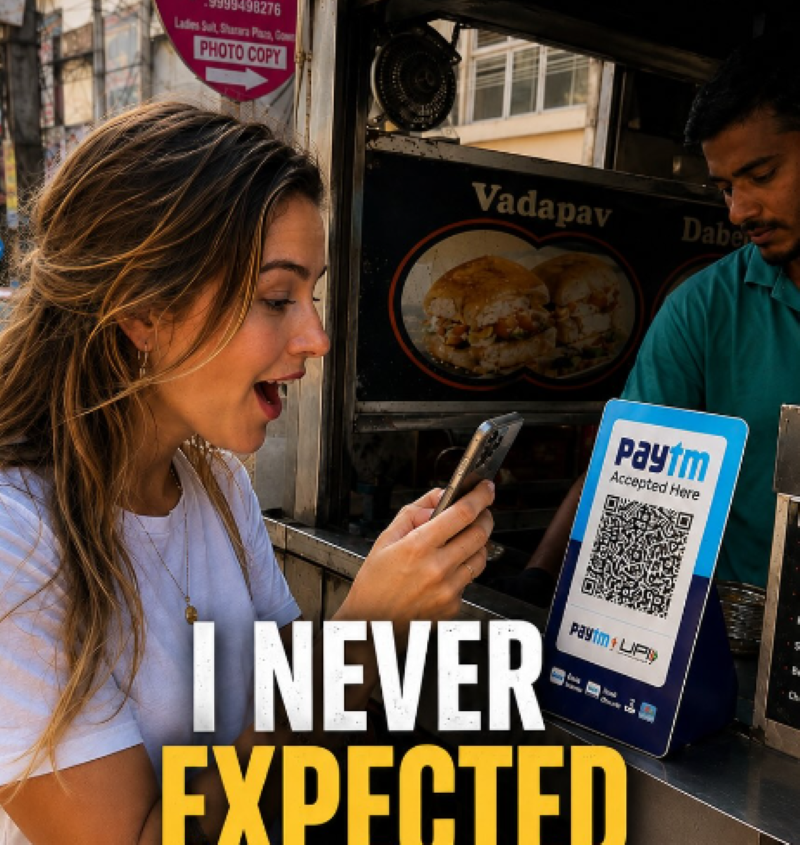
A French woman has expressed surprise at the widespread use of UPI payments in India, saying the digital payment system is used for everything from buying tea to making purchases at tiny roadside businesses.
In an Instagram video, the tourist said she was familiar with UPI before visiting India but did not realise how deeply digital payments were integrated into everyday life.
Whether buying street food, having a cup of chai, taking an autorickshaw or purchasing a ₹20 snack, she found herself using UPI for payments.
What surprised her most was that QR-code-based payments were not restricted to major cities or upscale establishments. She found QR codes widely displayed at small roadside stalls, local shops, cafés, autorickshaws and neighbourhood businesses.
“Before coming to India, I knew about UPI, but I honestly didn’t realise how deeply digital payments are integrated into everyday life,” she wrote on Instagram.
“And what surprised me most is that it’s not just in big cities or fancy places. You can find QR codes at small street-food stalls, local shops, cafés, rickshaws and businesses of all kinds,” she added.
“Coming from France, this was one of those little everyday cultural differences that made me think,” she said, concluding with an expression of surprise: “Wow… I really didn’t expect this.”
The tourist’s observation comes as UPI marks a decade of transforming India’s digital payments landscape. Launched on August 25, 2016, by the National Payments Corporation of India (NPCI) under the regulatory oversight of the Reserve Bank of India (RBI), UPI has emerged as a key pillar of the country’s digital payments ecosystem and a major driver of financial inclusion.
Over the past decade, UPI has recorded extraordinary growth. Annual transaction volumes rose from 1.78 crore transactions in FY 2016-17 to more than 24,162 crore transactions in FY 2025-26, representing an almost 13,000-fold increase.
Transaction value has also surged, rising from ₹0.07 lakh crore in FY 2016-17 to approximately ₹314 lakh crore in FY 2025-26, marking an increase of more than 4,000 times.
The French tourist’s reaction highlights how UPI has moved beyond being a digital payment option to becoming an everyday part of life for millions of Indians, including small traders, street vendors and local service providers.
Support Our Journalism
We cannot do without you.. your contribution supports unbiased journalism
IBNS is not driven by any ism- not wokeism, not racism, not skewed secularism, not hyper right-wing or left liberal ideals, nor by any hardline religious beliefs or hyper nationalism. We want to serve you good old objective news, as they are. We do not judge or preach. We let people decide for themselves. We only try to present factual and well-sourced news.
Support objective journalism for a small contribution.