‘We are the worst storytellers’: Suhel Seth on India’s failure to market itself at 'Kitaab' book launch
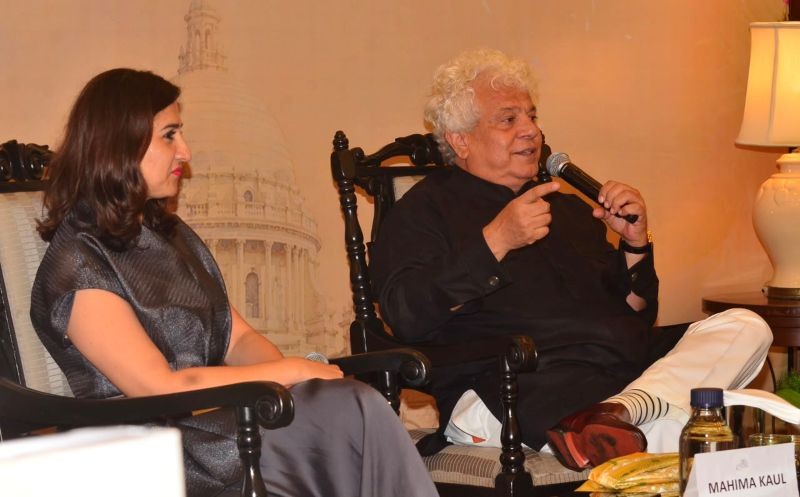
Author and columnist Suhel Seth was in Kolkata for the latest edition of ‘Kitaab’, a signature literary initiative of the Prabha Khaitan Foundation (PKF), in association with Rotary International and Ehsaas Women of Kolkata at Taj Bengal. Seth was present to launch his book WTF India: Are We Losing the Plot?, engaging in a candid conversation on India’s politics, governance, urban development, culture and the responsibilities of citizens. IBNS correspondent Souvik Ghosh reports...
Q. You have been using your platform to talk about India for decades, often highlighting the contradictions of a rising India. How did that journey begin?
A. I believe Calcutta (Kolkata) is the cradle of disagreement without being disagreeable. It taught me the art of public speaking and encouraged public debate. The adda was essentially unemployed people wanting to remain unemployed while discussing everybody else's employment (laughs)! But it was also a great revival of intellect.
We had formidable speakers and, more importantly, we learnt how to disagree, even offend, without being disagreeable. That stayed with me.
I can disagree with you and tell you to “fu*k off”, but do I say it with malice or viciousness? No. I have abused every political party in my life. I give my opinion. I don't need anyone to agree with me.
Q. You have access to rooms and meetings that most people don't. Yet you use your platform to raise issues that can be embarrassing for governments and bureaucrats. You don't claim to be an activist. So how would you define yourself?
A. I have my own voice. Ninety percent of people hate me, but I don't give a toss. I use my pen and my voice to express my angst. It's not my scene to wave a flag or participate in protests.
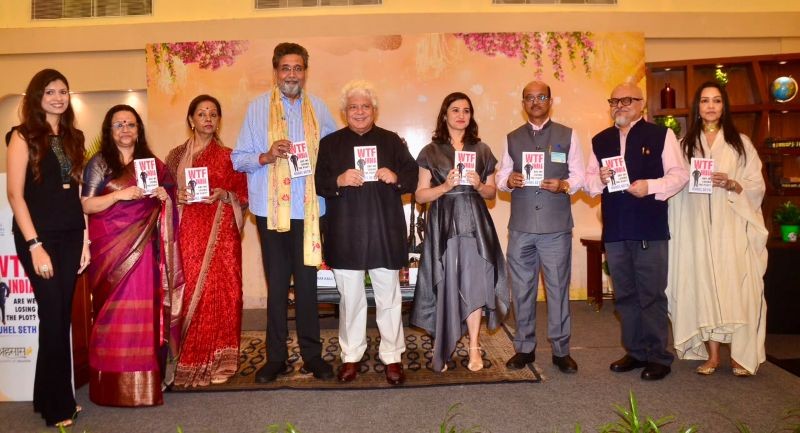 Suhel Seth along with all the guests at the book launch.
Q. Would you describe yourself as disruptively focussed, the same words you used for Rahul Gandhi in a podcast.
A. Yes. Rahul Gandhi is not anti-national, as many people make him out to be on television programmes. Is he a disruptor? Of course he is. His only flaw, to my mind, is inconsistency. He jumps from one topic to another.
Narendra Modi, on the other hand, is probably the hardest-working Prime Minister India has ever had. Before he assumed his post, I had written that he would and must become the Prime Minister of India.
I know Modi has his heart in the right place. But I believe the BJP, Congress, TMC and every political party need greater accountability.
Q. You work on branding and have also worked on branding India. Is that why governance and urban decay irritate you so much?
A. Absolutely. My issue is the gap between potential and delivery.
India is an outstanding country. We need to showcase who we are, celebrate our goodness and diversity. This whole nonsense about Hindu-Muslim has to stop. The idiots who do this don't even know the pre-partition demographics.
What happened in Ayodhya? The Ram Temple was built but BJP lost the seat. It is because Hinduism is a far greater embrace of humanity, like Islam is. People who haven't read the Quran talk about Islam and Islamic jihad without knowing its real meaning. We are destroying the youth by poisoning their minds rather than making them fertile towards progress and positivity.
This year was my ninth Venice Biennale. India had been unrepresented at the Venice Biennale in 2024. I wrote a blistering piece about it. Eventually, with support from people including Nita and Isha Ambani and the Serendipity Arts Foundation, India was represented.
If India is not represented in cultural spaces, we create great damage.
A country can be judged by two things — its museums and libraries. India hasn't built a public library in the last 78 years. That's a blo*dy shame.
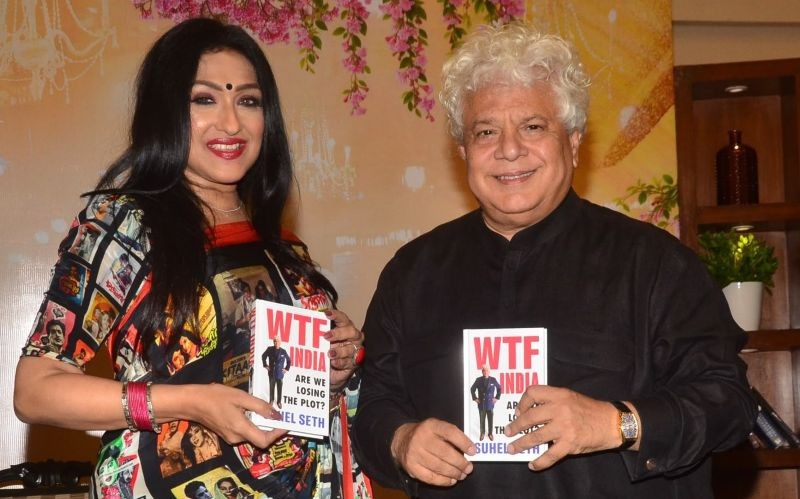 Suhel Seth (R) with the chief guest of the event, Bengali film superstar Rituparna Sengupta (L).
Q. Your comments at an event about Gurugram went viral. What happened afterwards?
A. Amitabh Kant (former NITI Aayog CEO) and Vinai Kumar Saxena (current Lieutenant Governor of Ladakh) were in a conversation at the event. Somebody asked if I had a question. I said, “No, I have a comment.”
I said it was a shame that they were discussing 'Brand India' when they couldn't get Gurugram right. I said 'Nayab Singh Saini (Haryana Chief Minister) should be sacked'. I said the smartest city had been destroyed by unsmart people.
I pointed out that around 60% of Haryana's revenue comes from Gurugram, while only about 11% is spent in Gurugram. That went insanely viral.
Afterwards, I started receiving messages from people in different cities asking me to intervene in their local problems. I told them, “Ask your mother!” I'm not running the municipal corporation of these cities.
But it worked.
Q. Your book places some responsibility on citizens themselves. Do you think Indians have become too dependent on the state to solve their problems?
A. Absolutely. Look at what happened during COVID. Out of hundreds of apartments in my neighbourhood, hundreds of residents had stopped paying their domestic staff. I raised the issue on the residents' WhatsApp group, and within three hours, everyone was paid.
That's what individual responsibility can achieve.
I remember after Ratan Tata's death, I went to his house and later to the NCPA. The crowds were extraordinary. My driver told me that he was a contract driver, but that night there would be no kitchen fire burning.
He then told me that during COVID, Ratan Tata (former Tata Group chairman) had instructed each contractor that they would lose the contract not only with the Taj but with all Tata companies and be blacklisted if anyone's salary was stopped.
That is goodness.
We are not maintaining traditions of culture or traditions of goodness. We are waiting for big gains and material perfection.
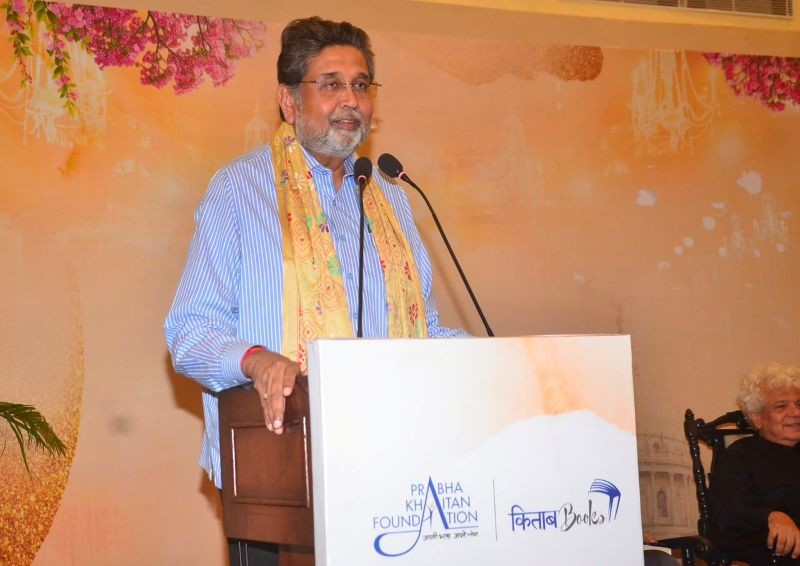 Ambuja Neotia Group chairman Harshvardhan Neotia speaking at the event.
Q. In your book, you talk about the India you wish existed, particularly highlighting empathy and excellence. Why these two qualities?
A. Empathy means understanding that a country is only as strong as its weakest link.
The British created the civil service to manage the colony. Today, the civil service should serve the people but they are still managing. The element of seva bhav (selfless service) is missing.
Why should the poorest of the poor not have access to clean air and safe streets?
If we cannot provide the basic elements of dignified subsistence, we should be ashamed of ourselves.
Q. Some people argue that urban chaos and infrastructure problems are simply part of the development process. Does India have to go through this phase?
A. It is the most ridiculous excuse that bureaucrats and politicians give us. We have three huge problems: corruption has been sanctified, there is zero accountability, and the media has lost its balls.
The media often doesn't have the courage to take on issues because they aren't popular or TRP-driven.
Q. There has been a debate about whether people should work 70 hours a week. What is your view?
A. I've never worked hard. I think hard work is useless. Hard work is for mules, not for smart people. If you work for more than six hours a day, you're doing something dramatically wrong, or you're incompetent and unintelligent.
 Prabha Khaitan Foundation hosted the event 'Kitaab'.
Q. India often complains about how Western media portrays the country. Are we really angry about the storytelling, or are we incapable of accepting criticism?
A. We are the worst storytellers despite having the most magnificent stories.
India has no ability to market itself properly.
We have everything — mythology, cinema, history, culture and extraordinary human stories. But we have no idea how to market those stories or make them relevant today.
We have developed a habit in India of outsourcing both our grief and our responsibility to someone else.
(Photos: PKF)
Support Our Journalism
We cannot do without you.. your contribution supports unbiased journalism
IBNS is not driven by any ism- not wokeism, not racism, not skewed secularism, not hyper right-wing or left liberal ideals, nor by any hardline religious beliefs or hyper nationalism. We want to serve you good old objective news, as they are. We do not judge or preach. We let people decide for themselves. We only try to present factual and well-sourced news.
Support objective journalism for a small contribution.