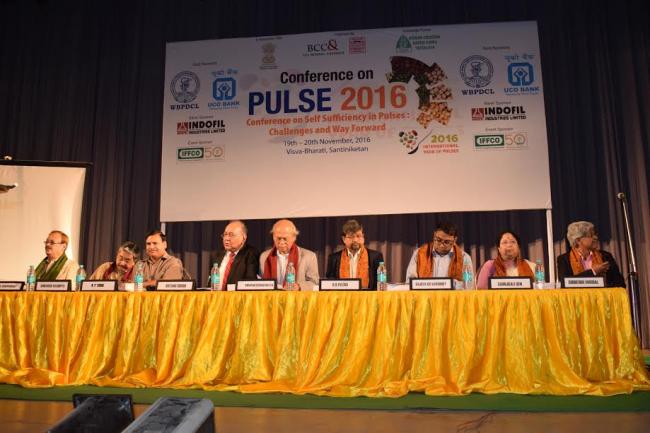
The Bengal Chamber of Commerce & Industry , Visva-Bharati, Santiniketan organise ‘Pulse 2016’
Diet is an important contributor to health, and to disease.
However, a large part of the population faces nutritional problems, from undernutrition and micronutrient deficiencies to obesity and diet-related diseases, or a mix of these. Pulses are a nutrient-rich food that, when included in a diet, can help fight malnutrition in both developed and developing countries.
From an economic perspective, pulses diversify smallholder income streams and mitigate risks associated with staple crop price fluctuations. When farmers grow pulses in addition to crops like maize, it helps buffer the farm from catastrophic disease, pest infestations and climate-related production disruptions.
 The International Year of Pulses (IYP) 2016 shows great potential for West Bengal agriculture in particular.
There is a need to celebrate IYP 2016 in the state, for addressing and removing the dietary imbalance, ensuring nutritional security - not just food security, harnessing remunerative returns from farming by rendering direct access to the deficit domestic market for the farmers or export through lndian Pulse & Grain Association as the case might be, and as an essential constituent of organic farming even with local cultivators.
In this backdrop, The Bengal Chamber of Commerce & Industry echoes the concern of the UN and is seeking to trigger off actions by creating awareness and enhanced research support.
The Chamber had organised ‘Pulse 2016’ - Self Sufficiency in Pulses: Challenges and Way Forward, in association with Visva-Bharati, Santiniketan. The knowledge partner for this event is Bidhan Chandra Krishi Viswavidyalaya, West Bengal.
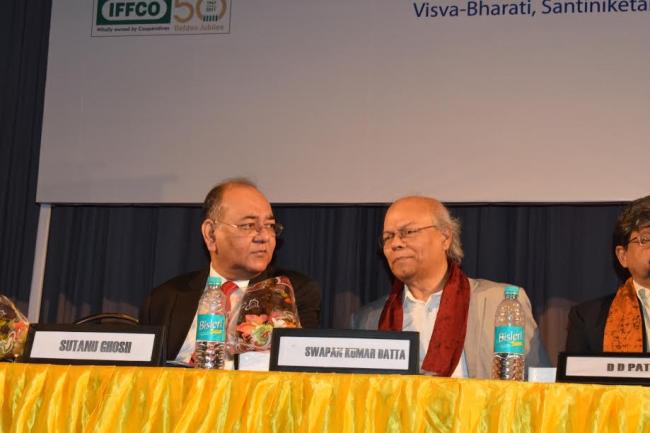
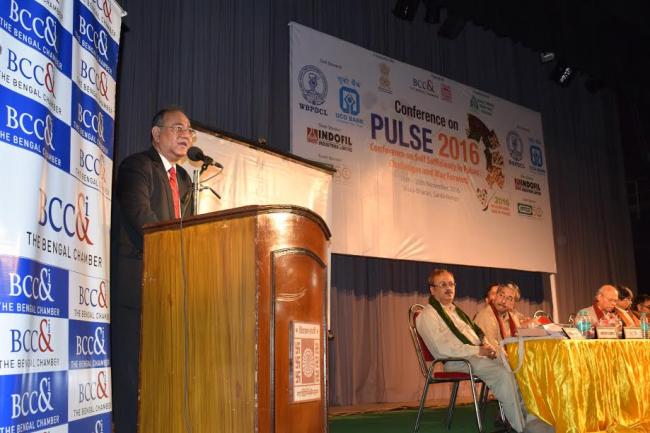 Speakers included: Prof. Sarthak Chowdhury,Principal P.S.B., Visva-Bharati; Dr. Rajeev Kumar Varshney, Director,Centre of Excellence in Genomics, The International Crops Research Institute for the Semi-Arid Tropics (ICRISAT), Hyderabad; Ambarish Dasgupta, Past President, The Bengal Chamber; Sutanu Ghosh , President, The Bengal Chamber, Dr. Swapan Kumar Dutta, Vice-Chancellor, Visva Bharati University; Dr. D.D. Patra, Vice-Chancellor, Bidhan Chandra Krishi Viswavidyalaya; Prof. Sabujkali Sen, Director (Studies, Educational Innovative & Rural Reconstruction); Prof. Subhendu Mondal, Siksha Bhavana; Dr. N.P. Singh, Director, Indian Institute of Pulses Research, Kanpur; among others.
“Pulses are incredibly rich in their nutritional value; they are small but densely packed with protein – double the amount found in wheat and three times that of rice. Pulses are also rich in complex carbohydrates, micronutrients, protein and B-vitamins, which are vital parts of a healthy diet,” said Sutanu Ghosh, President of The Bengal Chamber.
“When grown in rotation with other crops, pulses help improve staple crop (e.g. rice/ wheat / maize) yields by breaking soil-borne pests and disease cycles that afflict these crops,” he said.
Support Our Journalism
We cannot do without you.. your contribution supports unbiased journalism
IBNS is not driven by any ism- not wokeism, not racism, not skewed secularism, not hyper right-wing or left liberal ideals, nor by any hardline religious beliefs or hyper nationalism. We want to serve you good old objective news, as they are. We do not judge or preach. We let people decide for themselves. We only try to present factual and well-sourced news.
Support objective journalism for a small contribution.